Buying windows across borders is not simply a matter of comparing prices. A reliable Aluminum Window must suit the building’s climate, wall structure, glass requirements, and installation conditions. A coastal project may need stronger corrosion protection, while a cold region may require thermal breaks and insulated glazing. Small details can affect comfort, maintenance, and long-term performance.
This guide presents ten practical buying tips for global buyers. It covers profile thickness, alloy selection, surface finishes, hardware quality, drainage design, glazing options, packaging, documentation, and supplier evaluation. Product drawings, test reports, warranty terms, and sample checks should support every major decision. A clear specification sheet can prevent costly misunderstandings between factories, architects, contractors, and importers.
Details matter.
In real projects, attractive samples do not always guarantee dependable results. A smooth showroom frame may hide weak hardware, poor sealing, or unsuitable drainage. Buyers should review corner joints, gasket fit, locking points, and protective packaging before placing large orders. Even experienced purchasers can overlook local installation practices or changing weather conditions. That possibility deserves attention. Careful questions, independent inspections, and realistic performance expectations create a stronger purchasing process. These tips are designed to help buyers compare suppliers professionally, reduce avoidable risks, and select Aluminum Window products with greater confidence.
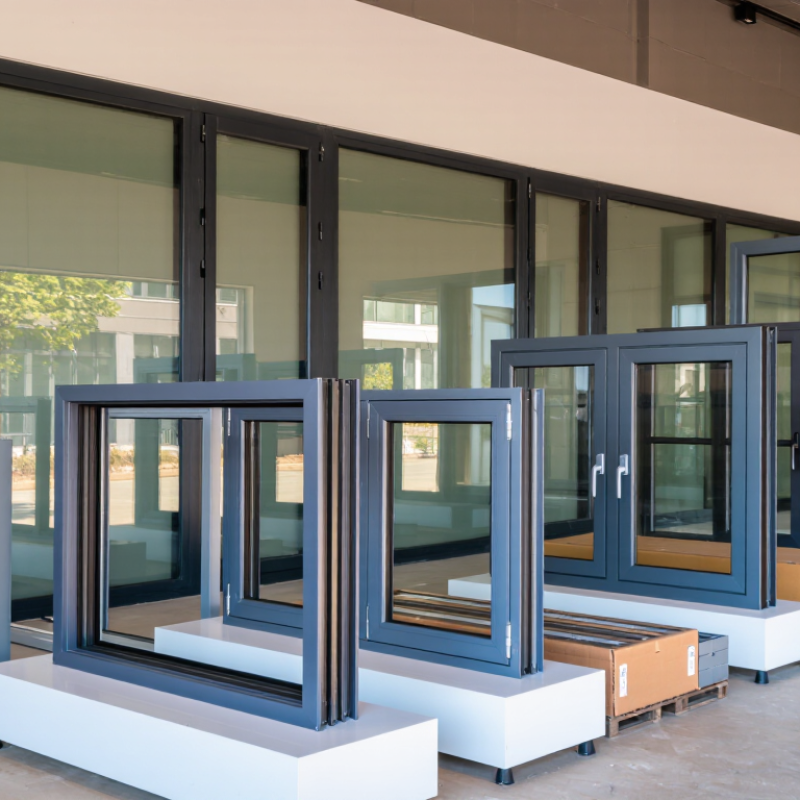
Define Climate and Code Needs: Target Uw ≤0.85 W/m²K for Passive House
For global aluminum window buyers, climate comes before catalog design. A window rated Uw ≤0.85 W/m²K can support Passive House targets in cool-temperate climates, but local criteria may differ. The Passive House Institute uses climate-specific performance requirements. Do not treat one number as universal.
Start with the building’s heating degree days, cooling load, humidity, wind, and solar exposure. In cold regions, low Uw reduces heat loss and interior surface cooling. In hot regions, low solar heat gain may matter more than an excellent U-value. The 2023 UNEP Global Status Report states that buildings and construction consume about 30% of global energy and create roughly 26% of energy-related emissions. Small envelope errors become expensive at scale.
Ask for whole-window Uw results, not center-glass Ug alone. Request frame, spacer, opening type, and installation details tested under recognized methods such as ISO 10077 or EN 14351-1. Check condensation risk around aluminum frames, especially at corners and meeting rails. Thermal breaks help, but weak spacers or poor seals can still undermine performance. An experienced buyer should also compare air leakage, water tightness, wind resistance, and solar factor. The IEA’s Buildings report repeatedly identifies envelope efficiency as a practical route to lower operational energy demand. Still, specifications are not reality. Installation quality is often the missing variable.
Evaluate Thermal-Break Frames: Compare 20–30 mm Polyamide Separators
When evaluating aluminum windows, thermal-break width deserves close attention. A 20–30 mm polyamide separator interrupts the metal path between interior and exterior profiles. Wider is not automatically better. Frame design, gasket placement, glazing pockets, and installation quality also affect heat flow. During site inspections, I have seen a 30 mm break underperform because insulation was compressed or drainage paths were poorly sealed. Details matter.
Ask suppliers for tested whole-window U-values, not only center-frame data. Request reports showing the testing standard, direction, glazing type, and spacer details. Compare 20 mm and 30 mm systems with the same glass configuration. A wider separator may improve thermal resistance, but it can increase frame depth, weight, and fabrication demands. Check corner joints carefully. Weak crimping or incomplete insulation can create cold spots near the sash. Infrared checks help in cool weather, although wind, humidity, and indoor heating can affect readings.
Climate should guide the decision. In cold regions, condensation risk deserves priority. In hot climates, solar glass and shading may matter more than adding ten millimeters. Confirm compatible hardware and drainage before approving a larger profile. I prefer written performance evidence over attractive cross-section drawings. Specifications can still miss real workmanship. Leave room for independent verification, because a promising separator cannot correct poor installation. That lesson is easy to overlook.
Select Glazing by Data: Low-E Emissivity ≈0.04, U-Value, and SHGC
Global buyers should select glazing from measured data, not appearance alone.
Low-E describes a surface that limits radiant heat transfer. A coated surface with emissivity near 0.04 can reduce heat movement between indoor and outdoor glass surfaces. Near 0.04 is useful. However, performance depends on coating position, cavity gas, and glass layers. Ask for the exact glass build-up, not a generic “Low-E” claim.
Compare U-values carefully. A lower U-value usually means better insulation, but confirm the units and test method. Check whether the figure covers center glass, frame, or the complete window. These values are not interchangeable. SHGC shows how much solar energy enters through the glazing. In hot regions, a lower SHGC can reduce cooling demand. In colder climates, moderate solar gain may support winter comfort. Orientation matters. West-facing glass can become uncomfortably hot in late afternoon.
Request independent test reports and a full product data sheet before ordering.
Review spacer type, frame design, gas fill, and installation tolerances. A high-performing pane can lose value through poor sealing around the opening. On site, inspect labels, cavity appearance, and frame-to-wall gaps before final payment. I have seen specifications that looked impressive until the installer revealed a different glass thickness. That mistake is easy to miss. Build a comparison table with U-value, SHGC, visible transmittance, glass layers, and test conditions. Then check local energy requirements with a qualified consultant.
Verify Certified Performance: EN 12207 Air Classes, Water Tightness, and Wind
For global buyers, window certification is not a decorative document. It shows how the unit behaves under controlled pressure. EN 12207 rates air permeability from Class 1 to Class 4. Class 4 is the tightest level, tested at 600 Pa. Ask for the tested leakage rate, not only the class. A Class 4 window can still perform poorly if installation joints remain open.
Air is only one risk. EN 12208 evaluates water tightness, commonly from 1A to 9A. Higher classes withstand stronger pressure without visible leakage. Imagine heavy rain striking a second-floor window while wind pushes water sideways. The test should reflect that exposure. EN 12210 then measures wind resistance, using pressure classes from 1 to 5 and deflection categories A, B, or C. Higher floors and coastal sites usually require stronger specifications, but local calculation remains essential.
Check the complete test report.
The International Energy Agency reported in Buildings 2023 that buildings consume about 30% of global final energy. Poorly sealed windows increase heating and cooling demand. In my purchasing experience, buyers often compare glass thickness first and ignore frame joints, drainage paths, and corner welds. That is a mistake. Certification also has limits. Laboratory results may change after transport, installation, ageing, or repeated operation. Request reports from an accredited laboratory, confirm the tested size, and compare those conditions with the project’s wind zone, rainfall, and installation method.
Audit Suppliers and Lifecycle Cost: Testing, Warranty, Lead Time, and ROI
A supplier audit should begin with evidence, not polished showroom samples. Request recent test reports for air leakage, water penetration, wind load, thermal performance, and hardware durability. Confirm the tested window matches your proposed frame, glass, seals, and installation method. Small component changes can invalidate useful comparisons. Ask who performed each test and whether the laboratory operates independently.
Walk through the factory if possible. Check extrusion storage, corner joining, powder-coating inspection, glass handling, and final packing. Ask for defect records from recent projects. A supplier avoiding this question may create risk. A supplier admitting recurring issues may be more reliable, if corrective actions are documented. I once saw a strong sample fail because production staff used a different gasket. Samples can mislead.
Warranty terms need more than a long number of years. Check coverage for coating, hardware, seals, glass, labor, transport, and replacement procedures. Note exclusions for coastal exposure, poor installation, and maintenance neglect. Lead time should include approvals, tooling, testing, production, inspection, and shipping. Request a milestone schedule with buffer days. “Ready to ship” may not mean ready for site installation.
Calculate ROI across the full lifecycle. Include purchase price, installation labor, energy performance, cleaning, repairs, replacement frequency, and downtime. A cheaper frame can cost more after repeated adjustments. Use local climate data and expected building use. Still, projections contain uncertainty. Add sensitivity checks for energy prices, delays, and maintenance costs. That honest margin often supports a better purchasing decision.
Conclusion
Choosing the right Aluminum Window for an international project requires more than comparing appearance and price. Buyers should first define the local climate, energy goals, and building codes. For highly efficient projects, a target Uw value of 0.85 W/m²K or lower may be appropriate. Thermal-break frames should be evaluated by separator design, especially polyamide systems in the 20–30 mm range, while glazing decisions should rely on measurable data such as low-E emissivity near 0.04, U-value, and solar heat gain coefficient.
Performance must also be verified through recognized testing. Check air permeability classifications under EN 12207, water tightness, and wind resistance to ensure the window suits the installation environment. A complete supplier review should include independent test documentation, warranty terms, production and shipping lead times, quality-control procedures, and long-term maintenance needs. Considering the total lifecycle cost—not only the initial quotation—helps buyers select a durable solution that supports energy savings, reliable operation, and a stronger return on investment.