
Window Wurx Industry Co., Ltd. — China's Trusted Aluminum Windows & Doors Manufacturer Since 1993

  • English
  • Español
  • Français
  • Deutsch
  • Italiano
  • Português
  • Nederlands
  • Русский
  • العربية
  • 中文
0%

Choosing the right Aluminium Washroom Door in 2026 requires more than comparing shiny finishes and low prices. A washroom door faces moisture, frequent cleaning, humidity, and constant daily use. Small details matter.

In real projects, a door may open hundreds of times each week. Wet hands can stain handles. Poor hinges can sag within months. A weak coating may peel near the floor. These practical problems often appear after installation, not inside a showroom.

This guide examines aluminium grades, frame strength, surface finishes, hardware, privacy, and maintenance needs. It also considers thermal comfort, noise control, accessibility, and installation quality. A reliable supplier should provide clear product specifications, coating information, test evidence, and a realistic warranty.

Do not trust appearance alone.

A well-designed Aluminium Washroom Door should close smoothly, resist corrosion, and remain stable in a humid environment. Powder coating can offer a durable finish, but preparation and curing still affect performance. Stainless steel hinges may improve reliability, although they can increase the overall cost.

There is no perfect door for every building. A budget model may suit a lightly used office, but it could fail in a busy school or commercial facility. That difference is easy to overlook. Even experienced buyers can focus too heavily on price, then regret the decision later.

By comparing evidence, installation conditions, and long-term maintenance, buyers can make a more confident choice. The best option is not always the most expensive. It is the door that performs consistently where it is actually used.
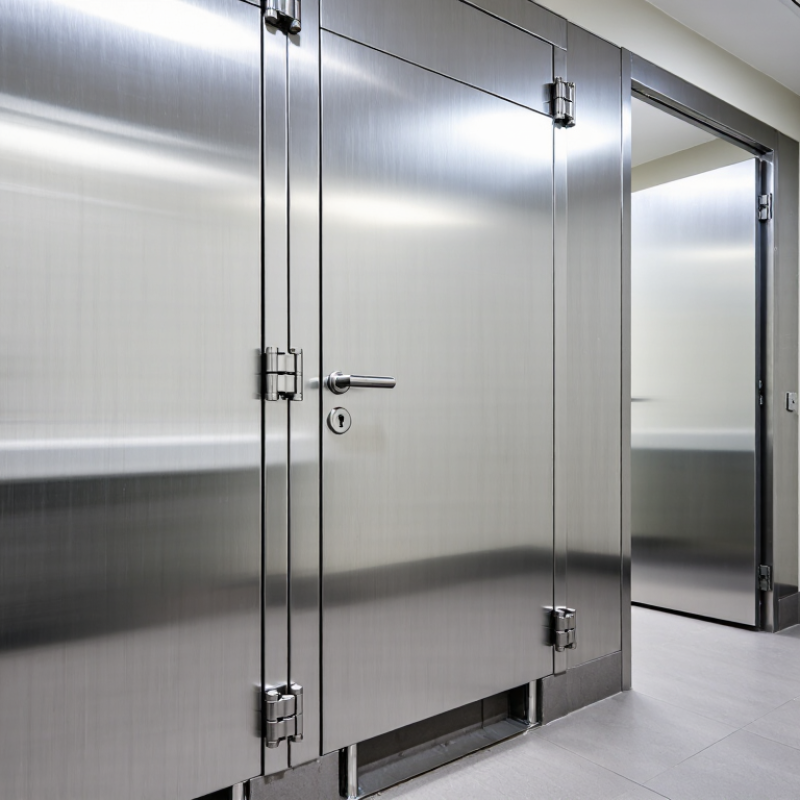
How to Choose the Best Aluminium Washroom Door in 2026?

Define Aluminium Washroom Door Types and Core Construction

Choosing the best aluminium washroom door begins with understanding its type and internal construction. A framed door uses aluminium profiles around a solid panel, offering stable edges and easier hardware installation. A semi-frameless design exposes more of the panel and creates a cleaner appearance. Frameless doors look lighter, but they require accurate wall alignment and stronger hinges. Louvered doors improve airflow, which helps in humid washrooms. They provide less privacy than fully solid panels.

Construction matters more than appearance. A reliable door usually combines a corrosion-resistant aluminium frame, moisture-resistant infill, durable surface skin, and sealed edges. The infill may use compact laminate, PVC-coated board, or a honeycomb structure. Honeycomb cores reduce weight, while compact panels usually resist impact better. Check the panel thickness, corner joints, hinge capacity, and bottom clearance. Small gaps prevent water from trapping against the door.

Measure the opening after wall finishes are complete. This avoids expensive fitting problems. In real installations, uneven floors often create rubbing at the lower corner. A strong frame cannot correct poor site measurements. I have also seen attractive doors fail because their screws rusted near wet floors. Stainless steel hardware and nylon washers are safer choices. Do not assume a heavier door is always better. Excess weight can strain hinges and make daily use uncomfortable. Inspect the latch action, ventilation needs, cleaning routine, and privacy level before selecting the final construction.

How to Choose the Best Aluminium Washroom Door in 2026?

Core construction affects moisture performance, weight, and structural stability. Closed-cell polyurethane foam and aluminium honeycomb are generally preferred for humid washroom environments because they do not readily absorb water. Paper honeycomb can reduce weight and cost, but it requires reliable edge sealing and should be protected from prolonged moisture exposure. The density figures are representative engineering values for commonly used core materials and are not brand-specific specifications.

Assess Moisture Resistance, Strength, Safety, and Privacy Requirements

Choosing the best aluminium washroom door in 2026 requires more than attractive styling. In humid washrooms, inspect the aluminium grade, coating, seals, and hardware. A reliable door should resist swelling, corrosion, and repeated splashes. Ask for moisture-test data, not vague claims.

Check the lower edge carefully. It often receives standing water and cleaning chemicals. From site inspections, I have found that poor drainage can damage doors faster than humidity alone. That lesson is easy to miss.

Choose corrosion-resistant hinges and a frame with proper drainage paths.

Strength matters when doors face busy public use. Look for reinforced profiles, secure hinges, and impact-resistant panels. The door should close smoothly without trapping fingers. Emergency access must remain practical, especially in accessible washrooms.

Privacy depends on more than an opaque panel. Check corridor sightlines, the gap beneath the door, and the lock indicator. A clear occupied signal can reduce awkward interruptions.

However, maximum privacy may conflict with ventilation or emergency visibility. Measure the room and user needs before selecting hardware. I once preferred a tighter gap, but cleaning access became difficult. That choice needed reconsideration.

Tips:

Request a sample corner and operate it repeatedly. Test the lock with wet hands. Examine seals after cleaning. Confirm that fasteners resist corrosion. Record maintenance needs in writing. If specifications seem incomplete, pause and request independent test reports. A cheaper door can become expensive after repeated repairs.

Compare Door Profiles, Hardware, Finishes, and Maintenance Needs

Choosing an aluminium washroom door in 2026 starts with the profile, not the colour. Slim profiles create a cleaner appearance, while wider sections feel more stable in busy facilities. Check the frame depth against the wall condition and floor level. Small gaps can expose the core to moisture. In practical installations, poor measuring causes more trouble than the door itself. I have seen attractive doors scrape after minor floor movement. That detail is easy to miss.

Tips: Select corrosion-resistant hinges, handles, and fixings for humid rooms. Use concealed hardware only when maintenance access remains practical. A privacy indicator should operate smoothly, even with wet hands. Test the latch repeatedly before handover. Do not assume every lock suits every profile.

For finishes, powder coating offers consistent colour and a hard-wearing surface. Textured finishes can hide fingerprints, but their grooves may collect soap residue. Smooth surfaces clean faster. Light colours show grime early, which is useful rather than embarrassing. Clean doors with mild detergent and a soft cloth. Avoid abrasive pads and strong solvents. Inspect hinge screws, seals, and bottom edges every few months. Replace loose components before alignment problems spread. One imperfect choice remains common: selecting appearance first, then discovering that daily cleaning is awkward. A realistic maintenance plan should influence the finish, hardware, and profile together.

How to Choose the Best Aluminium Washroom Door in 2026? — Compare Door Profiles, Hardware, Finishes, and Maintenance Needs

Selection Factor Light-Duty Wet Area
Basic Extruded Profile
General Residential Use
Standard Framed Profile
High-Traffic Commercial Use
Reinforced Framed Profile
Coastal, Healthcare, or Premium Use
Corrosion-Resistant Specification
Door Profile and Construction
Recommended application Private bathroom, utility room, or low-traffic shower area Apartment, house, hotel guest bathroom, or office washroom Shopping centre, school, restaurant, sports facility, or public washroom Seaside building, hospital, laboratory, spa, or high-humidity facility
Typical aluminium alloy 6063-T5 or equivalent architectural extrusion 6063-T5 or 6063-T6 for improved profile strength 6063-T5/T6 with thicker wall sections or internal reinforcement 6063-T5/T6 with carefully specified fasteners and isolated dissimilar metals
Typical door thickness 25–32 mm 30–40 mm 35–45 mm 35–45 mm, selected according to traffic, acoustic, and hygiene requirements
Typical profile wall thickness Approximately 1.2–1.5 mm Approximately 1.5–2.0 mm Approximately 2.0–3.0 mm or reinforced hollow sections Approximately 2.0–3.0 mm; verify engineering calculations for oversized doors
Strength and rigidity Suitable for standard-height doors with moderate use Good balance of rigidity, weight, and cost Best choice for frequent opening, impact, and repeated cleaning High durability when correctly engineered and installed
Water and humidity performance Good when joints are sealed and standing water is avoided Very good for normal indoor washroom humidity Very good; use sealed joints and corrosion-resistant fixings Excellent when drainage, ventilation, sealing, and material compatibility are controlled
Hardware and Functional Performance
Recommended hinges Two stainless-steel or aluminium hinges for a standard-size leaf Two or three stainless-steel hinges, depending on door weight and height Three heavy-duty stainless-steel hinges or a tested adjustable hinge set 316 stainless-steel hinges in marine or salt-exposed environments
Lock and privacy function Basic indicator bolt or turn-button privacy lock Privacy lock with emergency release from the outside Heavy-duty privacy lock with occupancy indicator and emergency release Hygienic, tamper-resistant privacy lock with replaceable components
Handle and pull hardware Anodised aluminium or stainless steel Stainless steel or powder-coated aluminium Stainless steel with concealed or tamper-resistant fixings 316 stainless steel where chloride or salt exposure is expected
Door closer Normally not required for a light private door Optional; use where self-closing is required Recommended for public washrooms and fire or accessibility strategies Use a corrosion-resistant, adjustable closer compatible with the door weight
Bottom clearance Often 10–20 mm, subject to ventilation and accessibility requirements Typically 10–20 mm, coordinated with the floor and threshold Set by accessibility, privacy, ventilation, and local building requirements Coordinate with hygiene, drainage, accessibility, and infection-control requirements
Performance priority Low weight and economical installation Quiet operation, appearance, and easy replacement Cycle durability, impact resistance, and serviceability Corrosion resistance, cleanability, hygiene, and long-term reliability
Surface Finish and Appearance
Anodised aluminium Good option for a clean metallic appearance and normal indoor humidity Durable, colour-stable, and relatively easy to clean Use a commercial-grade anodised finish with an appropriate sealed surface Suitable, but confirm the anodising specification for coastal exposure
Powder coating Suitable for colour selection and routine indoor use Good balance of appearance, protection, and design flexibility Use a properly pre-treated coating system rated for the exposure category Specify a high-durability system and inspect cut edges, scratches, and fixings regularly
Typical coating thickness Approximately 60–80 micrometres for many powder-coated systems Approximately 60–100 micrometres, subject to the coating specification Approximately 70–120 micrometres where a higher-durability system is specified Use the coating manufacturer's tested range; thickness alone does not determine corrosion performance
Gloss and texture choice Low-sheen or medium-sheen surfaces help reduce visible marks Matt or fine-textured finishes conceal fingerprints better than high gloss Fine-textured, low-gloss finishes are practical for high-contact areas Choose a smooth, non-porous finish that tolerates approved cleaning chemicals
Colour stability Good indoors when exposed to limited sunlight Good for interior use; avoid untested strong chemicals Specify a tested system where sunlight or aggressive cleaning is expected Confirm resistance to ultraviolet light, salt, disinfectants, and local cleaning products
Maintenance and Lifecycle Considerations
Routine cleaning Wipe weekly with clean water and a mild, pH-neutral detergent; dry afterward Clean weekly or as required by traffic; remove soap residue and standing moisture Clean daily in high-traffic washrooms, using products approved for the finish Clean daily or according to the hygiene plan; rinse salt and disinfectant residue thoroughly
Hardware inspection Check hinges, lock operation, and screws every 6–12 months Check alignment, closing action, and privacy function every 6–12 months Inspect quarterly or according to the facility maintenance schedule Inspect quarterly and immediately after exposure to salt, harsh chemicals, or impact
Lubrication requirement Use only the lubricant recommended for the lock or hinge; avoid contaminating surfaces Lubricate moving parts when operation becomes stiff or during scheduled servicing Use a planned maintenance interval based on traffic and hardware instructions Use corrosion-compatible lubricants and avoid products that attract dust or damage seals
Products to avoid Avoid abrasive pads, steel wool, strong acids, strong alkalis, chloride-rich cleaners, and prolonged contact with bleach. Always test a cleaning product on an inconspicuous area first.
Common replacement items Privacy lock, hinge screws, strike plate, and perimeter seals Privacy lock, hinges, seals, handles, and alignment shims Hinges, closer components, lock cartridges, handles, seals, and fixings 316 stainless-steel fixings, seals, lock components, and damaged coating sections
Expected service-life guidance Approximately 8–15 years with moderate use and proper maintenance Approximately 10–20 years with normal indoor use and timely hardware replacement Approximately 15–25 years when the profile, hardware, and finish are correctly specified Potentially 15–25+ years, but actual life depends heavily on exposure, cleaning, installation, and maintenance
2026 Buying Recommendation
Best overall choice Choose when initial cost and low weight are the main priorities Choose for most homes, apartments, offices, and hotel bathrooms Choose for public or commercial washrooms with frequent daily use Choose for coastal, healthcare, or chemically demanding environments
Minimum specification to request 6063 architectural aluminium, sealed joints, corrosion-resistant hinges, and a privacy lock 6063-T5/T6 profile, durable anodised or powder-coated finish, stainless-steel hardware, and replaceable seals Reinforced profile, heavy-duty hinges, emergency-release privacy lock, tested finish, and scheduled maintenance access Corrosion-resistant profile system, 316 stainless-steel exposed hardware, compatible finish, sealed interfaces, and documented cleaning procedures
Important verification before purchase Confirm door dimensions, weight, hinge capacity, accessibility clearances, ventilation requirements, wet-area detailing, local building regulations, coating compatibility, and the supplier's tested hardware cycle rating. The values above are typical selection ranges, not a substitute for project-specific engineering or code compliance.

Note: Aluminium alloy, profile thickness, coating thickness, hardware grade, and service-life performance vary by project conditions. In salt-air locations, 316 stainless steel is generally more resistant to chloride exposure than 304 stainless steel, but correct cleaning and installation remain essential.

Match Door Design to Washroom Layout, Traffic, and Accessibility

Choosing the best aluminium washroom door in 2026 starts with the room’s layout, not its appearance. A narrow cubicle row often suits an outward-opening door, especially where internal space is limited. Sliding doors can save valuable clearance, but they need reliable top tracks and careful cleaning access. Measure the door swing, corridor width, basin position, and emergency routes before selecting a design.

Traffic levels also shape the right specification. Busy schools, offices, and transport facilities need strong frames, durable hinges, and surfaces that tolerate frequent cleaning. A lightweight door may feel attractive, but it can loosen sooner under constant use. Soft-close hardware reduces noise near quiet areas. It is a small detail. Still, it matters.

Accessibility requires more than a wider opening. Check clear passage, threshold height, handle position, opening force, and turning space with the completed layout. Requirements differ by location, so confirm the relevant local standards with a qualified professional. Consider users carrying bags or using mobility aids. A door that works on paper may still feel awkward in practice. Site checks often reveal this late, when changes become expensive. That is an avoidable mistake, though not every project gets it right. Choose finishes with visible contrast where needed, and leave enough circulation space for confident, independent movement.

Evaluate Installation Quality, Service Life, and Total Cost in 2026

How to Choose the Best Aluminium Washroom Door in 2026?

A reliable aluminium washroom door begins with accurate site measurement. The installer should check the opening width, height, wall alignment, and floor level before drilling. Small errors can cause rubbing, uneven gaps, or poor privacy. I have seen attractive doors fail because installers rushed this stage. The frame should sit plumb, with secure anchors and evenly spaced fixings. Hinges must open smoothly without pulling the frame out of position. Check the seal around the door, especially near the floor. Water, cleaning chemicals, and frequent impact test every weak point.

Service life depends on the alloy, surface treatment, hardware, and daily maintenance. Ask how the finish resists moisture, scratches, and corrosion. Stainless or protected fasteners usually reduce future staining. A door used in a busy facility needs stronger hinges than one used occasionally. Not every “heavy-duty” claim is meaningful. Request test data, installation records, and clear maintenance instructions. Total cost includes delivery, labor, adjustments, cleaning, replacement hardware, and future repairs. A cheaper door may become expensive after repeated hinge failures. Compare realistic costs over ten years, not only the purchase invoice. Leave room for uncertainty. Actual service conditions can be harsher than the product specification.

FAQS

Which aluminium washroom door type suits a humid room?

Louvered doors improve airflow in damp washrooms. They reduce privacy compared with solid panels. Choose solid panels when privacy matters more.

What core construction should an aluminium washroom door have?

Look for a corrosion-resistant frame, moisture-resistant infill, durable skin, and sealed edges. Compact panels handle impacts well. Honeycomb cores reduce weight. Check thickness and corner joints carefully.

How should the washroom door opening be measured?

Measure after wall finishes and flooring are complete. Check the floor level, wall alignment, swing, and bottom clearance. Uneven floors can make the lower corner scrape. Small gaps matter.

Which hardware works best in wet washrooms?

Use corrosion-resistant hinges, handles, screws, and fixings. Stainless steel hardware with nylon washers helps near wet floors. Test the latch with wet hands. Do not assume every lock fits every profile.

Are slim aluminium profiles always the best choice?

Slim profiles create a clean appearance. Wider sections may feel more stable in busy facilities. Match frame depth with the wall condition and floor level. Appearance can mislead.

Which finish is easiest to maintain?

Smooth finishes usually clean faster. Textured surfaces hide fingerprints but may collect soap residue. Use mild detergent and a soft cloth. Avoid abrasive pads and strong solvents.

What door design suits a narrow washroom layout?

Outward-opening doors often preserve internal cubicle space. Sliding doors save clearance but need cleanable top tracks. Measure the corridor, basin position, swing, and emergency routes. Small layout errors become expensive.

How can a washroom door support accessibility?

Check clear passage, threshold height, handle position, opening force, and turning space. Consider people carrying bags or using mobility aids. Visible contrast may improve door recognition. A compliant drawing can still feel awkward in practice.

Conclusion

Choosing the best Aluminium Washroom Door in 2026 requires more than selecting an attractive surface. First, understand the available door types and core construction, including framed, semi-frameless, and solid-panel options. Assess the door’s resistance to moisture, corrosion, impact, and daily wear, while also considering safety, privacy, ventilation, and hygienic performance. Strong aluminium profiles, reliable hinges, secure locks, and suitable panel materials can improve durability and user comfort in demanding washroom environments.

The design should match the layout, traffic level, and accessibility needs of the facility. Sliding, hinged, or outward-opening doors may each suit different spaces, while clearances and easy operation are important for inclusive access. Compare finishes, hardware quality, cleaning requirements, and long-term maintenance before making a decision. Finally, evaluate installation accuracy, expected service life, warranty support, replacement needs, and total ownership cost. A well-selected Aluminium Washroom Door should balance appearance, performance, safety, and value throughout its working life.

Evelyn

Evelyn

Evelyn is a dedicated marketing professional with a strong understanding of the company’s products, customers, and evolving market needs. With a background in strategic communication, content planning, and digital marketing, Evelyn transforms complex product information into clear, practical, and......