
Window Wurx Industry Co., Ltd. — China's Trusted Aluminum Windows & Doors Manufacturer Since 1993

  • English
  • Español
  • Français
  • Deutsch
  • Italiano
  • Português
  • Nederlands
  • Русский
  • العربية
  • 中文
0%

Choosing the right Aluminum Door manufacturer now requires more than comparing prices and catalog photographs. Global buyers must examine thermal performance, corrosion resistance, production consistency, certification, and after-sales support. The International Energy Agency’s Buildings 2023 report states that buildings consume about 30% of global energy and create approximately 26% of energy-related emissions. Door systems therefore influence comfort, operating costs, and broader sustainability goals.

This guide, “Top 10 Aluminum Door Manufacturers for Global Buyers,” evaluates established suppliers through practical purchasing criteria. These include manufacturing experience, export capability, profile quality, hardware compatibility, testing evidence, customization options, and documented quality systems. The International Aluminium Institute identifies building and construction as a major aluminum market, reinforcing the material’s importance in modern façades and entrances. Still, recycled content claims need careful verification. Marketing language is not proof.

Look closely at the details.

A dependable manufacturer should provide section drawings, performance data, finish specifications, and installation guidance. Buyers should also confirm air leakage, water penetration, wind-load, acoustic, and thermal test results for the exact door configuration. Standards such as ISO 9001 can indicate process discipline, but certification alone cannot guarantee product performance. Factory audits, sample inspections, and reference projects remain valuable.

This list is not a universal verdict. Regional climate, building codes, logistics, budget, and project scale can change the best choice. A manufacturer serving high-rise projects may not suit a coastal villa or a replacement-door program. Some rankings may also reflect publicly available information rather than confidential factory data. That limitation deserves honesty. Use this overview as a focused starting point, then validate every technical and commercial claim before signing a purchase agreement.
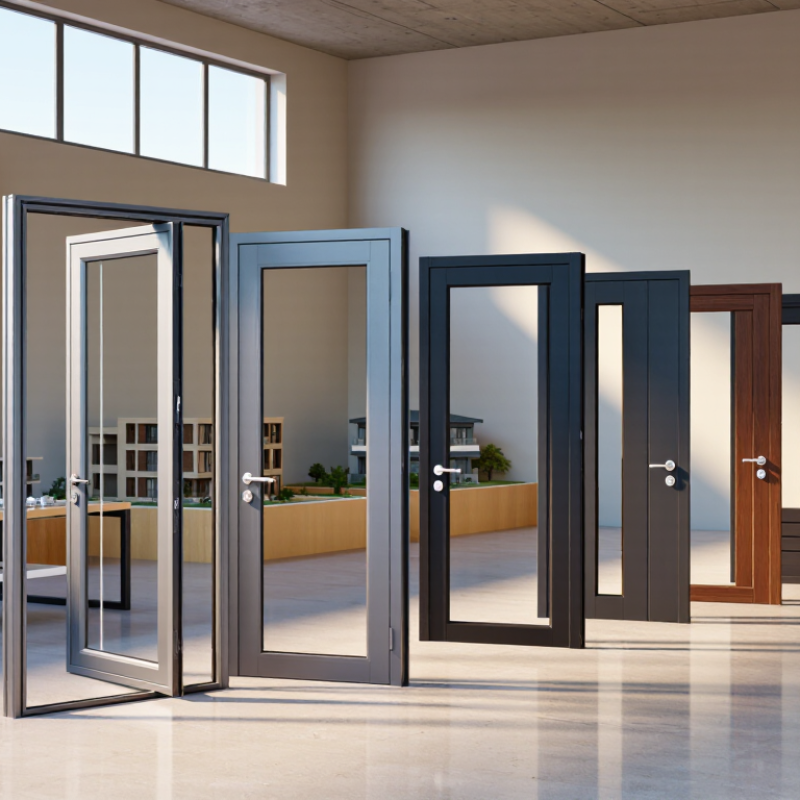
Top 10 Aluminum Door Manufacturers for Global Buyers

Aluminum Door Industry Overview for Global Buyers

The global aluminum door industry is shaped by durability, energy efficiency, and flexible design. Buyers often compare the top 10 manufacturers by more than price. They examine alloy grades, profile thickness, hardware quality, and production consistency. Aluminum doors suit hotels, apartments, offices, and coastal homes. Powder-coated finishes can resist fading, but poor preparation still causes peeling. Factory experience matters.

Reliable manufacturers should provide test reports for air leakage, water resistance, wind pressure, and thermal performance. These documents must match the intended market and project conditions. Ask for drawings, installation guides, warranty terms, and replacement-part policies. A strong supplier also explains lead times clearly.

During factory evaluations, I would inspect corner joints, drainage channels, gasket fitting, and packaging protection. Small gaps often reveal larger quality problems. Yet, even careful inspections cannot remove every risk. Samples may perform better than mass production, so batch control deserves attention.

Tips:
Request a full-size sample before placing a large order. Confirm opening direction, glass specification, finish code, and pallet dimensions. Check coastal corrosion protection when the project is near saltwater. Do not accept vague claims such as “premium quality.” Demand measurable evidence, and compare identical specifications across suppliers. Local installers should also review tolerances, because a well-made door can fail when the opening is poorly prepared.

How to Evaluate Aluminum Door Manufacturers

Choosing among the top 10 aluminum door manufacturers requires more than comparing online prices. Start with documented performance, factory experience, and project references.

The International Energy Agency reports that buildings consume about 30% of global final energy. Door insulation therefore deserves serious attention, especially in hot or cold regions.

Ask for evidence.

Request thermal-transmittance reports, air-infiltration results, water-resistance tests, and wind-load data. Check whether an independent laboratory issued these documents.

The U.S. Department of Energy notes that windows and doors can represent 25% to 30% of residential heating and cooling energy use.

A reliable manufacturer should explain its thermal-break design, gasket quality, glass configuration, and drainage path in practical terms.

Inspect aluminum alloy specifications, coating thickness, color consistency, and hardware cycles.

Confirm production capacity, quality-control records, packaging methods, and replacement-part availability. Visit the factory when possible. A video tour is useful, but it cannot reveal every process weakness.

Samples can mislead. Compare full-size corner joints, not only polished showroom pieces. Review warranty exclusions carefully, particularly for coastal corrosion, extreme temperatures, and installation errors.

The World Green Building Council links material choices with long-term building performance, yet supplier claims still require verification. A scorecard helps, but it is never perfect.

In my experience, delivery reliability and communication often matter as much as laboratory results.

Profiles of the Top 10 Aluminum Door Manufacturers

Profiles of the Top 10 Aluminum Door Manufacturers

Global buyers often compare manufacturers by product range, testing records, and delivery experience.

The first profile is a precision-focused producer, known for narrow frame systems and clean architectural lines.
The second serves residential projects, offering insulated doors with practical hardware choices.
A third specializes in thermally broken profiles for colder climates.
The fourth focuses on coastal construction, using protective finishes and corrosion-resistant components.
Another manufacturer supports large commercial entrances, where cycle testing and stable dimensions matter.
The sixth combines aluminum with glass for modern villas and offices.
The seventh provides custom colors, unusual sizes, and small-batch production.
The eighth is valued for export packaging and documented quality checks.
The ninth develops energy-conscious systems, though its premium pricing may challenge smaller projects.
The tenth offers flexible lead times, but buyers should verify production capacity during busy seasons.
Tips: Request test reports, finish samples, installation drawings, and hardware specifications before placing an order. Confirm the door’s wind, water, and air performance for the target location. Ask how rejected components are recorded. A confident supplier should answer clearly.
Experience shows that attractive samples can hide weak seals or inconsistent corners. Factory audits, video inspections, and reference projects improve purchasing confidence.
Still, no manufacturer is flawless. One may excel in engineering but struggle with communication. Another may offer fast production but limited customization.

Buyers should compare evidence, not promises, and record every technical requirement in writing. Small details matter.

Product, Quality, and Export Capability Comparison

When comparing the Top 10 Aluminum Door Manufacturers for Global Buyers, examine products beyond catalog photos. Check frame thickness, alloy grade, thermal breaks, glass options, hinges, locks, and drainage design. A reliable manufacturer should provide tested specifications, section drawings, and sample units. Ask how doors perform in coastal air, heavy rain, heat, or freezing weather. Beautiful finishes can still hide weak corner joints.

Quality depends on process control. Review cutting accuracy, welding or crimping methods, powder-coating thickness, and final inspection records. Experienced suppliers usually explain tolerances clearly and report defects honestly. That matters. I would also compare warranty terms, replacement-part access, and packaging strength. Some suppliers offer impressive samples but change components during mass production. This risk deserves direct questioning.

Tips: Request one production sample before placing a large order. Confirm carton dimensions, container loading plans, labeling, and export documents. Compare lead times during busy seasons, not only standard estimates. Check whether the supplier has experience with your destination’s building requirements and import procedures. Ask for references from similar projects, while remembering that one successful shipment proves little. A practical scorecard can compare product range, test evidence, inspection discipline, communication speed, and shipping reliability. Price should remain important, but it should not quietly replace performance.

Top 10 Aluminum Door Manufacturers for Global Buyers - Product, Quality, and Export Capability Comparison

Rank Supplier Code Primary Product Range Common Aluminum Alloys Door System Types Thermal Performance Maximum Typical Door Size Surface Finishes Quality & Compliance Indicators Customization Capability Typical Export Regions Indicative Production Lead Time Export Capability Score
1 Supplier 01 Aluminum entrance, patio, sliding, folding, and commercial doors 6063-T5/T6; 6061-T6 for heavy-duty components Thermal-break, lift-and-slide, multi-panel folding Thermal-break systems available; typical U-value range: 1.4–2.2 W/m²K, depending on glazing Up to 3,600 mm height; panel width subject to system load limits Powder coating, anodizing, wood-effect coating ISO 9001 quality system; air, water, and wind-load testing available by project High: profile color, glass specification, hardware, dimensions, and packaging North America, Europe, Middle East, Southeast Asia 25–40 working days ★★★★★
2 Supplier 02 Residential windows and aluminum doors for new-build projects 6063-T5/T6 Sliding, hinged, French, and tilt-and-slide doors Thermal-break and non-thermal systems; glazing options up to triple glass Up to 3,000 mm height Powder coating, anodized, fluorocarbon coating Documented profile inspection; project testing for water tightness and wind resistance High: custom colors, screen doors, glazing, opening configurations Europe, Australia, New Zealand, Africa 30–45 working days ★★★★★
3 Supplier 03 Commercial storefront, office partition, and entrance door systems 6063-T5; reinforced 6061 components Storefront, pivot, automatic-compatible, and framed glass doors Primarily commercial systems; thermal-break options available Up to 3,200 mm height Powder coating, anodizing, PVDF-type coating Project-based structural calculations; applicable safety-glass documentation High: mullion design, hardware preparation, glass, access-control integration North America, Europe, Gulf countries, Latin America 35–50 working days ★★★★☆
4 Supplier 04 Premium residential sliding, bifold, and large-opening doors 6063-T5/T6 Lift-and-slide, slim-frame sliding, bifold, and corner-opening systems High-performance thermal-break systems; double and triple glazing compatible Up to 3,500 mm height; large panels subject to engineering review Powder coating, anodizing, textured and wood-grain finishes Performance testing available for air permeability, water tightness, and wind resistance Very high: slim sightlines, corner posts, custom tracks, glazing, and hardware Europe, North America, Australia, Middle East 40–60 working days ★★★★☆
5 Supplier 05 Standard aluminum doors for housing, hospitality, and renovation projects 6063-T5 Hinged, sliding, balcony, and entrance doors Non-thermal and thermal-break options; typical double-glazing configurations Up to 2,800 mm height Powder coating and anodizing Factory quality inspection; product documentation supplied for export orders Medium to high: colors, glass, locking points, dimensions, and accessories Southeast Asia, Africa, Middle East, Eastern Europe 20–35 working days ★★★★☆
6 Supplier 06 Fire-rated, acoustic, and security-oriented aluminum door assemblies 6063-T5; reinforced aluminum profiles Hinged, double-leaf, glazed, and specialized commercial doors Thermal-break options; acoustic and fire-performance specifications depend on tested assembly Up to 2,700 mm height for standard configurations Powder coating and anodizing Third-party test reports available for selected fire, acoustic, and security assemblies Medium: hardware, glass, door leaf size, finish, and access-control preparation Europe, Middle East, Africa, Southeast Asia 45–65 working days ★★★★☆
7 Supplier 07 Economical aluminum doors for residential and light-commercial applications 6063-T5 Sliding, hinged, screen, and balcony doors Mostly non-thermal systems; selected thermal-break configurations Up to 2,600 mm height Powder coating, anodized, wood-effect finish Routine dimensional and coating inspection; project certification subject to order scope Medium: profiles, colors, glass types, handles, and packaging Africa, South Asia, Southeast Asia, Middle East 20–30 working days ★★★☆☆
8 Supplier 08 Architectural aluminum doors for villas, hotels, and high-end residences 6063-T5/T6; 6061-T6 for structural parts Pivot, oversized hinged, lift-and-slide, and bifold systems Thermal-break systems with low-E double or triple glazing compatibility Up to 4,000 mm height after structural assessment Powder coating, anodizing, PVDF-type and textured coatings Project engineering, sample approval, and performance testing available Very high: oversized openings, concealed drainage, custom profiles, glass, and hardware North America, Europe, Middle East, Australia 45–70 working days ★★★★☆
9 Supplier 09 Replacement and renovation door systems for residential buildings 6063-T5 Hinged, sliding, French, and terrace doors Thermal-break and retrofit-friendly systems; glazing selected by climate zone Up to 2,900 mm height Powder coating and anodizing Installation manuals, dimensional drawings, and batch inspection records available High: replacement dimensions, thresholds, opening direction, glass, and color Europe, North America, Oceania, Middle East 30–45 working days ★★★★☆
10 Supplier 10 Project-based aluminum door packages for residential developments 6063-T5/T6 Sliding, hinged, entrance, balcony, and service doors Thermal and non-thermal options; performance varies by profile and glazing package Up to 3,100 mm height Powder coating, anodizing, wood-effect coating Pre-shipment inspection, packing specifications, and project documentation available High: system selection, colors, glass, hardware, labeling, and container loading plans Latin America, Africa, Southeast Asia, Middle East 25–45 working days ★★★☆☆

Key Factors for Selecting the Right Manufacturer

Choosing among the top 10 aluminum door manufacturers requires more than comparing catalog prices. The manufacturer should understand your climate, building type, and installation conditions. The IEA’s Buildings 2023 report states that buildings consume about 30% of global final energy. Door performance therefore affects long-term operating costs, not just appearance. Ask for tested U-values, air leakage results, water resistance, and thermal-break specifications.

Production control matters just as much. Check whether the factory follows ISO 9001 procedures and can provide batch records, material certificates, and inspection photographs. Test reports should reference recognized standards, such as EN 14351-1 or ASTM methods for air, water, and structural performance. A polished sample proves little. A traceable production system proves more. Still, certificates can be outdated or limited to one product series, so verify their scope and issue date.

Export experience deserves close attention. Request packaging drawings, loading plans, spare-part policies, and clear warranty terms. The World Bank’s Logistics Performance Index 2023 shows major differences in customs, tracking, and delivery reliability across markets. A capable manufacturer should explain these risks before receiving an order. Communication is another practical test; delayed answers during sampling may become serious problems during installation. The cheapest quotation may look attractive and still exclude testing, hardware, or protective packaging. That mistake is common. A factory audit, independent inspection, and small trial order can expose weaknesses early, although they also require time and budget.

Top 10 Aluminum Door Manufacturers for Global Buyers

Key Factors for Selecting the Right Manufacturer

This 100-point buyer scorecard summarizes the practical criteria global purchasers commonly use when comparing aluminum door manufacturers. Product quality, thermal performance, certifications, customization, production capacity, delivery reliability, warranty support, sustainability, export experience, and total cost are evaluated without displaying company or brand data.

FAQS

What should global buyers compare when choosing aluminum door manufacturers?

Compare alloy grade, frame thickness, hardware, testing records, lead times, and production consistency. Price alone can mislead.

Which performance reports should a supplier provide?

Request reports for air leakage, water resistance, wind pressure, and thermal performance. The reports should match your project conditions.

Why is a full-size sample important?

A full-size sample reveals corner gaps, drainage problems, gasket fitting, and opening direction. Small gaps matter.

Can an attractive sample guarantee mass-production quality?

No. Some batches may use different components or weaker seals. Production samples and batch records deserve careful review.

What details should buyers confirm before placing a large order?

Confirm glass type, finish code, opening direction, pallet dimensions, carton size, and installation tolerances.

How can buyers assess coating and corrosion protection?

Request finish samples and coating details. Coastal projects need stronger corrosion protection because salty air attacks exposed components.

What should a factory inspection include?

Inspect cutting accuracy, corner joints, drainage channels, gasket fitting, coating consistency, packaging, and final inspection records.

How should buyers compare export capability?

Review destination experience, shipping documents, container loading plans, labeling, replacement parts, and delivery performance during busy seasons.

What role do local installers play?

Installers should check opening sizes and tolerances before installation. A well-made door can fail in a poorly prepared opening.

Is the lowest price usually the best choice?

Not necessarily. Compare identical specifications, test evidence, warranty terms, and replacement support. I would still question every unusually low quote.

Conclusion

This guide provides global buyers with a practical overview of the Aluminum Door industry, including major product categories, common applications, material options, and evolving market expectations. It explains how to evaluate manufacturers by examining production capacity, engineering expertise, quality control systems, customization services, certifications, lead times, communication, and after-sales support. The article also introduces ten representative manufacturer profiles based on their product range, manufacturing strengths, export experience, and ability to serve different project requirements.

A clear comparison of product quality, design flexibility, energy efficiency, durability, packaging, logistics, and international delivery capability helps buyers identify the most suitable partners. The final section highlights key selection factors, such as project specifications, budget, order volume, technical support, compliance documentation, and long-term cooperation potential. By applying these criteria systematically, buyers can reduce sourcing risks, improve purchasing efficiency, and select an Aluminum Door manufacturer that offers reliable performance, consistent quality, and dependable service for residential, commercial, and architectural projects.

Amelia

Amelia

Amelia is a highly skilled marketing professional dedicated to helping businesses understand products, market trends, and practical solutions that support sustainable growth. With extensive knowledge of the company’s offerings, she combines product expertise with clear communication to create......