
Window Wurx Industry Co., Ltd. — China's Trusted Aluminum Windows & Doors Manufacturer Since 1993
Choosing among the 10 Best Aluminium Windows and Doors Suppliers for Global Buyers takes more than comparing catalogues. A slim frame may look elegant in a showroom, but buyers also need to examine thermal-break design, glazing options, finish durability, and documented test results. Small details matter. Ask for specifications that match the project’s climate, building type, and local requirements—not just a polished product sheet.
Building scientist Dr. Joseph Lstiburek has put the challenge plainly: “Windows are holes in walls.” His reminder helps explain why frame performance, installation details, and glass selection deserve equal attention. A supplier should be able to provide clear technical documents, relevant project references, realistic lead times, and responsive after-sales support. For international orders, clarify packaging, shipping responsibilities, warranty coverage, and who handles questions after delivery. A low quoted price can lose its appeal when answers are vague.
This guide compares ten suppliers through practical considerations for global buyers, including product range, customization, quality evidence, and export readiness. The ranking is a useful starting point, not a universal verdict. A company suited to a coastal hotel may not fit a small residential renovation. And supplier claims still need checking. Request current documentation and confirm that proposed products meet the project’s applicable standards before committing. The best choice is not always the most famous name; it is the one whose capabilities and communication hold up under close review.
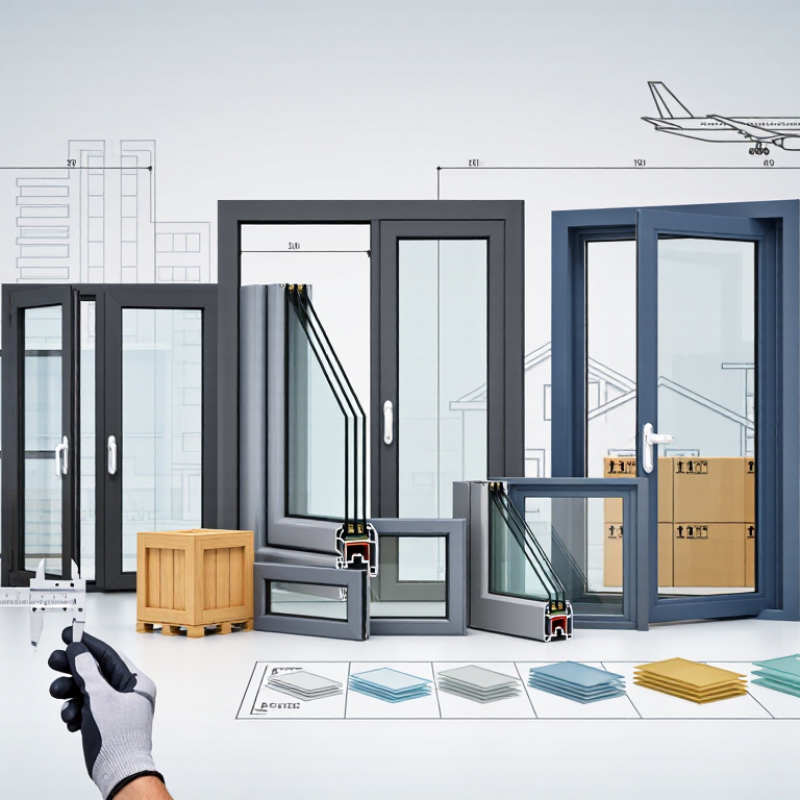
Choosing an aluminium window or door supplier involves more than comparing frame prices. Ask how the profiles, thermal breaks, seals, and glazing work together in the specified opening. A slim frame may look attractive, but it can perform poorly if drainage or weather seals are overlooked. Request drawings, material specifications, and test reports for the exact configuration you plan to buy. A report for a different size or glass build-up may not answer your questions.
Check how the supplier handles different climates, transport, and installation details. For example, confirm the surface finish, hardware corrosion resistance, and packaging method before ordering. Ask for clear lead times and a written process for damaged units or measurement changes. Small details matter. A neat catalogue can still leave gaps; I would not rely on product photos alone. Compare service responsiveness as carefully as technical data.
Tips: Send the supplier your opening sizes, glass requirements, project location, and expected delivery date. Ask who verifies measurements and whether installation guidance is available. Keep approved drawings and specifications together, so the delivered frames can be checked against what you ordered.
Evaluating Aluminium Window and Door Suppliers
A supplier’s catalogue can look convincing. The test reports matter more. The International Energy Agency’s 2023 Global Status Report says buildings use about 30% of global final energy and produce 26% of energy-related emissions. That makes verified thermal performance a practical purchasing concern, not a decorative specification. Ask for tested U-factor and solar heat gain coefficient values for the exact frame and glazing combination. A generic product sheet may not match your project.
The U.S. Department of Energy estimates that heat gain and loss through windows account for 25–30% of residential heating and cooling energy use. Request independent air-leakage, water-penetration, and structural test results, then check that sizes and configurations resemble your order. Inspect a physical sample: look for consistent corner joints, smooth hardware action, intact thermal breaks, and an even coating. Ask how alloy, finish, glass, and hardware batches are traceable. Confirm packaging, spare-part availability, lead times, and written warranty terms in advance. A factory audit can help, but one visit cannot prove every shipment will be consistent. I would still compare delivered samples with the approved drawings. That step is easy to skip.
| Evaluation Dimension | What to Check | Useful Evidence to Request | Why It Matters |
|---|---|---|---|
| 1. Product and Project Experience | Check whether the supplier regularly makes the window and door types, opening styles, sizes, and project quantities your specification requires. | Product catalogue, project references with permission, sample drawings, and examples of comparable completed work. | Relevant experience helps confirm that the supplier understands the product details and coordination your project requires. |
| 2. Applicable Standards and Compliance | Confirm which building-code and product requirements apply in the destination market, then check that the proposed products meet them. | Current certificates or declarations, test reports, and documentation identifying the tested product configuration and applicable standard. | Requirements differ by country and project. A certificate for one market or product configuration may not establish compliance for another. |
| 3. Verified Performance | Review documented air leakage, water penetration, structural performance, and other tests required by the project specification. | Laboratory reports showing test methods, results, specimen details, and the issuing laboratory. | Test results help buyers compare performance using evidence rather than general claims. |
| 4. Thermal and Energy Performance | Compare whole-window thermal transmittance and, where relevant, solar heat gain and visible-light performance. | Product-specific calculations or test reports for the specified frame, glazing, spacers, and dimensions. | Performance depends on the complete assembly; values for glass alone do not describe the whole window or door. |
| 5. Materials and Finish | Specify the aluminium profile, glazing, seals, coatings, and hardware, including finish requirements for the installation environment. | Written material and finish specifications, finish samples, and applicable coating or corrosion-resistance documentation. | Clear specifications make products easier to compare and help reduce substitutions that do not meet project requirements. |
| 6. Customization and Shop Drawings | Check the supplier’s ability to produce project-specific sizes, configurations, colours, and interfaces with the building envelope. | Sample shop drawings, opening schedules, technical submittals, and a documented drawing-approval process. | Approved drawings help coordinate dimensions, operation, glazing, hardware, and installation details before production. |
| 7. Quality Control and Traceability | Ask how incoming materials, fabrication, assembly, inspection, and finished-product checks are controlled and recorded. | Quality procedures, inspection records, non-conformance process, and batch or order traceability information. | Documented controls make it easier to identify issues and verify that delivered products match the approved specification. |
| 8. Production Capacity and Lead Time | Assess whether the supplier can meet the project quantity, production schedule, and required delivery sequence. | Written production schedule, capacity plan, milestone dates, and details of how schedule changes are communicated. | A realistic, documented schedule supports coordination with construction and installation activities. |
| 9. Packaging and International Shipping | Review how products are protected, labelled, packed, and prepared for the agreed transport method and delivery location. | Packing specifications, shipment documentation checklist, delivery terms, and a process for reporting transit damage. | Suitable packaging and clear shipping responsibilities help buyers plan delivery and manage damage claims. |
| 10. Warranty and After-Sales Support | Read the warranty terms for frames, finishes, glazing, hardware, and workmanship, and confirm how technical issues are handled. | Written warranty conditions, exclusions, claim procedure, spare-parts policy, and named service contact or response process. | Clear support and warranty terms help establish responsibilities after delivery and during product use. |
International buyers comparing ten aluminium window and door suppliers should look beyond polished catalogue photographs. Export readiness shows in practical details: documented thermal performance, corrosion-resistant finishes, secure packaging, and clear installation guidance. Ask how suppliers protect frame corners and glass during long-distance shipping. Small gaps matter.
The 2023 Global Status Report for Buildings and Construction, published by UNEP and GlobalABC, estimated that buildings and construction accounted for 34% of global energy demand and 37% of energy- and process-related carbon dioxide emissions in 2022. These sector-wide figures make insulation performance an important comparison point, not a guarantee of product quality. Request test reports for whole-window U-values, air leakage, and water penetration. Check that the tested configuration matches the product being quoted.
A useful shortlist of ten suppliers should include manufacturers with distinct strengths: large-volume production, custom sizing, coastal-grade finishes, or support for complex glazing specifications. Compare sample lead times, replacement-part availability, and the clarity of technical documents. Not always. A low quoted price can become costly when packing, delivery, or installation requirements are unclear. I would verify each claim against current test documents and a sample order before committing to a full shipment.
Approximate density of common window and door frame materials, in grams per cubic centimetre (g/cm³).
Aluminium has a lower density than carbon steel. Actual values vary by alloy, grade, and formulation; this chart compares materials, not individual suppliers.
Choosing aluminium window and door suppliers requires more than comparing catalogue prices. Compare frame depth, alloy specification, thermal-break design, glazing options, and drainage details. Ask for documented U-factor and solar heat gain coefficient (SHGC) values; lower U-factors generally reduce heat transfer, while suitable SHGC depends on climate and orientation. Small details matter. A sample corner joint can reveal seal quality and finish consistency.
Certifications need context. ISO 9001 indicates a quality-management system, but it does not prove that a specific window passes performance tests. Request current air-leakage, water-penetration, and structural-load reports for the exact product configuration. Check the test method, laboratory, and report date. The Global Alliance for Buildings and Construction and UNEP reported that buildings and construction accounted for 32% of global energy demand and 34% of energy-related CO₂ emissions in 2023. That makes verified thermal performance more than a brochure claim.
Manufacturing capability is equally practical. Confirm whether the supplier controls extrusion, thermal-break assembly, coating, glazing, and final inspection, or outsources key stages. Ask about batch traceability, production capacity, packaging, and realistic lead times. Factory photos help, but they are not proof. A live production review is better, though not always possible. Even strong suppliers may have gaps; record them and compare evidence, not promises.
Selecting an aluminium windows and doors supplier starts with a clear project brief. List opening sizes, finish, thermal performance, hardware, delivery dates, and installation conditions. Specify measurable requirements, such as whole-window U-values and tested air, water, and wind resistance. The UNEP Global Status Report for Buildings and Construction 2023/24 estimates that buildings and construction account for 34% of global energy demand. That figure covers the wider sector, not windows alone, but it shows why product performance deserves careful checking.
Request technical drawings, test reports, material specifications, and references for comparable projects. Confirm that reported performance applies to the complete window assembly, not just the glass. Ask how the supplier controls frame tolerances, corner joints, coatings, and packaging. A factory audit or live production review can reveal details missing from a polished catalogue. Compare quotations line by line; a low price may exclude installation accessories, spare parts, or protective crating. I would still verify lead times in writing. Delays happen.
Tips: Send the same specification to every bidder. Ask for a physical corner sample and finish swatch before approval. Check the warranty, payment milestones, shipping terms, and after-sales response process. Keep one signed specification as the reference for production. Small omissions matter.
Ask for whole-window U-values and solar heat gain values for your exact frame and glazing combination. Generic figures may not match your order.
Request current air-leakage, water-penetration, and structural-load reports. Check the tested sizes, configuration, laboratory, and report date. Details matter.
Inspect corner joints, coating, thermal breaks, and hardware movement. A finish swatch and corner sample can reveal uneven surfaces or loose seals.
Not by themselves. A quality-management certificate describes a system; product-specific test reports show how a tested window performed.
Ask who handles extrusion, thermal-break assembly, coating, glazing, and final inspection. Confirm how material and finish batches are traced.
Send every bidder the same specification. Check whether prices include accessories, spare parts, protective packaging, and installation-related items. Low prices can omit details.
Request written lead times, shipping terms, and payment milestones. Delays happen. I would still compare the promised schedule with production capacity.
Keep signed drawings and specifications as the reference. Confirm warranty terms, after-sales response, packaging, and spare-part availability. One factory visit cannot prove every shipment will match.
This guide helps global buyers understand what to consider when sourcing Aluminium Windows & Doors, from material performance and product options to dependable supply and communication across markets. It explains how to assess suppliers by reviewing their experience with international orders, product range, quality-control processes, customization capabilities, production capacity, and ability to provide relevant certifications and technical documentation.
The article also introduces ten suppliers serving international markets and outlines practical ways to compare their products, manufacturing capabilities, and service offerings. Buyers can use a structured sourcing process: define project requirements, request specifications and quotations, verify documentation, clarify production and delivery expectations, and compare suppliers against consistent criteria. Careful preparation can help buyers identify a suitable partner for their project, budget, and delivery needs.