
An Aluminum Door With Window can make a modern home feel brighter and more connected to the garden, while keeping the clean lines many homeowners want. Yet the glass and frame must do more than look good. The U.S. Department of Energy’s Energy Saver guidance estimates that heat gain and heat loss through windows account for 25%–30% of residential heating and cooling energy use. That figure concerns windows, not glazed doors specifically, but it highlights why glass area, seals, and installation deserve attention.
Building-science expert Dr. Joseph Lstiburek is known for the blunt reminder, “Windows are holes in walls.” It is a useful way to think about a glazed door, too: the opening can bring in daylight, but it can also become a weak point if poorly specified or fitted. Look for published U-factor and solar heat gain coefficient ratings, such as those provided through the National Fenestration Rating Council’s labeling program. Then consider the details you will notice every day: a slim black frame against pale siding, a threshold that is easy to cross, and hardware that feels solid in your hand.
Looks are not enough. A large glass panel may brighten a room, yet still feel uncomfortable in direct afternoon sun. The right choice depends on climate, orientation, privacy, and maintenance—not just a showroom display. The options below compare seven aluminum door styles with windows, noting where each can suit a modern home and where it may require a second look. Details matter.
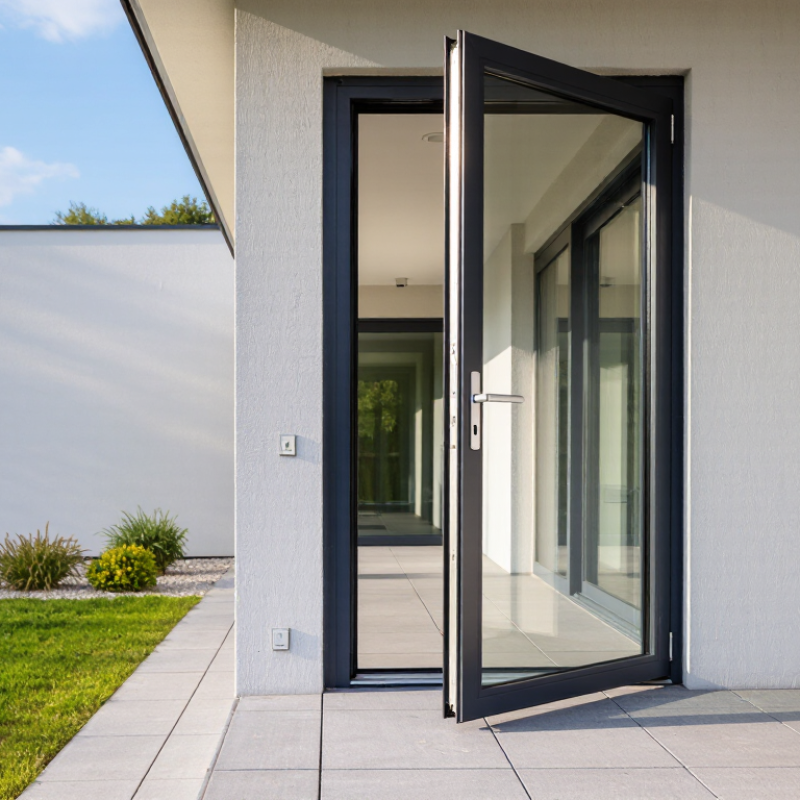
Understanding Aluminum Doors With Windows
Aluminum doors with windows pair a slim, strong frame with glazed panels that bring daylight into an entry or patio. Aluminum resists rust, but its surface finish can still scratch or fade over time. Look closely at frame construction: a thermal break separates the exterior and interior metal, helping reduce heat transfer. Glass type, weather seals, and careful installation also affect comfort and drafts. Details matter.
Window placement changes how a door feels in daily use. A tall glass panel can brighten a shaded hallway, while a low panel may offer a view of the garden. But more glass can mean less privacy and stronger afternoon glare. Frosted glazing or a small overhang may help. A small admission: the brightest option is not always the most comfortable. Check the door’s performance ratings against your climate, and confirm that the opening is measured accurately before ordering.
Tips: Ask how the glass handles heat and whether replacement panes are available. Inspect corner joints and seals in person when possible. If the door faces harsh sun, compare glazing options before choosing a frame color. Even a well-made door can disappoint if it is poorly fitted.
| Door Type | Typical Planning Size (W × H) | Window Configuration | Best Suited For | Key Considerations |
|---|---|---|---|---|
| Single Hinged Entry Door | 36 × 80 in (914 × 2,032 mm) | One large glazed panel, a vertical vision panel, or smaller divided lites | Main entrances, side entrances, and compact porches | Offers a familiar swing-door layout. Confirm the handing, swing clearance, threshold, and glass privacy level before ordering. |
| Double Hinged Door | 72 × 80 in (1,829 × 2,032 mm) overall | Glazed panels in one or both door leaves; optional sidelights | Wide entryways and rooms opening onto patios | Creates a broad opening but needs clear floor space for the swing. Check how the inactive leaf is secured and whether the opening suits everyday use. |
| Aluminum Sliding Door | 72 × 80 in (1,829 × 2,032 mm) overall | Large glazed panels, commonly arranged as two or more sliding sections | Patios, balconies, and spaces where a swinging door would obstruct furniture | Does not require swing clearance. Track drainage, roller adjustment, weather seals, and the size of the usable opening are important. |
| Aluminum Bifold Door | 144 × 80 in (3,658 × 2,032 mm) overall | Multiple glazed leaves that fold and stack to one or both sides | Wide openings between living areas and outdoor spaces | Provides a wide opening when folded, but needs stacking space and a suitable head track. Check panel weight, threshold design, and operating hardware. |
| Pivot Entry Door | 48 × 96 in (1,219 × 2,438 mm) | Large glazed panel or a combination of glass and opaque infill | Contemporary entrances with generous wall and floor space | Pivot placement affects the opening path and clear passage width. Large or heavy glazed panels require hardware specified for the door’s weight and size. |
| French-Style Hinged Door | 60 × 80 in (1,524 × 2,032 mm) overall | Two glazed leaves, often with full-height glass or divided lites | Garden entrances, dining rooms, and traditional-modern interiors | Lets daylight pass through both leaves. Check the center meeting point, weather seals, security hardware, and the space needed for the swing. |
| Hinged Door With Sidelight | 48 × 80 in (1,219 × 2,032 mm) overall, including one sidelight | Glazed door panel paired with a fixed vertical glass panel | Entryways that need additional daylight without a double-door opening | The sidelight adds natural light while keeping the main door’s swing compact. Consider privacy, glazing safety, and whether the sidelight is fixed or operable. |
Planning note: Sizes shown are example planning references, not universal standard dimensions. Actual available sizes vary by opening, frame system, glass specification, and local building requirements. For better insulation, ask about insulated glazing, low-emissivity coatings, thermal breaks in the aluminum frame, and the complete door unit’s tested energy performance. Safety-glazing requirements depend on the installation location and applicable local codes.
Slim aluminum frames can bring daylight into an entry or patio. Aluminum resists rust, though its finish may scratch or fade. A thermal break can help reduce heat transfer. Details matter.
Measure the opening’s width and height at several points. Older openings may not be square. Check the swing direction, too, so the handle does not hit a nearby wall.
Clear glass brightens a dark hallway, but it may expose a street-facing entry. Textured or frosted glazing can add privacy. For a sunny west-facing door, consider low-emissivity glass to reduce heat and glare.
Ask for the frame and glass ratings instead of relying on broad claims. U-factor and solar heat gain ratings can help you compare options for your climate. Seals and installation matter, too.
Laminated glass may offer added resistance to breakage. A multipoint lock can improve closure when installed correctly. Check the threshold height if someone uses a walker or stroller. Small detail, big impact.
The opening should be square and well supported. Installers should check that the sill is level and the frame is plumb. Keep drainage paths clear; blocked slots can direct rain indoors.
Wash the frame with mild soap and water, then rinse away grit. Clear tracks and drainage slots several times a year. Inspect hinges, weatherstripping, and sealant annually. Not glamorous, but useful.
Look for drafts, cracked seals, water stains, or a door that needs force to latch. Inspect both sides of the frame. A neat-looking seal can still hide a gap. I might overlook one at first.
Aluminum doors with windows combine a clean, modern appearance with practical strength and natural light. Their performance depends on factors such as frame construction, glass type, insulation, weather sealing, security hardware, and the balance between glass area and privacy. When choosing a door, consider your home’s architecture, the opening’s size, local climate, desired daylight, and how much maintenance you’re comfortable with. An Aluminum Door With Window can suit many settings when its design and glazing are matched to the home’s needs.
Seven styles offer different ways to shape an entry or connect indoor and outdoor spaces, including hinged, sliding, folding, and multi-panel designs, with varied glass layouts and frame profiles. Careful installation helps ensure smooth operation and a tight fit. Regularly cleaning the glass and frames, checking seals and hardware, and addressing minor wear early can help preserve appearance and performance over time.