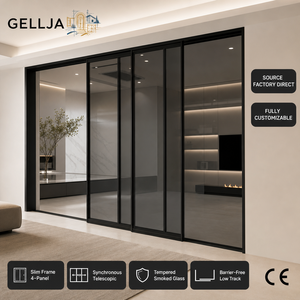

Precision-engineered thermal break windows, sliding patio systems, structural entrance doors, and heavy-duty architectural glass solutions manufactured for international compliance.
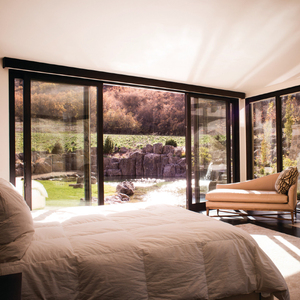
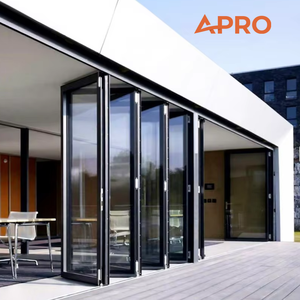
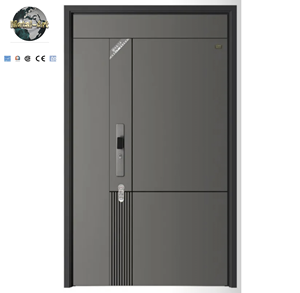
Understanding the critical intersection of alloy chemistry, thermal break polyamide science, surface treatment durability, and European normative compliance for global fenestration procurement.
The structural integrity of modern aluminum alloy windows hinges on precise chemical composition and artificial aging processes. Architectural grade 6063 aluminum alloy is optimized for complex extrusion geometries, smooth surface finish, and exceptional corrosion resistance.
When subjected to the T5 temper (cooled from an elevated temperature shaping process and artificially aged), the alloy achieves a tensile strength of ≥ 160 MPa and a yield strength of ≥ 110 MPa. For heavy-duty commercial curtain walls and wide-span folding doors, T6 temper artificial aging elevates tensile strength to ≥ 205 MPa, guaranteeing structural resilience under severe wind loads (up to Class C5 according to EN 12210).
CE certification is not merely a label; it represents mandatory compliance under the European Construction Products Regulation (CPR 305/2011). Windows and external pedestrian doorsets must satisfy stringent performance metrics evaluated via EN 14351-1:2006+A2:2016.
Key compliance parameters tested by accredited notified bodies include air permeability (EN 12207), water tightness under static pressure (EN 12208), acoustic isolation performance (EN ISO 717-1), and overall thermal transmittance ($U_w$ values calculated in accordance with EN ISO 10077-1).
| System Classification | Frame Profile Material | Thermal Transmittance ($U_w$) | Acoustic Isolation ($R_w$) | Air Permeability Class | Water Tightness Rating |
|---|---|---|---|---|---|
| Ultra-Slim Sliding Patio Doors | 6063-T6 Architectural Alloy (1.8-2.0mm) | 1.4 - 1.8 W/m²K | 32 - 38 dB | Class 4 (600 Pa) | Class E900 (900 Pa) |
| Thermal Break Casement Windows | 6063-T5 High Precision (1.4-1.6mm) | 0.9 - 1.3 W/m²K | 38 - 45 dB | Class 4 (600 Pa) | Class E1050 (1050 Pa) |
| Heavy-Duty Exterior Bifold Doors | 6063-T6 Reinforced Alloy (2.0-3.0mm) | 1.3 - 1.6 W/m²K | 35 - 40 dB | Class 3 (600 Pa) | Class 9A (600 Pa) |
| Tilt & Turn Passive House Windows | Multi-Chambered PA66 Break (2.0mm) | 0.75 - 0.95 W/m²K | 42 - 48 dB | Class 4 (600 Pa) | Class E1200 (1200 Pa) |
As international energy codes tighten and architectural preferences lean toward expansive glass surfaces, procurement officers must align with manufacturers pioneering next-generation fenestration technology.
Architectural demand has shifted heavily toward ultra-narrow sightlines (16mm to 25mm visible interlocks). Future-ready factories integrate high-modulus structural silicone glazing (SSG) techniques that allow glass panes to act as structural load-bearing elements, increasing daylight penetration without sacrificing wind load resistance.
The integration of dynamic electrochromic glass (switchable privacy and tinting controlled via IoT automation) and Building Integrated Photovoltaics (BIPV) is becoming standard in commercial project specifications. Forward-thinking suppliers design hollow profile wire conduits and smart sensor channels inside frame profiles.
With the European Carbon Border Adjustment Mechanism (CBAM) coming into effect, global buyers are seeking manufacturers utilizing primary aluminum produced via hydro-electric smelting or certified post-consumer recycled content (≥ 75% scrap aluminum), reducing embodied carbon by up to 85% per kilogram.
Factory-direct transparency, advanced automation, continuous R&D, and rigorous international quality control systems backed by over three decades of export leadership.
Located in Dali Town, Nanhai District, Foshan City — China's world-famous aluminum manufacturing capital — Window Wurx Industry Co., Ltd. leverages a complete local supply chain ecosystem. From raw Billet casting and anodizing tanks to European precision CNC machining centers, every fabrication step occurs under strict quality control protocol.
Our global distribution model supports architects, commercial contractors, trade dealers, and real estate developers across Europe, Australia (AS2047 standard compliance), North America, and the Middle East with custom shop-drawing reviews (BIM / CAD files), structural calculation engineering reports, and factory-direct pricing.

International ocean shipping subjects heavy architectural glass products to intense vibration, pressure differentials, and humidity swings. Our standardized packaging process ensures zero job-site damage:
Technical solutions and sourcing clarifications covering certifications, customization capabilities, thermal performance verification, and commercial shipping.
Every shipment is accompanied by a formal Declaration of Performance (DoP) under the European Construction Products Regulation (EU) No 305/2011. Our window systems undergo initial type testing (ITT) by accredited third-party laboratories according to EN 14351-1. Test documentation verifies thermal transmittance ($U_w$), air tightness (EN 12207), water tightness under static and dynamic pressure (EN 12208), resistance to wind load (EN 12210), and operating forces (EN 12046-1).
Yes. Utilizing thermal-break assembly machinery, we roll outer and inner aluminum profiles separately before joining them with PA66 GF25 polyamide strips. This process allows complete freedom for dual-color specifications — for example, specifying an exterior architectural matte black (RAL 9005) powder coating to match exterior façade claddings while maintaining a warm anodized bronze or textured white woodgrain finish inside the room.
While uPVC offers basic thermal insulation, aluminum alloy profiles provide vastly superior structural strength, allowing for significantly larger glass sashes and slighter frame sightlines. Aluminum will not warp, yellow, degrade under UV exposure, or become brittle in severe climate extremes (-40°C to +80°C). With modern polyamide thermal break technology, aluminum window systems match or exceed the energy efficiency ($U_w \le 0.8 \text{ W/m}^2\text{K}$) of top-tier uPVC frames while providing a 50+ year structural lifespan.
For projects located within 3 kilometers of ocean coastlines, we recommend either Qualicoat Class 2 certified Fluorocarbon (PVDF) spray coating (containing at least 70% Kynar 500 resin) or Class 20 Anodized finishes (minimum film thickness of 20–25 microns). These surface treatments withstand rigorous 3,000-hour continuous salt spray testing under ASTM B117 standards without chalking, blistering, or delamination.
Upon receiving architectural floor plans or window schedules, our dedicated engineering team prepares comprehensive 2D CAD shop drawings and 3D BIM models detailing exact rough opening sizes, profile cross-sections, glass build-ups, anchor bracket placements, drainage channel paths, and hardware operating mechanisms. Production begins only after formal sign-off and approval of these drawings by your project architect or contractor.
Acoustic isolation ($R_w$ ratings) is achieved by breaking sound wave resonance through asymmetric glass pane thickness and laminated interlayers. We engineer custom double and triple insulated glass units (IGU) incorporating PVB or acoustic SGP laminated panes (e.g., 6mm Low-E + 12mm Argon space + 4mm Glass + 0.76mm Acoustic PVB + 4mm Glass), reducing noise penetration by up to 45 decibels (STC 45).
Our global dealer model avoids expensive franchise fees. We provide trade partners with factory-direct wholesale pricing tier structures, complete physical sample corner displays, unbranded marketing collateral, technical training for installation teams, priority factory lead-time scheduling, and direct CAD/engineering support on commercial project bids.
Standard fabrication lead time is 25 to 35 calendar days following final CAD drawing approval and glass specification sign-off. For large-scale commercial developments requiring custom aluminum extrusion dies, an additional 12 to 15 days is allotted for die matrix milling and sample extrusion testing. Emergency project acceleration options are available through our 3 automated production lines.
Submit your project drawings, architectural window schedules, or required performance parameters. Our senior structural engineers reply within 24 hours with complete system specifications and direct factory quotation.