
Precision-manufactured aluminum glazing solutions certified to European (CE) and Australian (AS2047) performance standards for residential, commercial, and industrial developments.
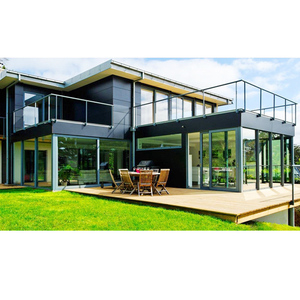
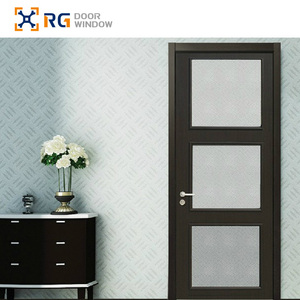
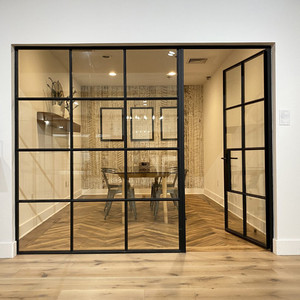
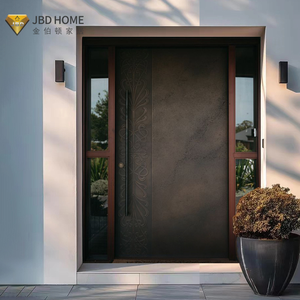
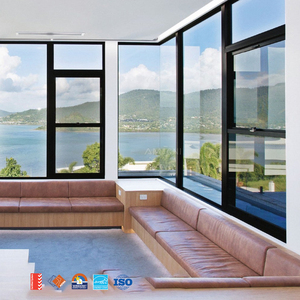
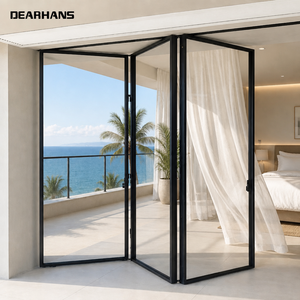
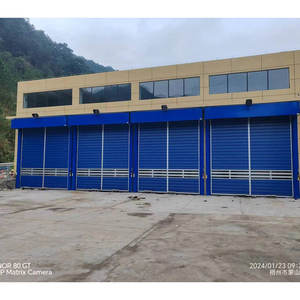
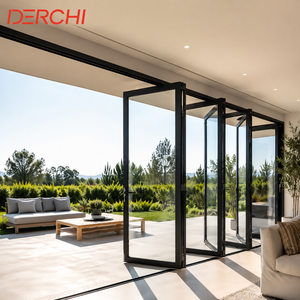
Direct from Foshan—China's global aluminum processing hub—delivering structural integrity, customized glazing bars, and certified compliance directly to international job sites.
Our dedicated structural engineering team designs thermal break profiles that undergo strict testing under European standard EN 14351-1 (CE marking) and Australian standard AS2047, ensuring airtightness, wind-load capacity, and water resistance.
From authentic Georgian cottage grid layouts (muntin bars) to custom dual-color powder coatings. Achieve exterior architectural harmony with dark charcoal profiles outside while maintaining light oak or modern white interior acoustics.
Long-haul ocean transit requires superior wrapping. Units feature corner guards, protective films, expansion foam, and are fully enclosed inside fumigation-free plywood crates, allowing seamless customs clearance at destination ports.
Cottage pane doors—historically characterized by smaller individual glass panes divided by wooden or steel muntin bars—have undergone a significant engineering revolution. Modern commercial architecture and high-end residential developments now demand the aesthetic charm of traditional Georgian grid configurations paired with high-performance thermal insulation, multi-point security locking systems, and structural weather-tightness. As a leading manufacturer in Foshan with over three decades of export experience, Window Wurx Industry Co., Ltd. provides architects, general contractors, and trade importers with technical clarity on specifying CE-certified aluminium cottage pane doors.
Information Gain Metric: Traditional cottage pane doors created significant thermal bridging through individual glass frame breaks. Modern aluminium cottage pane doors utilize internal or external surface-applied glazing bars over continuous double/triple insulated glass units (IGUs) combined with polyamide (PA66) thermal break profiles, cutting overall U-values down to < 1.4 W/m²K.
The core structural advantage of aluminum over wood or standard steel lies in its strength-to-weight ratio and corrosion resistance. However, raw aluminum is a highly conductive material. To achieve CE compliance under EN 14351-1, high-tier factories incorporate multi-chamber polyamide thermal barriers (PA66 GF25 with 25% glass fiber reinforcement).
These thermal breaks decouple the exterior aluminum profile from the interior frame, eliminating condensation risks in cold climates and reducing thermal conductivity. When combined with argon-gas filled double-tempered Low-E glass (e.g., 5mm Low-E + 12Ar + 5mm Clear), thermal efficiency matches stringent European green building mandates (EPBD standards).
| Performance Standard | Testing / Certification Benchmark | Technical Value / Result |
|---|---|---|
| Thermal Transmittance (U-Value) | EN ISO 10077-2 / NFRC | 1.2 – 1.6 W/m²K (Climate Dependent) |
| Acoustic Insulation (Rw) | EN ISO 140-3 | 35 dB – 42 dB (With Laminated Double IGU) |
| Air Permeability | EN 12207 / AS2047 Class 4 | Class 4 (600 Pa test pressure) |
| Water Tightness | EN 12208 Class E900 | 900 Pa (Severe storm resistance) |
| Wind Load Resistance | EN 12210 Class C5 | 2500 Pa structural integrity limit |
When procuring from China factories, trade buyers must select between two primary grid manufacturing methods:
Importing window and door assemblies into Europe or Oceania without mandatory compliance paperwork leads to severe job site delays and legal penalties. CE Certification requires factory production control (FPC) audit compliance along with Initial Type Testing (ITT) for safety glass (EN 12150) and operational durability. Similarly, exporting to Australia requires AS2047 verification for deflections, water penetration, and air infiltration. Window Wurx maintains comprehensive third-party lab documentation ready for municipal inspector sign-offs.
The architectural hardware and fenestration industry is undergoing rapid technological shifts. Buying managers and distributors sourcing from Chinese factories should align their product roadmaps with the following four macro trends:
Demand for ultra-slim interlock stiles (as narrow as 20mm–25mm) in cottage pane designs is rising. Engineers utilize structural glass bonding to transfer load stress directly into the glazing unit.
Fluoro-carbon (PVDF) coatings and advanced powder-coating processes (Qualicoat Class 2 standard) offer 25-year anti-fading guarantees against UV exposure and coastal saline environment corrosion.
Main entrance cottage pane pivot and hinged doors are increasingly specified with embedded biometric access, motorized multi-point locks, and hidden wiring channels for home automation systems.
Key technical and logistics inquiries answered by our senior door manufacturing engineering team.
Submit your architectural schedule, project CAD drawings, or custom specification requirements. Our technical sales engineers respond within 24 hours with factory-direct pricing and technical compliance analysis.
Inquire Now