Window Wurx Industry Co., Ltd. — China's Trusted Aluminum Windows & Doors Manufacturer Since 1993

  • English
  • Español
  • Français
  • Deutsch
  • Italiano
  • Português
  • Nederlands
  • Русский
  • العربية
  • 中文

CE Certified Aluminium Internal Glass Doors Exporter & Exporters

Architectural Engineering Whitepaper: Technical Specifications, CE EN 14351-1 Compliance, Acoustic Performance & Global Sourcing Trends

Featured CE Certified Aluminium Internal Glass Doors

Precision-engineered interior glazing systems manufactured in Foshan, complying with EU EN 14351-1 standards and customized for commercial, residential, and hospitality developments.
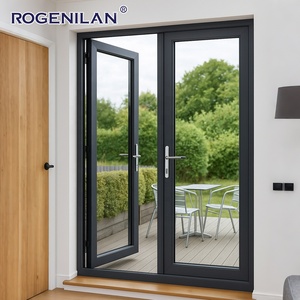
Modern Indoor Aluminium French Casement Swing Glass Door Internal Glass Walls Divider Interior Metal Framed French Doors

Modern Indoor Aluminium French Casement Swing Glass Door & Wall Divider

CE Certified Get a Quote
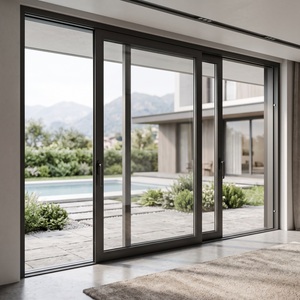
Sliding Doors Custom OEM ODM Soundproof Double Glazed Tempered Glass Aluminum Alloy Frame

Soundproof Double Glazed Tempered Glass Aluminum Interior Sliding Door

OEM / ODM Get a Quote
Customized Size Aluminum Doors and Window Double Large Glass Fixed French Door

Custom Large Glass Fixed French Internal Partition Door System

Double Glazed Get a Quote
Noise Control Sliding Doors with Soundproof Double Glazed Tempered Glass in Aluminum Alloy Frame

Acoustic Noise Control Double Glazed Aluminum Sliding Partition Door

High Acoustic Get a Quote
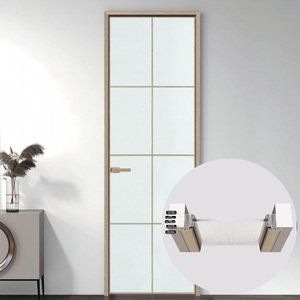
Aluminum Glass Door Minimalist Wide for Kitchen Cabinet Wardrobe Doors

Minimalist Ultra-Narrow Aluminum Frame Glass Swing Door for Interior

Slim Profile Get a Quote
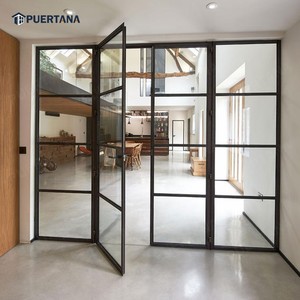
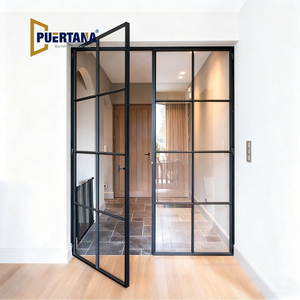
Modern Apartment House Internal Black Industrial Studio Clear Glass Door Aluminium French Glass Doors

Industrial Black Metal Framed Internal Glass French Swing Doors

Studio Series Get a Quote
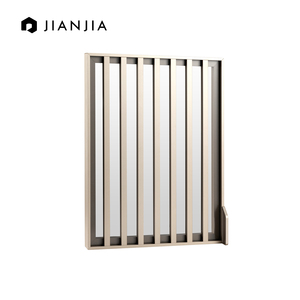
Ultra Narrow Frame Full Aluminum Glass Swing Door Fluted Frosted Glass Bathroom Door

Fluted Frosted Glass Ultra-Narrow Aluminum Frame Interior Door

Privacy Glass Get a Quote
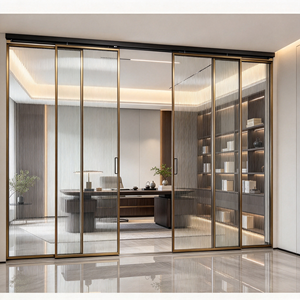
Modern Glass Sliding Doors With Aluminum Frame Interior Door No Bottom Track Soft Closing

Trackless Soft-Closing Top-Hung Interior Aluminum Sliding Glass Door

No Bottom Track Get a Quote
1993
Established Year
20,000m²
Production Workshop
150+
Skilled Technicians
3 Lines
Automated Extrusion
CE & AS2047
Global Compliance

CE EN 14351-1 Compliance

Direct factory export certified to European Standards. Every unit undergoes strict structural integrity, pendulum impact resistance (EN 12600), and safety testing for architectural sign-off.

In-House R&D & Customization

Full CAD/BIM support for architects and developers. Custom dimensions, thermal-break profiles, dual-tone anodizing/powder coating (AAMA 2604/2605), and custom hardware integration.

5-Layer Export Packaging

Zero-breakage ocean shipping protection featuring protective film, corner foam guards, bubble wrap, inner structural padding, and fumigation-free solid wooden crates for site-ready delivery.

Technical Whitepaper: CE Certified Aluminium Internal Glass Doors Exporter Benchmark

As modern architectural design continues to shift toward open-concept spaces, light-flooded interiors, and adaptable acoustic zoning, the strategic selection of CE certified aluminium internal glass doors has become a cornerstone of commercial, residential, and hospitality procurement. Sourcing directly from certified manufacturers in Foshan, China—the global hub of high-performance architectural aluminum processing—provides international importers, general contractors, and real estate developers with a formidable competitive advantage in cost efficiency, precision engineering, and customization breadth.

Key Takeaway for Procurement Officers: CE Marking under EU Directive 305/2011 (Harmonized Standard EN 14351-1) guarantees that interior glass door assemblies comply with strict requirements for dangerous substance release, wind-load deflection, structural load-bearing safety, and mechanical operating durability across millions of duty cycles.

1. Structural Alloys, Surface Metallurgy, and Frame Architecture

High-tier aluminum internal glass doors utilize primary architectural 6063-T5 or 6063-T6 aluminum extrusion alloys. The microstructural density of 6063 alloy allows for minimal profile wall thickness (ranging from ultra-narrow 1.2mm frames up to heavy-duty 2.0mm structural stiles) without compromising torsional rigidity or flexural strength.

To ensure long-term mechanical resilience and aesthetic permanence, advanced surface treatment processes are applied to the aluminum extrusions:

  • Fluorocarbon Powder Coating (PVDF / AAMA 2605): Offers ultra-high weatherability, UV resistance, and chemical inertness, maintaining color fidelity over 25+ years.
  • Qualanod-Certified Anodizing: Creates an integrated aluminum oxide film (15 to 25 microns deep) that enhances abrasion resistance and produces elegant metallic finishes, such as champagne gold, matte black, and satin bronze.
  • Sublimation Woodgrain Transfer: Combines the structural stability and fire safety of aluminum with the organic visual warmth of natural timber.

2. Acoustic Engineering & Safety Glazing Standards

Internal wall dividers and glass doors must balance light transmission with acoustic privacy (Sound Transmission Class STC and Weighted Sound Reduction Index R_w). Standard single glass doors provide minimal noise attenuation (R_w ~ 20–25 dB). However, high-specification B2B orders incorporate engineered acoustic glazing configurations:

Glazing System Type Glass Configuration Spec Sound Isolation (R_w Rating) Primary Target Applications
Single Monolithic Toughened 8mm / 10mm EN 12150 Tempered Glass 28 - 30 dB Interior residential partition, wardrobe doors
Laminated Safety Glass (PVB/SGP) 5mm + 0.76PVB + 5mm Acoustic Laminated 35 - 38 dB Executive office suites, hotel conference rooms
Insulated Double Glazing (IGU) 5mm Tempered + 9A/12A Argon + 5mm Tempered 38 - 42 dB High-noise commercial zones, residential study rooms
Decorative Privacy Glazing Fluted / Moru / Reeded / Frosted Tempered 30 - 33 dB Luxury suite bathrooms, modern studio dividers

Future Global Sourcing & Procurement Trends (2025–2030)

Analyzing global market intelligence and architectural specification changes reveals four prominent macro-trends dominating the B2B procurement landscape for internal glass door systems:

Trend A: The Ascendancy of Micro-Slim Profile Architectures

Architects are increasingly specifying visible profile widths as thin as 16mm to 20mm (often referred to as minimalist narrow-edge frames). These systems maximize the glass-to-frame ratio, delivering unobstructed light penetration while utilizing high-tensile 6063-T6 aluminum alloys to support oversized glass panels up to 3000mm in height.

Trend B: Trackless (Top-Hung) Soft-Closing Sliding Systems

Traditional sliding doors required floor tracks, creating trip hazards and interrupting continuous flooring design. Modern procurement favors top-hung sliding mechanisms engineered with concealed heavy-duty structural tracks and dual-direction hydraulic soft-closing dampeners. These systems withstand over 100,000 continuous sliding cycles without structural sag.

Trend C: Integrated Smart Privacy & Electrochromic Glazing

The integration of Polymer Dispersed Liquid Crystal (PDLC) switchable smart glass into aluminum internal door assemblies is accelerating. At the press of a button or via building automation systems, the glass transitions from crystal-clear transparency to total opaque privacy in under 100 milliseconds, revolutionizing boardroom and healthcare design.

Trend D: Prefabricated Modular "Plug-and-Play" Delivery

To offset escalating on-site skilled labor costs in Europe, North America, and Australia, international buyers are requesting pre-assembled, factory-adjusted door kits. Pre-drilled aluminum frames, pre-installed drop-down seals, and factory-fitted multipoint locks reduce job-site installation times by up to 60%.

Product Development & Technological Evolution Trends

Driven by strict building regulations and occupant wellness metrics, manufacturing innovation focuses heavily on three critical areas:

  • Concealed Hardware Integration: Invisible 3D-adjustable pivot hinges and concealed magnetic latch locks eliminate surface clutter, delivering seamless, flush-fitting aesthetics.
  • Acoustic Drop Seals & Perimeter Gaskets: Automatic spring-loaded bottom drop seals deploy automatically upon door closure to bridge the gap between floor and door panel, preventing sound leakage and dust ingress.
  • Sustainable Low-Carbon Extrusion: Modern aluminum manufacturing utilizes high-percentage recycled aluminum billets powered by clean energy, dramatically reducing embodied carbon metrics for LEED and BREEAM project certifications.

Comprehensive Buyer Technical FAQ (B2B Sourcing Guide)

Q1: What specific CE documentation should an importer request from a manufacturer?
Importers must verify the Declaration of Performance (DoP) issued under EN 14351-1, alongside factory production control (FPC) ISO 9001 certificates. Additionally, test reports from notified body laboratories for EN 12150 (tempered glass safety) and EN 12600 (impact resistance) should be provided before contract signing.
Q2: How does factory-direct procurement from Foshan protect against shipping breakage?
Export packaging utilizes a rigorous 5-layer system: PE protective film, high-density EPE corner protectors, shock-absorbing bubble wrap, inner structural corrugated wrapping, and fully enclosed fumigation-free plywood crates. Containers are mechanically braced with heavy-duty strapping to resist sea-freight pitching and rolling.
Q3: Can custom colors and two-tone finishes be specified on low minimum order quantities (MOQ)?
Yes. Modern vertical powder coating lines allow for flexible batch production. Dual-tone anodizing/powder coating—allowing the outer door frame to match corridor specifications while the internal face complements room aesthetics—is routinely supported for custom project schedules.
Q4: What are the standard lead times from shop drawing approval to ocean container loading?
Once CAD shop drawings are confirmed, standard factory fabrication requires 20 to 25 calendar days for standard anodized or black finishes, and 28 to 35 days for custom RAL colors or specialized smart glass integration.
Q5: How do top-hung sliding doors maintain stability without a bottom floor track?
Top-hung systems rely on high-load structural aluminum head tracks bolted directly into reinforced ceiling joists or lintels. Bottom lateral alignment is maintained via a small, hidden floor guide pin positioned at the door edge that runs inside a concealed channel cut into the bottom door stile.

Ready to Source CE Certified Aluminium Internal Glass Doors Direct from the Manufacturer?

Submit your architectural drawings, schedule of openings, or OEM specifications to our engineering team for immediate technical consultation and factory-direct pricing.

Get a Quote