
Explore our export-grade fenestration product series manufactured under strict CE & AS2047 quality control standards.
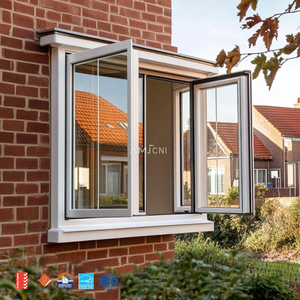
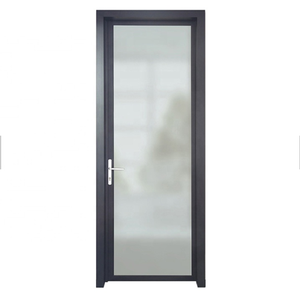
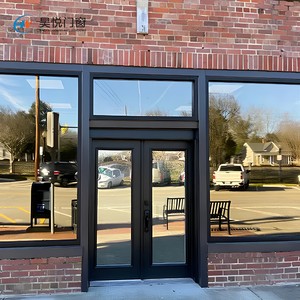
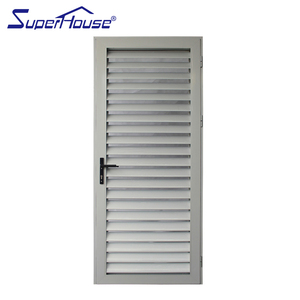
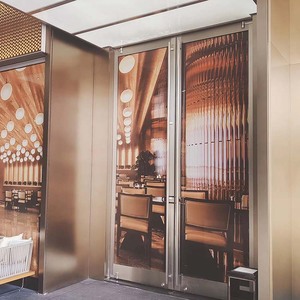
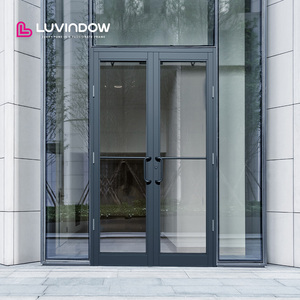
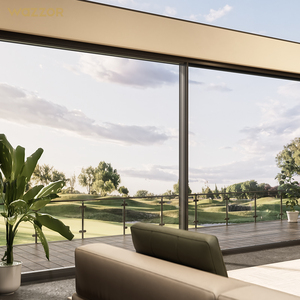
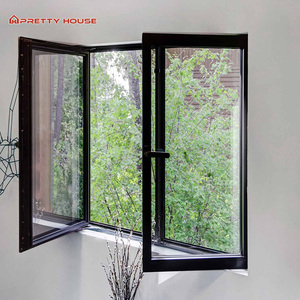
A comprehensive analysis for architects, structural engineers, commercial developers, and global fenestration importers.
An Aluminium Jali Window represents the synergy between historic architectural shading aesthetics (perforated lattice or geometric mesh grilles) and modern high-performance fenestration technology. In modern architectural engineering, the "Jali" component functions not merely as a decorative security screen, but as an integrated solar shading device (brise-soleil), security barrier, and passive thermal control mechanism built into extruded aluminum frame structures.
For B2B procurement in the European Union, Australia, North America, and the Middle East, standard aluminum windows are insufficient. A qualified CE Certified Aluminium Jali Window Supplier must verify compliance under European Harmonized Standard EN 14351-1:2006+A2:2016, evaluating essential performance attributes including structural wind resistance (EN 12210), watertightness (EN 12208), air permeability (EN 12207), thermal transmittance (EN ISO 10077-2), and acoustic attenuation.
Under wind load testing mandated by CE EN 12210, our integrated Aluminium Jali Window profiles withstand positive and negative design pressures exceeding 3000 Pa to 5000 Pa. The geometric structural mesh of the Jali screen acts as a primary buffer, dissipating kinetic wind energy before it reaches the primary insulated glass unit, thereby extending the mechanical lifespan of perimeter structural seals.
Manufacturer Authority Note: Formulated at our Foshan facility, every batch of extruded alloy undergoes optical emission spectroscopy to ensure strictly controlled magnesium-silicon ratios (6063-T5/T6 specification), providing high tensile yield strength without stress corrosion cracking.
Direct comparison of technical parameters evaluated during CE Marking, AS2047 testing, and NFRC thermal simulation.
| Performance Parameter | Test Standard / Standard Code | Window Wurx System Specification | Engineering Benefit for Procurement |
|---|---|---|---|
| Thermal Transmittance (U-Value) | EN ISO 10077-2 / NFRC 100 | Uw = 1.1 W/m²·K to 1.6 W/m²·K | Reduces HVAC cooling loads by up to 34% in tropical and desert climates. |
| Wind Pressure Resistance | EN 12210 / AS2047 Class HP | Class C5 (Serviceability 2500Pa, Ultimate 3750Pa+) | Suitable for high-rise coastal developments and hurricane-prone coastal regions. |
| Air Permeability | EN 12207 Class 4 | Class 4 (< 3 m³/h·m² at 600 Pa) | Eliminates draft loss, dust infiltration, and moisture penetration during monsoons. |
| Watertightness | EN 12208 Class E900 | E900 (Unsheltered static water pressure testing) | Zero water ingress under extreme wind-driven torrential rain conditions. |
| Acoustic Insulation (Rw) | EN ISO 717-1 / ASTM E90 | Rw (C; Ctr) = 38 dB to 44 dB | Subdues high-frequency urban traffic noise, heavy machinery, and flight paths. |
| Surface Finish Durability | AAMA 2604 / AAMA 2605 (PVDF) | Fluorocarbon Resin / Electrophoresis (25-Year Guarantee) | Impervious to UV radiation degradation, salt spray corrosion, and chemical oxidation. |
| Security & Intrusion Resistance | EN 1627 / RC2 & RC3 Standard | Integrated CNC Jali Grille + Multi-point Mushroom Cam Locks | Provides forced-entry prevention without requiring secondary external steel bars. |
Why Tier-1 architectural firms, commercial builders, and B2B distributors source directly from Window Wurx Industry Co., Ltd.
Located in Dali Town, Foshan—China's premier aluminum manufacturing hub—our factory operates 3 automated CNC fabrication lines, automated corner-crimping cells, and robotic glass assembly stations delivering high precision with minimal dimensional tolerance.
Every window system leaves our facility backed by CE marking documentation, AS2047 Australian compliance certification, NFRC thermal ratings, and full mill test reports (MTR) verifying metal composition, anodizing thickness, and glass tempering safety standards.
We do not force projects into rigid off-the-shelf catalog dimensions. Our senior fenestration engineers convert your architectural elevation drawings into detailed shop drawings, custom extrusion profiles, and parametric CNC laser-cut Jali patterns tailored to your build.
Through state-of-the-art thermal break assembly technology, we offer specialized two-tone architectural finishes. Match exterior facade requirements with fluorocarbon PVDF gray while preserving interior woodgrain or matte white aesthetics within living spaces.
To eliminate sea transit damage, every unit undergoes 5-layer protective packing: protective surface film, corner buffer guards, air-bubble wrap, corrugated carton outer wrap, and fully enclosed, fumigation-free wooden crates equipped with internal shock mitigation bracing.
By eliminating middleman trading agents, Window Wurx provides direct factory pricing with predictable lead times. Our global distributor program empowers window dealers, contractors, and importers with high margins and direct technical backup.
Key market forces, technical innovations, and sustainability mandates reshaping the global procurement landscape for Aluminium Jali Windows.
Architectural fenestration is shifting from static, uniform window grilles toward dynamic, parametrically generated facade patterns. Modern architectural software enables developers to optimize perforation density across a building's envelope according to solar radiation maps.
As a leading CE Certified Aluminium Jali Window Supplier, Window Wurx utilizes high-speed 12,000W fiber laser cutting stations capable of executing intricate geometric Jali patterns with sub-millimeter precision directly from vector files. This trend reduces overall building dead load while maintaining high structural rigidity and customizable daylight autonomy.
Environmental Product Declarations (EPD) and embodied carbon metrics are becoming mandatory in European and North American building codes. Procuring aluminum windows sourced from primary smelting with high fossil energy consumption is rapidly becoming a commercial liability.
The future of B2B procurement relies heavily on green aluminum profiles manufactured using hydro-powered smelting and high recycled scrap ratios (low carbon footprint aluminum with < 4.0 kg CO2e/kg Al). Window Wurx is actively aligning profile extrusion lines with international circular economy frameworks to ensure seamless LEED and BREEAM building accreditation for our commercial clients.
As global building energy standards (such as the EU Energy Performance of Buildings Directive - EPBD) mandate near-zero energy buildings (nZEB), traditional non-thermal break aluminum frames are being completely phased out. Future procurement strategies prioritize advanced polyamide thermal barriers enriched with 25% glass fiber (PA66-GF25) and polyolefin foam core insertion.
Furthermore, the integration of Vacuum Insulated Glass (VIG) within Aluminium Jali Windows represents a massive technological leap. VIG offers center-of-glass thermal performance of Ug = 0.4 W/m²·K in a profile thickness of under 10mm, allowing slim-frame Jali windows to meet passive house standards without sacrificing structural slender aesthetics.
The boundary between static windows and smart building automation is blurring. Modern architectural Jali windows are increasingly specified with embedded linear actuators, hidden micro-motors, and smart sensor arrays (measuring indoor CO2, humidity, ambient solar lux, and wind velocity).
These automated Jali window systems interface directly with Building Management Systems (BMS) via KNX or Zigbee protocols, automatically tilting louvers or opening sash apertures during optimal night-purge cooling hours. This active passive-hybrid ventilation strategy drastically reduces HVAC energy consumption in high-density urban environments.
In-depth technical answers addressing common engineering, logistics, and certification queries from commercial buyers.