
Explore our factory-direct, high-performance impact-resistant and thermal aluminum door and window systems engineered for commercial, hospitality, and luxury residential developments worldwide.
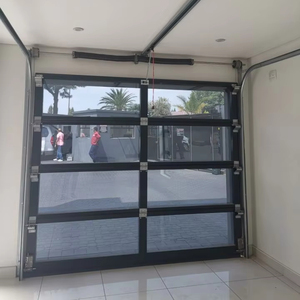
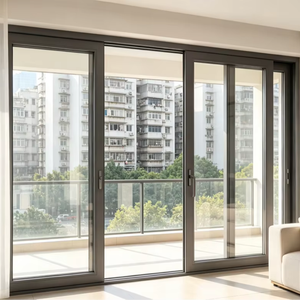
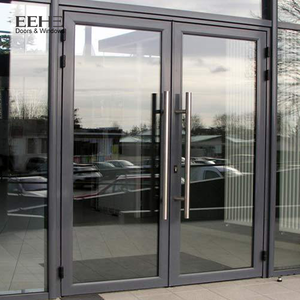
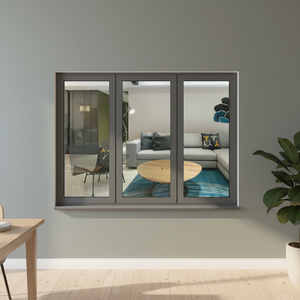
In contemporary architectural design and structural engineering, fenestration systems are no longer regarded as mere aesthetic envelope fillers. Across coastal zones, High-Velocity Hurricane Zones (HVHZ), and severe weather regions in Europe, North America, and Australia, windows and doors represent critical structural load-bearing boundaries. Selecting an authoritative CE certified aluminum hurricane windows supplier is a prerequisite for ensuring envelope integrity, building occupant safety, and strict compliance with global construction codes such as EN 14351-1, ASTM E1886/E1996, and AS2047.
This technical report delivers deep structural clarity on hurricane impact dynamics, profile metallurgy, laminated glass interlayers, and supply chain strategies. As an enterprise established in 1993 with a 20,000 m² manufacturing hub in Foshan, China, Window Wurx Industry Co., Ltd. provides global buyers, structural consultants, and facade engineers with an empirical, verified framework for specification and procurement.
CE certification mandates comprehensive type testing for air permeability (EN 12207 Class 4), watertightness under static pressure (EN 12208 Class E1050), and resistance to wind loads (EN 12210 Class C5/B5).
Engineered using multi-layered laminated glass assemblies incorporating Dupont SentryGlas® (SGP) or high-yield PVB interlayers capable of absorbing kinetic energy from high-mass debris impacts during Category 5 typhoons.
Structural frame profiles are manufactured using virgin 6063-T6 or 6005A-T6 structural aluminum alloys with wall thicknesses up to 3.0mm, delivering yield tensile strength exceedances above 205 MPa.
To assist facade procurement officers in evaluating specifications, the matrix below details the structural and thermal performance metrics comparing Window Wurx CE certified impact systems against legacy commercial glazing:
| Performance Vector | Standard Aluminum Windows | Window Wurx CE Impact Systems | Testing Standard / Compliance Code |
|---|---|---|---|
| Wind Pressure Resistance | 1,200 – 2,400 Pa | 4,500 – 9,000 Pa (DP60 - DP100) | EN 12210 / ASTM E330 |
| Debris Impact Resistance | None (Glass Shatters) | Large Missile (9lb 2x4 Timber @ 50fps) | ASTM E1886/E1996 / EN 1630 |
| Watertightness | 300 – 600 Pa | 1,050 Pa (Class E1050) | EN 12208 / TAS 202 |
| Thermal Insulation (U-Value) | 2.8 – 3.5 W/m²K | 1.1 – 1.6 W/m²K (Thermal Break) | EN ISO 10077-2 / NFRC 100 |
| Acoustic Attenuation | 28 – 32 dB | 42 – 48 dB (STC / Rw) | EN ISO 10140-2 / ASTM E90 |
| Structural Deflection Limit | L/175 | L/300 Exceeded | AAMA/WDMA/CSA 101/I.S.2/A440 |
The international fenestration marketplace is undergoing a profound structural evolution driven by climate change mitigation, tightening energy consumption mandates, and supply chain transparency requirements. Commercial real estate developers, window importers, and general contractors must navigate key macro trends when selecting a reliable CE certified aluminum hurricane windows supplier:
Global procurement standards increasingly demand Environmental Product Declarations (EPDs). Primary aluminum smelting accounts for high carbon emissions; consequently, top-tier Chinese manufacturers are shifting toward hydroelectric-smelted low-carbon aluminum and recycled scrap alloys. Future-proof suppliers must document carbon intensity below 4.0 kg CO2e per kg of extruded profile.
Historical hurricane windows prioritized structural mass over energy performance, creating severe thermal bridges. Modern procurement trends require multi-cavity Polyamide (PA66 GF25) thermal barriers integrated directly into heavy-duty impact profiles. This allows project managers to achieve U-values under 1.4 W/m²K while satisfying stringent HVHZ wind load profiles.
Structural failure under cyclic storm loading often originates at frame corners. Modern factory automation utilizes heavy cast-aluminum corner keys combined with dual-component epoxy resin injection. This technique creates a monolithic mechanical bond, preventing frame racked distortion and water capillary ingress under extreme pressure drops.
Next-generation luxury hospitality and residential developments are integrating smart tinting electrochromic glass and Low-E solar coatings directly into impact-laminated glass build-ups. Suppliers capable of customizing insulated laminated glass (IGU + Laminated) are capturing the high-margin market segment.
Understanding the technological architectural elements of storm-rated fenestration allows specifiers to optimize project budgets without sacrificing safety margins or aesthetic sightlines.
The structural backbone of any hurricane window lies in its extrusion geometry. Window Wurx utilizes multi-chambered internal webbing within 6063-T6 aluminum extrusions. Internal reinforcement ribs distribute localized deflection loads evenly across the profile depth. Unlike standard 1.4mm architectural profiles, impact systems mandate structural wall thicknesses ranging between 2.0mm and 3.0mm, ensuring zero permanent frame deformation under test pressures matching Category 5 hurricane conditions.
When impact debris strikes an exterior pane, the sacrificial glass breaks, but the elastomeric interlayer maintains the building envelope seal. Choosing the correct polymer interlayer is critical for technical performance:
Hurricane windows are predominantly installed in aggressive, salt-laden marine environments. Standard powder coatings experience rapid filiform corrosion and chalking. Superior suppliers employ Fluorocarbon (PVDF / Kynar 500) 3-Coat/3-Bake electrostatic spraying adhering to AAMA 2605 specifications. This process guarantees salt spray resistance exceeding 4,000 hours, maintaining color fastness and gloss retention under intense ultraviolet (UV) exposure.
Selecting a Chinese manufacturing partner requires verifying factory capacity, quality assurance standards, and long-haul export packaging protection. Located in Foshan City—China's global capital for aluminum manufacturing—Window Wurx Industry Co., Ltd. brings 30+ years of documented industrial experience.
Equipped with 3 high-precision CNC automated processing lines, digital double-head cutting saws, and automated corner crimping stations capable of maintaining sub-millimeter manufacturing tolerances.
Our complete window, door, and curtain wall catalog carries fully audited CE Certification (EN 14351-1), Australian AS2047 certification, and NFRC thermal performance compliance.
Zero-damage transit is guaranteed via unitized surface protection films, cellular corner guards, EPE foam wrapping, and fully enclosed fumigation-free plywood crates reinforced for ocean freight containerization.
Our CE certification strictly complies with EN 14351-1 for external windows and doors. The official test documentation covers Air Permeability (EN 12207 up to Class 4), Watertightness under static pressure (EN 12208 up to Class E1050), Resistance to Wind Load (EN 12210 up to Class C5/B5), Acoustic Performance (EN ISO 10140-2), and Thermal Transmittance (EN ISO 10077-2). Full lab reports from accredited 3rd party testing bodies can be provided during project shop drawing approval.
Yes. 100% of our production is custom-engineered to project architectural drawings. We offer bespoke frame extrusions, custom structural mullions, two-tone powder coating (different exterior/interior finish), high-performance Low-E coatings, double/triple pane insulated glazing units, and customized SDL (Simulated Divided Lite) grille patterns.
We implement a strict 5-layer export packaging protocol: 1) Surface protective film across aluminum and glass; 2) Impact-absorbing rubber corner protectors; 3) EPE bubble foam wrapping; 4) Customized fumigation-free solid plywood crates; 5) Internal container steel-strapping and air-bag bracing to prevent cargo movement during transit.
CE Certification is mandatory for European Economic Area (EEA) compliance focusing on safety, health, and environmental standards under EN 14351-1. AS2047 is the mandatory Australian standard detailing structural performance, deflection, air infiltration, and water penetration tests. NFRC (National Fenestration Rating Council) provides verified thermal energy metrics (U-factor, SHGC, VT) widely accepted in North America and international green building systems. Window Wurx offers certified products satisfying all three regulatory frameworks.
Once shop drawings are formally approved and deposit confirmation is received, standard fabrication lead time ranges between 25 to 35 calendar days. For complex custom extrusion die creation, add 10 to 14 days for tooling setup and sample extrusion validation. Accelerated production scheduling is available for urgent commercial contracts.
We partner with top-tier international and premium domestic hardware manufacturers, including Siegenia, Hoppe, GU, CMECH, and Kin Long. For hurricane impact sliding systems, we utilize stainless steel 316 multi-point locking gear, heavy-duty tandem rollers rated up to 400kg per sash, and anti-lift structural blocks.
Absolutely. We offer a flexible, non-franchise international dealer program tailored for local distributors, window contractors, and fabricators. Our in-house engineering team provides complete AutoCAD shop drawings, BIM models, structural load calculation assistance, and installation guidance for architectural specification.
Submit your architectural drawings, window schedules, or technical specification requirements to our Foshan engineering team for immediate review, structural analysis, and factory-direct pricing.
Send an Inquiry