
1. Strategic Overview: Sourcing CE Certified Aluminum Kitchen Doors from China
In modern architectural design, the kitchen has evolved from a utilitarian service space into the epicenter of domestic life and open-plan luxury. This paradigm shift presents unique architectural and material challenges. Kitchen doors must isolate heavy cooking fumes, high humidity, elevated moisture vapor, and airborne grease, while maintaining maximum natural daylight transmission, sound attenuation, and effortless mechanical movement.
For international buyers—including commercial real estate developers, architectural specifiers, window and door importers, and general contractors—sourcing CE Certified Aluminum Kitchen Doors Suppliers & Exporters requires looking beyond basic aesthetics. The European CE mark (mandated under the Construction Products Regulation CPR 305/2011 and EN 14351-1 standards) guarantees that structural stability, air permeability, water tightness, acoustic isolation, and hazardous substance emissions meet stringent European Union benchmarks.
Operating from Foshan, China—the world's premier industrial hub for architectural aluminum manufacturing—Window Wurx Industry Co., Ltd. (established in 1993) operates a 20,000 square meter automated fabrication complex. Utilizing premium 6063-T5 aluminum extrusions, precision thermal break polyamides (PA66GF25), and structural aluminum honeycomb core infills, our engineering team manufactures custom kitchen door solutions tailored to global building codes and demanding interior specifications.
Technical Information Gain: What Does CE Compliance Entail for Kitchen Partition Systems?
CE Certification according to EN 14351-1 is not merely a stamped mark; it represents documented third-party laboratory verification. For kitchen aluminum doors, testing covers flexural strength under differential indoor thermal conditions, cyclic opening durability (exceeding 100,000 operational cycles), anti-finger-pinch safety design, and zero VOC/formaldehyde emissions from seals and internal core adhesives.
2. Engineering & Material Science of Aluminum Kitchen Door Systems
Aluminum alloy profiles outshine traditional solid wood, MDF, and unplasticized PVC (uPVC) in kitchen environments. Timber absorbs moisture, causing warp, mold, and door jamb misalignment. uPVC exhibits high thermal expansion coefficients and degrades when exposed to vaporized lipids. High-grade aluminum extrusions, conversely, exhibit zero volumetric expansion under moisture variation, non-flammability, and high tensile strength.
6063-T5 Alloy Metallurgical Integrity
Extruded with 0.45-0.9% Magnesium and 0.2-0.6% Silicon, our profiles undergo artificially aged T5 heat treatment, achieving a Webster hardness ≥12 HW for immense frame rigidity.
Aluminum Honeycomb Core Structure
Interior solid aluminum doors utilize an aircraft-grade hexagonal 3003 aluminum foil honeycomb matrix, delivering superior soundproofing (up to 38 dB noise reduction) and high impact resistance without adding excessive dead weight.
Advanced Surface Finishes
Coated with AkzoNobel Fluorocarbon (PVDF) or electrostatic powder coating, our profile surfaces withstand acidic vapors, grease build-up, detergent corrosion, and high-frequency friction.
Technical Performance Matrix: Aluminum Kitchen Doors vs. Traditional Materials
| Performance Indicator | Window Wurx CE Aluminum Door | Solid Wood / Engineered MDF | Standard uPVC Door |
|---|---|---|---|
| Moisture & Vapor Resistance | 100% Waterproof (Zero Swelling) | Poor (Prone to warping & rot) | Moderate (Degrades with heat) |
| Structural Stile Width | Ultra-Slim (16mm - 30mm) | Wide (80mm - 120mm) | Wide (60mm - 90mm) |
| Fire Safety Rating | Class A1 Non-Combustible | Combustible (Class B/C) | Self-extinguishing but emits toxic gas |
| Acoustic Isolation (Rw) | 32 dB - 42 dB (Glazed / Honeycomb) | 25 dB - 30 dB | 22 dB - 28 dB |
| Operational Lifecycle | > 25 Years (> 100,000 cycles) | 5 - 10 Years | 8 - 12 Years |
| Eco & Recyclability | 100% Recyclable (Circular Eco-Build) | Biodegradable but deforesting | Difficult to recycle |
3. Modern Design Configurations for Commercial & Residential Procurement
Different kitchen floor plans demand specialized kinetic door mechanisms to optimize traffic flow and physical space. As a dedicated manufacturer and direct exporter, Window Wurx engineers custom doors according to architectural CAD/BIM schematics.
A. Ultra-Slim Frame Sliding Kitchen Doors (Pocket & Multi-Track Systems)
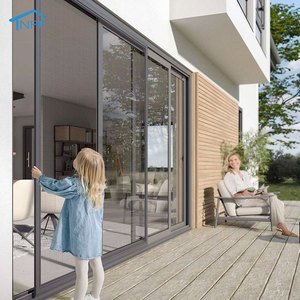
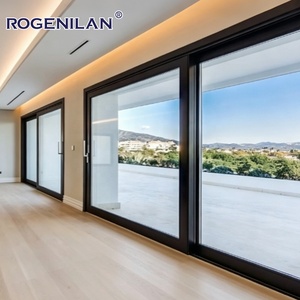
Sliding aluminum doors represent the gold standard for open-plan residential conversions. Featuring sightlines as narrow as 16mm, double or triple tracks, soft-close hydraulic dampers, and bottom tracks recessed flush with finished floor tiles (zero-threshold design), these systems block grease while maintaining complete visual transparency into dining areas.
B. Heavy-Duty Bi-Folding Accordion Doors
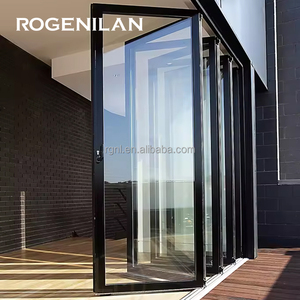
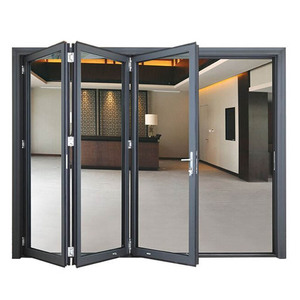
For large kitchen openings leading directly onto outdoor patios, barbecue decks, or alfresco dining zones, bi-fold accordion doors create an unobstructed opening span up to 90% of the wall width. Equipped with stainless steel top-hung guide rollers and double EPDM sealing gaskets, these systems block driving rain windloads while sliding effortlessly during entertainment events.
C. Minimalist French Casement & Single-Swing Honeycomb Doors
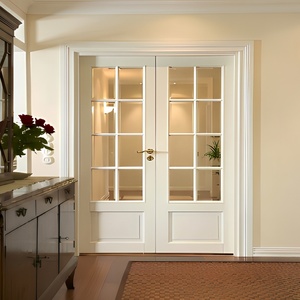
Designed for compact galley kitchens, laundry room partitions, and private residential pantry enclosures, single-swing aluminum doors with internal aluminum honeycomb cores and narrow glass lites deliver maximum structural soundproofing and privacy. They can be integrated with magnetic locks, concealed hinges, and automatic drop-down door bottom seals to prevent under-door air leaks.
4. Future Global Procurement Trends in Aluminum Door Systems (2025–2030)
The architectural hardware and glazing export landscape is undergoing rapid technological and regulatory transformations. Importers and procurement directors must align their supply chains with these macro industry trajectories:
1. Thermal Separation & Zero-Energy Building (ZEB) Directives: As global energy codes become stricter (such as EU Zero-Emission Building targets), interior partitions between conditioned living spaces and service/kitchen areas increasingly require thermal break PA66GF25 structural polyamide strips to prevent internal ambient energy losses.
2. Smart Architectural Hardware Integration: Modern high-end procurement emphasizes touchless access. Magnetic levitation sliding hardware, biometric handle integration, hidden soft-close air shocks, and electronic smart-tinting electrochromic privacy glass are rapidly shifting from luxury options to standard commercial specifications.
3. Carbon Footprint Tracking & Sustainable Extrusions: International developers now evaluate supplier Environmental Product Declarations (EPDs). Sourcing aluminum produced with hydro-electric power or utilizing high percentages of post-consumer recycled aluminum alloy significantly reduces embodied carbon in building projects seeking LEED Gold or BREEAM certifications.
Enterprise Advantage: Window Wurx Global Supply Chain Integration
By consolidating window, sliding door, folding partition, skylight, and curtain wall manufacturing into a single 20,000 m² Foshan complex, Window Wurx provides unified surface color matching, matched architectural sightlines, simplified single-container shipping logistics, and a single point of warranty accountability.