
Explore our flagship heavy-duty accordion folding, ultra-slim sliding, and thermal-break terrace door series engineered to strict European Norms (CE EN 14351-1) and Australian AS2047 standards.
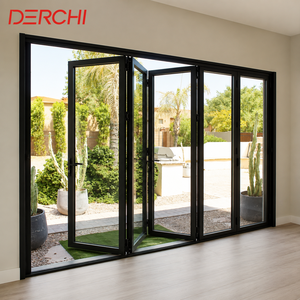
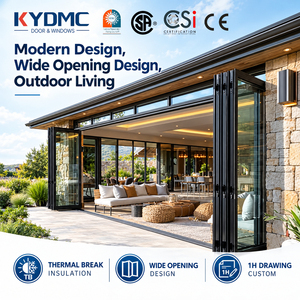
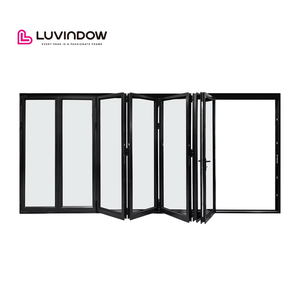
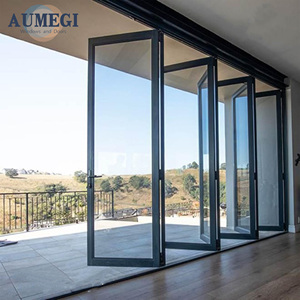
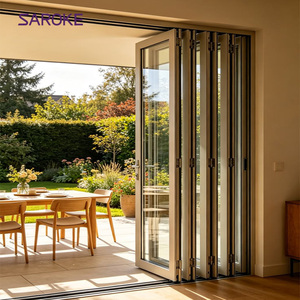
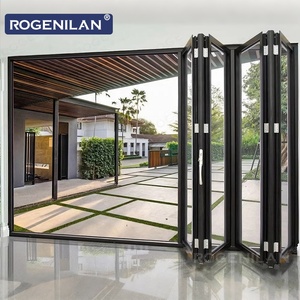
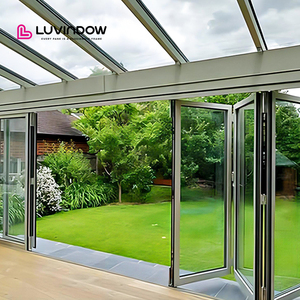
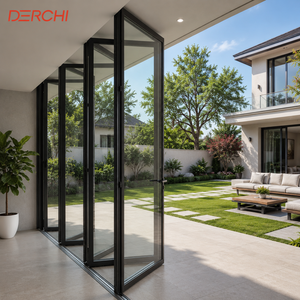
In modern architectural engineering, exterior terrace doors serve as pivotal envelope components that must harmonize transparent aesthetics, structural stability, thermal insulation, and strict weatherproofing. Sourcing high-caliber architectural fenestration requires absolute compliance with European Conformity (CE) directives—specifically EN 14351-1:2006+A2:2016, which dictates external pedestrian doorsets and window assemblies without resistance to fire and/or smoke leakage characteristics.
As a prominent Foshan-based manufacturer and global exporter operating since 1993, Window Wurx Industry Co., Ltd. engineered its terrace door profiles utilizing primary T6063-T5 high-purity extrusion alloys. Our engineering frameworks are meticulously analyzed under finite element analysis (FEA) to withstand severe wind loads (up to Class C5 under EN 12210), extreme driving rain conditions (Class E1050 under EN 12208), and minimal air permeability (Class 4 under EN 12207).
Utilizing 24mm to 34mm Technoform® glass-fiber reinforced polyamide thermal barrier strips, reducing system overall thermal transmittance (Uw-value) to below 1.2 W/(m²·K) for passive house compliance.
Multi-chamber profile geometry coupled with double or triple Low-E argon-filled tempered glass units (IGU) delivering acoustic reduction ratings from Rw 38 dB up to Rw 45 dB in heavy urban corridors.
Surface finishing compliant with Seaside Qualicoat standards, offering anti-corrosion marine grade anodizing (25μm) and fluorocarbon (PVDF) coatings engineered to withstand over 3,000 hours of salt-spray testing.
The table below provides verifiable technical benchmarks for architectural procurement officers and structural engineers evaluating factory direct orders:
| Performance Characteristic | Test Standard (European / Int'l) | Achieved Rating / Parameter | Certification Compliance |
|---|---|---|---|
| Thermal Transmittance (Uw) | EN ISO 10077-1 / EN ISO 10077-2 | 0.85 – 1.3 W/(m²·K) (Triple Glazed Low-E) | CE Certified |
| Air Permeability | EN 12207 | Class 4 (600 Pa test pressure) | CE / AS2047 |
| Water Tightness | EN 12208 | Class E1050 (1050 Pa static pressure) | CE Certified |
| Resistance to Wind Load | EN 12210 | Class C5 (Design Load: 2000 Pa, Deflection < 1/300) | CE / NOA Florida |
| Acoustic Insulation (Rw) | EN ISO 140-3 / EN ISO 717-1 | Rw (C; Ctr) = 42 (-1; -4) dB | Certified Tested |
| Burglar Resistance | EN 1627 / RC2 - RC3 | Multi-point hardware locking system (Siegenia / Hoppe) | Security Tested |
Established in 1993 in Dali Town, Foshan—China's global epicenter for aluminum profile extrusion and fenestration technology—Window Wurx Industry Co., Ltd. has grown into a premiere manufacturing exporter supplying developers, architects, and building material distributors worldwide.
Our expansive industrial park houses three automated high-speed production lines equipped with German CNC double-head cutting machines, automatic corner crimping units, and digital glass assembly stations. This setup enables consistent dimensional precision within ±0.5mm tolerance across large-scale commercial orders.
International freight demands robust protection to eliminate transit vibration damage and frame abrasion. Our engineering team designed a 5-layer export packaging protocol that preserves surface finishes and glass structural integrity across thousands of nautical miles.
Providing factory direct pricing, technical engineering documentation, and project support for landmark developments in over 80 countries.
Direct transparency into our manufacturing plant, physical test beds, and product showrooms in Foshan:


Analyzing global architectural shifts, climate mandates, and supply chain updates reveals several critical procurement trends shaping how real estate developers, contractors, and importers source aluminum terrace doors.
With strict energy codes in the EU (EPBD standards) and North America (Energy Star v7.0), procurement focus has shifted from standard single-chamber aluminum to multi-chamber thermal breaks filled with aerogel or polyurethane foam, combined with triple-pane Low-E glass units reaching U-values below 1.0 W/(m²·K).
Architectural design favors seamless indoor-outdoor integration. High-end residential and hospitality developments increasingly specify structural glass terrace doors featuring ultra-thin interlock profiles of 20mm to 30mm, capable of supporting individual panel weights up to 400kg through heavy-duty stainless steel carriage rollers.
Coastal and tropical region developers (e.g., Florida NOA, Caribbean, Australia Region C wind zones) require heavy-duty terrace doors with laminated impact-resistant glass (SentryGlas® / PVB interlayers) capable of enduring missile impact tests and 80 PSF structural design pressures.
Understanding where fenestration engineering is headed empowers buyers to make future-proof purchasing decisions that maintain property values and compliance over decades.
Modern luxury villas and penthouse suites are rapidly abandoning manual push-pull terrace systems in favor of concealed linear motor drives and smart building management system (BMS) integration. Smart terrace doors can now automatically open, close, and lock via smartphone apps, wall switches, or rain/wind sensors, with pinch-protection safety sensors compliant with EN 16005 safety guidelines.
Barrier-free living is transitioning from an accessibility requirement to an architectural baseline. Advanced terrace door systems utilize recessed drainage channels and flush floor track designs that sit completely level with indoor hardwood or outdoor stone decking, equipped with hidden stainless steel drainage traps to prevent water ingress during torrential rains.
As VIG technology reaches industrial maturity, next-generation aluminum terrace doors will replace conventional double-pane argon IGUs with 8.3mm thin vacuum glass. This innovation yields thermal insulation equivalent to solid brick walls (U-values around 0.4 W/m²K) while dramatically reducing profile sash weight and frame thickness.
Global developers prioritized low-embodied-carbon building products. Leading factories are adopting recycled aluminum billets (certified Hydro CIRCAL or 75%+ post-consumer scrap), alongside solvent-free electrostatic powder coating lines and eco-friendly packaging materials to lower total Scope 1 and Scope 2 emissions.
Get clear, authoritative technical answers regarding certification, custom engineering, containerized shipping, and factory partnerships.

