
Directly manufactured in our 20,000 m² Foshan facility with precision thermal breaking, acoustic insulation, and high-durability brown powder/anodized coatings.
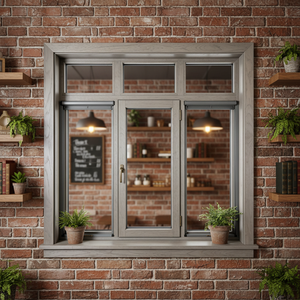
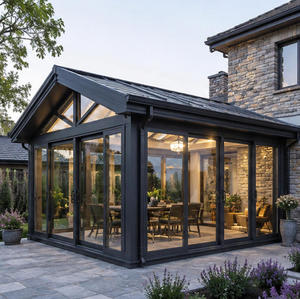
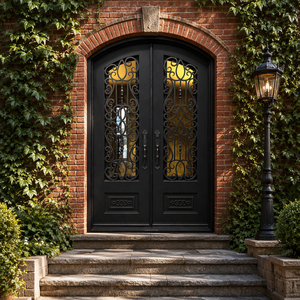
In modern architectural design, color selection for structural fenestration serves as a critical bridge between façade aesthetics and long-term durability. Among earth-tone fenestration options, aluminium brown windows—encompassing shades from deep bronze, chocolate brown, and anodized espresso to thermally sublimated woodgrain textures—have emerged as the gold standard for luxury residential developments, historic restorations, and contemporary multi-family commercial projects.
As premier Chinese suppliers and exporters based in Foshan—the world's hub for structural aluminum extrusion—our engineering team utilizes 6063-T5/T6 high-tensile architectural aluminum alloys. The primary technical advantage of brown-finished aluminum profile systems lies in their exceptional versatility under contrasting ambient lighting, coupled with advanced surface chemistry that resists ultraviolet (UV) degradation, oxidation, and salt-spray corrosion.
Technical Insight: Standard painted finishes often suffer from color fading and chalking over a 10-year lifespan. By deploying Qualicoat Class 2 Super Durable Powder Coatings and 25-micron Architectural Anodizing Treatments (AAMA 611/612 compliant), our brown aluminum window profiles achieve zero color shift (ΔE < 1.5) even under high UV exposure in desert and equatorial coastal environments.
Multi-stage chemical pre-treatment (Chromate-free conversion) paired with electrochemically deposited electrolytic bronze colorants ensures atomic-level adhesion.
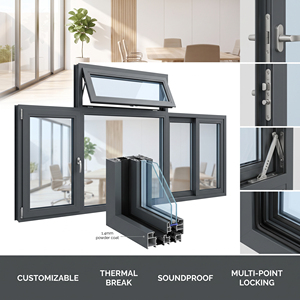
Equipped with 25% Glass-Fiber Reinforced Polyamide (PA66GF25) thermal barrier strips to break the conductive path of heat transfer through the metallic frame.
Precision-engineered sash overlap with double or triple insulated glass units (IGUs) provides superior atmospheric sealing against high wind pressure and urban noise pollution.
When specifying brown aluminium windows for large-scale international projects, importers and developers must evaluate the core performance differences between surface finishing technologies. Below is an engineering evaluation matrix detailing the trade-offs in durability, maintenance, aesthetic depth, and cost-efficiency:
| Finish Specification | Process Technology | Micron Film Thickness | UV Stability & Weatherability | Optimal Application Scenario |
|---|---|---|---|---|
| Anodized Bronze / Brown | Electrochemical sulfuric acid anodizing with inorganic metal salt coloring | 20 μm – 25 μm | Superior (Will not peel, chip, or blister; metallic sheen) | Coastal luxury villas, extreme solar intensity zones, high-traffic commercial facades |
| PVDF Fluorocarbon (3-Coat) | 70% Kynar 500 / Hylar 5000 resin liquid spray baking | 35 μm – 45 μm | Exceptional (20+ Year color retention guarantee) | High-rise curtain walls, institutional buildings, corrosive industrial atmospheres |
| Architectural Powder Coat | Thermosetting TGIC-free polyester powder electrostatic application | 60 μm – 80 μm | High (Qualicoat Class 1/2 certified) | Standard residential developments, interior partitions, suburban housing projects |
| Heat Transfer Woodgrain Brown | Powder base coat followed by vacuum sublimation film transfer | 60 μm – 70 μm | Moderate to High (Requires UV-stabilized clear coat) | Eco-resorts, rustic aesthetic villas, aluminum-clad wood replacement projects |
Choosing the correct brown aluminium window typology requires aligning opening mechanisms with building orientation, occupancy patterns, and structural loads. Below are primary product configurations engineered and exported by Window Wurx Industry Co., Ltd.:
Outswing and inswing brown casement windows represent the most airtight operable fenestration style available. Engineered with friction hinges made of SUS304 stainless steel and multi-point locking gear from European manufacturers (such as Sobinco, Siegenia, or Giesse), these windows compression-seal against outer frame gaskets under wind pressure. Ideal for climate zone 4 through 7 projects where low air infiltration (Q1 rating) is mandatory.
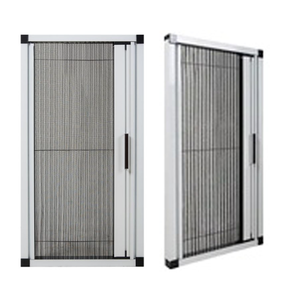
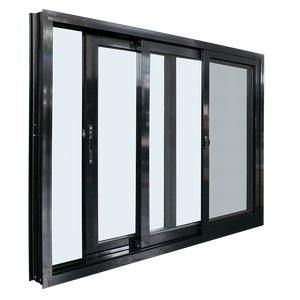
Featuring narrow frame sightlines and stainless steel bottom tracks with heavy-duty tandem rollers, our brown aluminium sliding systems accommodate pane weights up to 400 kg. Designed for large-span openings connecting interior living spaces with outdoor terraces. Integrated with dual-track or triple-track retractable plisse insect screens for tropical and subtropical environments.
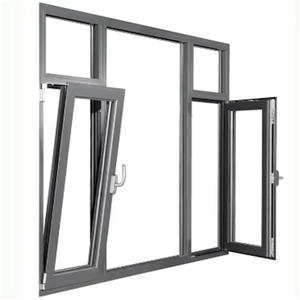
Combining dual-function operation within a single turn of the handle, tilt-and-turn windows tilt inward at the top for draft-free background ventilation or swing inward like a door for easy glass cleaning. Finished in deep metallic brown, these units are highly specified in modern urban apartments requiring stringent soundproofing (STC > 42 dB) and high structural safety.
The global architectural fenestration sector is experiencing a paradigm shift driven by stringent municipal energy codes, net-zero carbon mandates, and smart building integration. Buyers sourcing aluminium brown windows from China must align their supply chains with the following emerging technological trends:
Driven by Europe's Carbon Border Adjustment Mechanism (CBAM) and global ESG compliance, leading Chinese manufacturers are switching to primary aluminum produced via hydro-electric energy and post-consumer recycled billet blends (>75% recycled content). This reduces embedded carbon footprint from 18 kg CO₂/kg Al down to under 4.0 kg CO₂/kg Al while maintaining full structural yield strength.
Next-generation brown aluminum profiles are engineered with internal wiring channels to support electrochromic dynamic tinting glass and Building-Integrated Photovoltaic (BIPV) double glazing. The dark bronze and brown profile aesthetics hide perimeter wiring harnesses, offering a seamless architectural envelope for smart homes.
Minimalist design trends dictate maximum glass surface areas with frame visibility reduced to as little as 18 mm. Advanced hidden hinges, concealed drainage systems, and structural silicone structural glazing (SSG) allow brown frames to provide structural support while remaining visually unobtrusive.
China's window manufacturing ecosystem—centered in Foshan, Guangdong—has evolved from labor-intensive assembly to fully automated Industry 4.0 production lines. Understanding this evolution allows overseas project managers to optimize their procurement strategies:
Established in 1993, Window Wurx Industry Co., Ltd. operates as a tier-one manufacturer and direct global exporter from Foshan, China. Our facilities represent three decades of specialized engineering experience in custom architectural glazing:
Equipped with 3 automated extrusion assembly lines, automated glass handling equipment, and specialized testing labs for water tightness, air infiltration, and structural deflection.
Our window systems hold full CE certification for the European Union market and stringent AS2047 / AS1288 certification verified by independent NATA-accredited testing facilities for Australia and New Zealand.
Every window unit undergoes surface protective filming, corner guards, bubble wrap encapsulation, foam padding, and complete enclosure in fumigation-free plywood crates, ensuring zero transit damage on ocean voyages.
Expert answers addressing certification, structural customization, containerized shipping, and quality assurance when purchasing aluminium brown windows from China.
Our aluminum window and door systems are fully tested and certified under international standards. For Europe, we provide CE marking compliant with EN 14351-1. For Australia and New Zealand, our systems are certified under AS2047 (Windows and External Glazed Doors in Buildings) and AS1288 (Glass in Buildings), validated by third-party laboratory air/water/wind pressure testing. Test reports and certificates are provided directly with shop drawing submittals.
We utilize computerized color spectrophotometers (Delta E color space measuring) to maintain color variance within ΔE < 0.8 across all extrusion batches. By partnering exclusively with certified powder coating brands such as AkzoNobel, PPG, and Jotun, and running automated electrochemically controlled anodizing tanks, we guarantee absolute color uniformity from the first window frame to the last.
Yes, 100% customization is our core capability. We routinely produce two-tone thermally broken systems—for example, an anodized dark brown exterior frame to match building code mandates, combined with a clean powder-coated white or custom interior woodgrain to match interior decor. Frame depths can be customized from 50 mm up to 150 mm based on structural wind load requirements.
Darker finishes like brown and bronze show surface scuffs easily if improperly handled. We apply a thick, low-tack protective PE film directly to all aluminum profile surfaces immediately after heat curing. Units are then wrapped in shock-absorbing PE foam, corner-protected with heavy plastic caps, and vacuum-sealed before placement in custom fumigation-free wooden crates equipped with internal bracing straps.
Standard lead time for custom-engineered orders is 25 to 35 calendar days following shop drawing approval and deposit receipt. For standard stock profile finishes, lead times can be compressed to 20 days. Our 20,000 m² factory capacity allows us to process large-volume commercial container orders reliably without bottlenecking schedule timelines.
Yes. Our engineering department generates detailed 2D CAD elevations, cross-sectional installation details, and 3D Revit BIM models for project specifiers. We also provide structural wind load deflection calculations (Ix / Iy inertias) to ensure compliance with local building structural codes prior to manufacturing initiation.
Contact our technical engineering team today to review your architectural drawings, request factory-direct quotations, or order physical brown anodized and powder-coated sample kits.
Get a Quote