
Architectural bay windows—encompassing traditional 3-panel angled bay configurations, 90-degree box bays, and multi-segment curved bow window systems—represent one of the most structurally demanding exterior envelope elements in residential and commercial construction. This technical whitepaper establishes the procurement criteria, structural standards, and thermal performance benchmarks required when sourcing premium custom aluminum bay windows from leading OEM/ODM manufacturers in China.
Aluminum bay windows project outward from the structural load-bearing walls of a building. This creates significant cantilever forces, wind uplift vectors, and torsional stress at the corner mullion junctions. Premium Foshan factories utilize heavy-duty 6063-T6 aluminum extrusions (minimum 1.8mm to 3.0mm wall thickness for structural bays) integrated with internal steel reinforcement corner keys, argon-shielded structural welding, or high-tensile mechanical corner crimping to resist severe lateral wind pressures exceeding 3000 Pa (Pa).
Standard aluminum profiles exhibit high thermal conductivity. To prevent thermal bridging and interior condensation in North American and European climates, tier-1 Chinese suppliers implement multi-cavity thermal break extrusions featuring PA66-GF25 (25% glass-fiber reinforced Polyamide 66) barrier strips. Combined with warm-edge spacer technology and triple-pane Low-E insulated glass units (IGUs), modern bay systems reduce thermal transfer coefficients down to U-Factor ≤ 1.2 W/m²K.
Modern architectural intent demands maximized daylighting and unobstructed panoramic sightlines. Sourcing direct from custom manufacturing hubs allows architects to specify non-standard bay angles—ranging from 30°, 45°, and 90° box bays to custom 135° architectural angles. Incorporating structurally bonded fixed picture windows flanked by high-compression tilt-and-turn or casement vent sashes achieves optimal acoustic damping (STC up to 45 dB).
Explore our factory-direct product catalog engineered for residential luxury villas, commercial facades, and high-rise developments. All units undergo 100% factory pre-assembly and air-water tightness testing prior to export container loading.
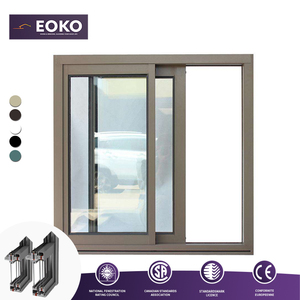
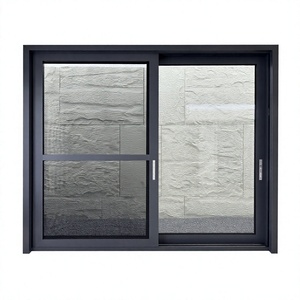
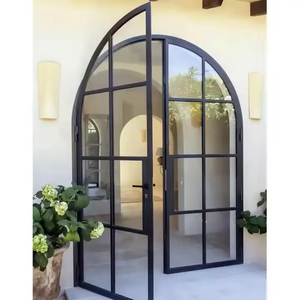
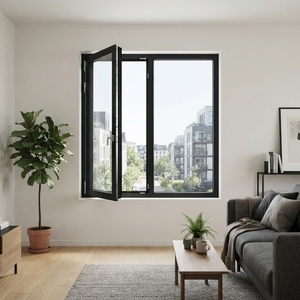
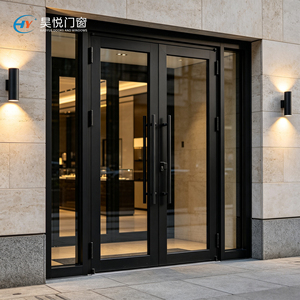
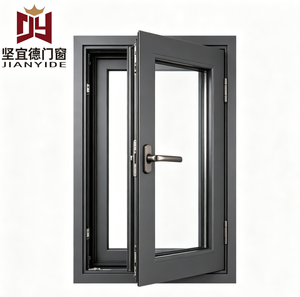
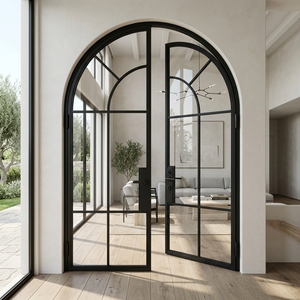
Selecting the correct profile geometry, alloy temper, and glass layup dictates structural safety and long-term energy savings. Below is the standard engineering breakdown for our certified aluminum bay & architectural window systems.
| System Component | Standard Commercial Grade | Thermal Break Bay Grade (Premium) | Passive House / Ultra-Low Energy |
|---|---|---|---|
| Profile Alloy & Temper | Aluminum 6063-T5 (1.4mm) | Aluminum 6063-T6 (1.8mm - 2.5mm) | High-Tensile 6060-T66 (2.0mm - 3.0mm) |
| Thermal Strip Tech | None / Non-thermal | PA66-GF25 Polyamide (24mm strip) | Multi-Cavity PA66 Insert with Aerogel Insulation |
| Glazing Configuration | 5mm + 12A + 5mm Tempered Glass | 6mm Low-E + 16Ar + 6mm Double Glazed | 4mm Low-E + 12Ar + 4mm Low-E + 12Ar + 4mm Triple |
| U-Factor Performance | U ≥ 3.5 W/m²K | U: 1.2 – 1.6 W/m²K | U ≤ 0.8 W/m²K (Certified) |
| Water Penetration | 350 Pa (Class 7A) | 600 Pa (Class 9A / AS2047) | 750 Pa (Extreme Typhoon Rating) |
| Hardware Integration | Standard Friction Hinge / Latch | German Siegeina / Hoppe Multi-point Lock | Concealed Heavy-Duty 180° Hinge Systems Set |
Established in 1993 in Foshan, Guangdong, our factory operates at the epicenter of China's aluminum extrusion industry. Over three decades of continuous R&D and international export compliance position us as a primary tier-1 supplier for real estate developers, general contractors, window distributors, and architectural design firms globally.
Our expansive industrial plant houses three high-speed automated CNC extrusion cutting lines, double-head precision miter saws, automated corner crimping stations, and a dedicated dust-free glass glazing workshop. Operating with over 150 skilled staff, we maintain a monthly output capacity exceeding 30,000 square meters of custom window and door units.
Global code compliance is essential for frictionless import and job-site inspection. Our window assemblies undergo rigorous independent lab testing for physical structural integrity, NFRC thermal performance ratings, European CE standards, and stringent Australian AS2047 / AS1288 window code testing including acoustic attenuation and water penetration certification.
To ensure 0% breakage across long-distance sea container transport, every custom unit receives PE protective wrapping film, thick corner protectors, cellular EPE foam buffer sheets, and is fully enclosed inside fumigation-free solid plywood crates. Internal steel framing inside sea containers prevents shifting or vibration damage during international transit.
As global building energy codes tighten and architectural design aesthetics shift toward ultra-minimalism, commercial buyers must align with forward-looking manufacturing capabilities. Below are the key industry shifts defining aluminum bay window sourcing over the next decade.
Traditional heavy bay window frames are rapidly giving way to narrow face-width aluminum extrusions (sightlines under 45mm). Utilizing high-strength aluminum alloys (6063-T6) allows factories to create structural bay mullions that support massive floor-to-ceiling glass panes without bulky framing profiles, expanding interior daylighting by up to 22%.
While double and triple IGUs remain standard, Next-Gen bay window designs are adopting Vacuum Insulated Glass (VIG). VIG technology eliminates the gas gap by using a micro-pillar vacuum layer, achieving thermal performance equivalent to a solid brick wall (U-factor under 0.60 W/m²K) in a ultra-thin 8.3mm glass profile ideal for sleek bay projections.
Modern residential buyers increasingly request intelligent home integration. Future-proof aluminum bay window units come factory-engineered with hidden wiring channels for motorized casement actuators, automated rain sensors, electrochromic smart glass tinting, and concealed motorized Venetian blinds integrated directly inside the sealed double glazing cavity.
The technological evolution of China's aluminum processing ecosystem has transitioned Foshan from a low-cost manufacturing center into a global R&D leader in structural glazing systems. Key innovations include:
To combat harsh marine environments and high UV exposure, top-tier factories employ automated vertical powder coating lines utilizing AkzoNobel or PPG Fluorocarbon (PVDF) paints. These coatings carry 20+ year guarantees against chalking, fading, or salt-spray corrosion. Furthermore, 3D/4D heat-transfer woodgrain technology delivers authentic timber textures with zero maintenance and fireproof Class-A aluminum ratings.
Bay windows require exceptional air-sealing along multi-angled perimeter sashes. Industry-leading suppliers partner directly with European hardware innovators like Siegenia, GU, Roto, and Hoppe to integrate concealed multi-point gear drive locking systems. Engaging 6 to 8 locking points around the perimeter sash compresses continuous EPDM weather gaskets, delivering zero air infiltration even under extreme wind storms.
For frameless corner box bay windows (90-degree glass-to-glass edge joints), advanced structural silicone glazing (SSG) techniques replace traditional corner mullion profiles. Using high-modulus structural silicone sealant (Dow Corning / Tremco) applied under robotic pressure control creates uninterrupted glass-to-glass views while maintaining hurricane-proof structural strength and watertightness.
Get immediate answers to crucial engineering, customization, compliance, and shipping queries prior to placing international volume orders.
Connect directly with our senior facade engineers and factory export specialists to receive detailed CAD shop drawings, technical specifications, and factory-direct wholesale pricing within 24 hours.