
Explore our factory-engineered fenestration solutions, built for extreme wind pressure, low-E thermal insulation, and coastal corrosion resistance.
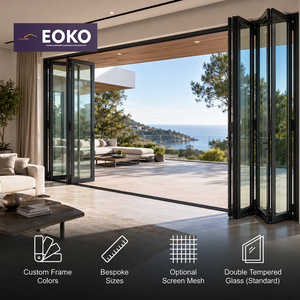
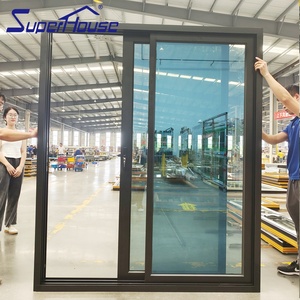
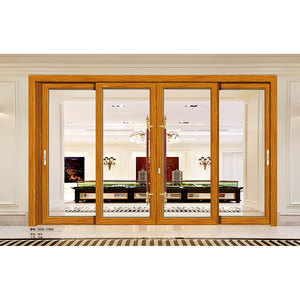
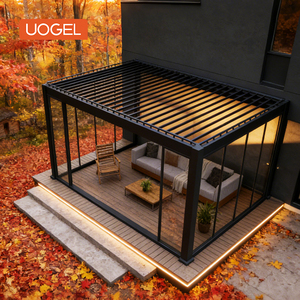
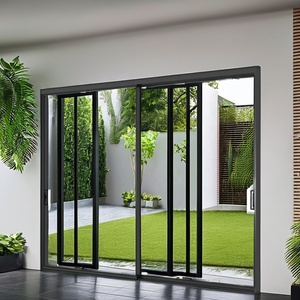
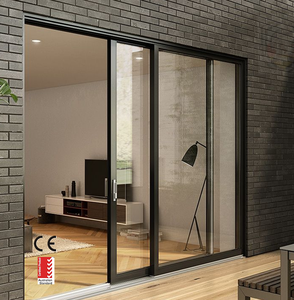
In contemporary architectural design, fenestration is no longer merely an envelope barrier; it is an engineered energy node, a acoustic filter, and a primary contributor to structural resilience. Aluminum casement windows have established dominance in both luxury residential villas and high-density commercial towers due to their superior structural rigidity, compression-seal air tightness, and expansive unobstructed sightlines.
As worldwide building energy codes tighten—such as Europe's EPBD requirements, North America's IECC standards, and Australia's NatHERS ratings—the global procurement vector has shifted decisively toward specialized OEM/ODM manufacturers located in Foshan, China. Foshan represents the global epicenter of precision aluminum extrusion, advanced surface finishing, and thermal-break assembly. Sourcing high-specification casement windows directly from certified Chinese exporters allows developers, architects, and trade importers to capture an unmatched balance of architectural aesthetics, structural performance (reaching 80 PSF impact ratings), and financial yield.
Understanding profile physics, barrier polymers, multi-point locking mechanics, and acoustic glass engineering.
Standard aluminum extruded profiles act as thermal conductors. Modern architectural casement systems utilize a dual-chamber profile split by 24mm to 34mm wide PA66-GF25 (Polyamide 66 reinforced with 25% glass fiber) thermal break strips. This mechanical barrier halts conductive heat transfer, lowering overall frame U-values dramatically to achieve Passive House energy benchmarks.
Designed for severe weather zones, such as Florida hurricane corridors and coastal typhoons, heavy-duty casement profiles feature reinforced wall thicknesses (up to 3.0mm) and corner-joint crimping with dual-component structural adhesive. Systems achieve up to 80 PSF structural design pressure, withstanding missile impacts and positive/negative wind force loads.
Unlike sliding configurations that rely on brush seals, casement sashes compress tightly against continuous EPDM (Ethylene Propylene Diene Monomer) cellular rubber gaskets upon closure. This continuous compression joint blocks water penetration under dynamic pressure tests (up to 700 Pa) and delivers sound transmission class ratings up to STC 45dB with laminated Low-E insulated glazing unit (IGU).
| Performance Vector | Standard Non-Thermal Casement | High-Tier Thermal Break Casement | Extreme Hurricane/Passive Casement |
|---|---|---|---|
| Frame U-Value (W/m²K) | 5.8 - 4.2 W/m²K | 1.8 - 1.4 W/m²K | 0.8 - 1.1 W/m²K (Passivhaus Standard) |
| Thermal Break Material | None / PVC Inserts | PA66-GF25 (24mm Strip) | PA66-GF25 (34mm Strip + Aerogel Foam fill) |
| Wind Pressure Resistance | 1.5 kPa (Class 3) | 3.5 kPa (Class 5) | ≥ 5.0 kPa (80 PSF High-Impact NOA) |
| Glazing Architecture | 5mm + 12A + 5mm Tempered | 6mm Low-E + 16Ar + 6mm Double IGU | 6mm + 1.52PVB + 6mm Laminated Triple IGU |
| Water Tightness Rating | 300 Pa (Class 6A) | 600 Pa (Class 9A) | 750+ Pa (ASTM E331 Severe Coastal) |
| Hardware & Lock Nodes | Single-Point Latch | Multi-Point Transmission Gear | Concealed Multi-Point European Groove Hardware |
Key structural innovations and material shifts that global developers and trade buyers must anticipate over the next decade.
Architectural demand is rapidly favoring frame-to-glass maximize ratios. Emerging casement designs incorporate concealed sashes where the exterior profile width drops below 45mm. Sashes sit flush against outer frames, maximizing daylight intake while maintaining structural integrity via structural silicon bonding (SSG) technology.
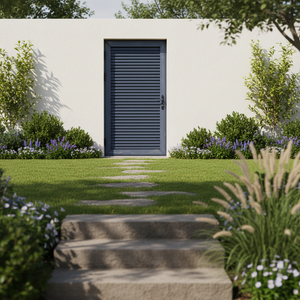
Modern B2B procurement combines window units with integrated motorized blind systems (magnetic or electric between double glazing) or built-in high-transparency stainless steel mesh (flyscreens/security screens). As seen in RG60C series, hybrid louver-casements serve dual purposes: privacy control and natural cross-ventilation for eco-residences.
Environmental Product Declarations (EPD) are becoming mandatory in green building tenders (LEED v4, BREEAM). Leading Chinese exporters utilize primary aluminum produced via hydroelectric smelting and incorporate recycled aluminum scrap, lowering embodied carbon from 18 kg CO2/kg Al down to under 4.0 kg CO2/kg Al.
While double and triple glazing increase sash depth and hardware stress, VIG technology packs standard triple-pane performance (U-value ≤ 0.6 W/m²K) into a 8.3mm ultra-thin glass profile. Sourcing casements pre-engineered for VIG units allows light-frame installation without structural deflection.
Advanced dual-extrusion crimping permits two-tone color customization. Architects can specify matte dark architectural charcoal (RAL 7016) or anodized bronze for the outdoor facade, while selecting warm interior woodgrain sublimation or soft off-white to match interior design palettes.
Commercial casements are increasingly integrated with BMS (Building Management Systems) via 24V DC hidden chain actuators. Rain sensors automatically close high-level clerestory casements during squalls, while thermal sensors trigger night-flush cooling cycles to reduce HVAC load.
Located in Dali Town, Foshan—China's premiere aluminum industrial cluster—we bridge European engineering precision with China's factory-direct production scale.
Over 30 years of manufacturing experience. We have weathered global design shifts, mastering aluminum alloy metallurgical control, precision miter cutting, and weather-seal longevity.
Equipped with 3 automated CNC processing centers, digital profile cutting saws, corner crimping machines, and automated double-glazing IGU lines processing 150,000+ m² annually.
Extensively tested to Australian Standard AS2047 (for deflection, air infiltration, water resistance, and ultimate strength), European CE EN 14351-1, and NFRC energy ratings.
Every sash and frame undergoes PE protective film wrapping, EPE foam corner guards, bubble wrap layering, and solid fumigation-free plywood crate packing for zero ocean freight damage.
Addressing key technical, compliance, customization, and logistical queries regarding Chinese aluminum casement window exports.
Our aluminum casement window systems are rigorously tested and certified for major international markets:
Yes. 100% of our production is made-to-order according to your architectural window schedules. We customize frame depths (e.g., 60mm, 70mm, 90mm series), wall thickness (1.4mm to 3.0mm), opening layouts (top-hung, side-hung, tilt-and-turn, fixed-casement combinations), glass thickness build-ups, powder coating colors (RAL palette), hardware brands (German Siegenia, Hoppe, or local premium brands), and sub-frame attachment angles.
Outward-opening casements are highly popular in North America, Australia, and coastal regions because wind pressure pushes the sash tighter against the frame weather-stripping, enhancing water tightness during heavy storms. They also save indoor living space. Inward-opening tilt & turn casements (popular in Europe) allow two functions: tilting inwards at the top for secure draft-free ventilation, or swinging inward 90 degrees like a door for easy glass cleaning on upper-floor high-rises.
We deploy a engineered 5-layer export packaging protocol: (1) PE anti-scratch film on aluminum extrusions, (2) Shock-absorbing EPE foam corner protectors, (3) Multi-layer waterproof plastic film wrapping, (4) High-density corrugated fiberboard edge caps, and (5) Custom-built fumigation-free plywood crates with internal structural bracing. Freight containers are loaded using air-bag shock absorbers to prevent cargo shifting during heavy ocean swells.
Once shop drawings (CAD layout) and color samples are signed off, typical production lead times range from 25 to 35 calendar days. Custom powder-coating or anodizing finishes may require an additional 5 days. Our 20,000 m² production base featuring 3 automated assembly lines allows us to maintain strict timeline predictability for multi-building developments.
Yes. Because thermal break windows utilize two separate aluminum profiles connected by a polyamide strip, we can finish the exterior frame in a durable powder-coated dark gray or PVDF metallic finish, while finishing the interior profile in a different shade or realistic woodgrain thermal-sublimation print to match interior cabinetry.
Whether you are an architect detailing custom curtain wall casements, a building contractor managing a residential project, or an importer seeking an OEM partner in China—our engineering team delivers full shop drawings, thermal calculations, and competitive pricing within 24 hours.