
Engineered to international building standards (AS2047, CE, NFRC). Custom-fabricated in Foshan for high-end residential villas, commercial façades, and municipal projects.
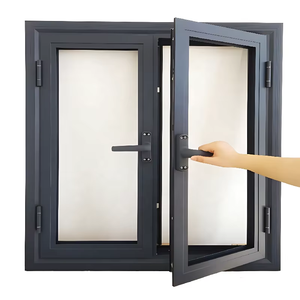
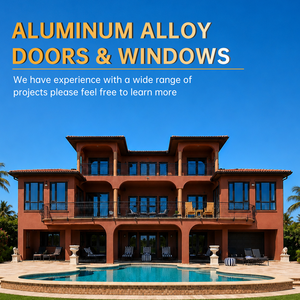
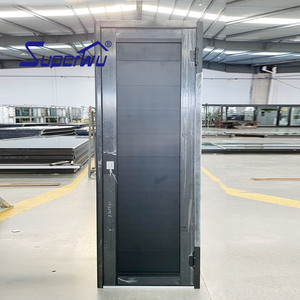
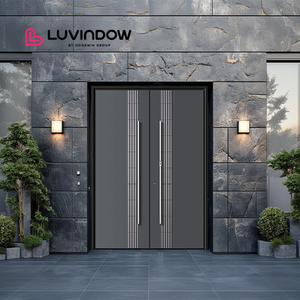
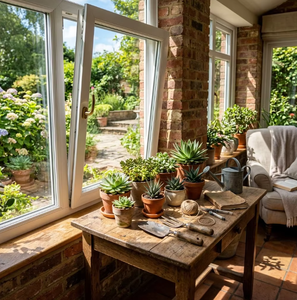
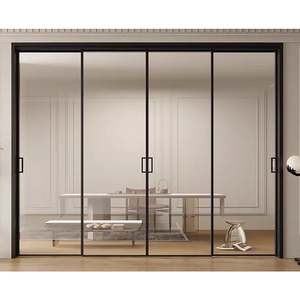
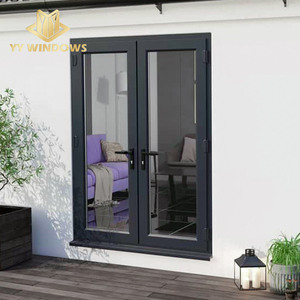
The global demand for high-performance building envelopes has transformed how architects, commercial builders, and real estate developers evaluate China aluminium window manufacturers and suppliers. Historically viewed primarily as a cost-effective manufacturing alternative, Foshan’s architectural aluminum ecosystem—anchored by pioneer enterprises operating since 1993—now represents the pinnacle of structural precision, thermal efficiency, and material innovation.
Modern architectural trends demand slim sightlines, massive uninterrupted glass panes, and ultra-low U-factors. Meeting these strict energy codes (such as Europe’s Passivhaus standard or North America’s NFRC energy benchmarks) requires deep metallurgy knowledge, precision corner-crimping mechanics, and advanced polyamid thermal break integration. Sourcing directly from top-tier Chinese original equipment manufacturers (OEMs) allows international procurement directors to streamline custom fabrication while cutting costs by 30% to 50% compared to Western counterparts.
High-purity primary aluminum billets extruded at precise pressure gradients deliver tensiles exceeding 180 MPa. Ideal for high-wind load coastal regions and structural curtain wall installations.
Reinforced 25% fiberglass thermal break strips eliminate thermal bridging between interior and exterior profiles, reducing building HVAC energy loss significantly.
A transparent overview of manufacturing standards, compliance protocols, and customization options provided by tier-1 China window factories.
Verified adherence to Australian standard AS2047 / AS2208, European CE norms, and North American NFRC hurricane-impact ratings. Full mechanical test reports supplied prior to shipment.
Every window and door profile is engineered to exact architectural drawings. Dual-color anodizing, AkzoNobel powder coating, curved frames, and customized hardware integration (Hoppe, Siegenia, CMECH).
Multi-stage protection featuring PE film wrapping, corner guards, EPE shock-absorbent foam, honeycomb board shielding, and fumigation-free solid plywood crating engineered for ocean transit.
Quantifiable performance parameters demonstrating structural integrity, water tightness, and soundproofing capabilities.
| Parameter | Testing Standard | Achieved Specification | Commercial Application |
|---|---|---|---|
| Thermal Transmittance (U-Value) | ISO 10077-2 / NFRC | 1.0 - 1.6 W/m²K (Low-E Triple Glazed) | Passivhaus & Cold-Climate Projects |
| Acoustic Insulation (STC/Rw) | ASTM E413 / ISO 717-1 | 38 dB - 45 dB (Laminated Glass Units) | Urban High-Rise & Hotel Suites |
| Wind Load Resistance | AS4055 / EN 12210 | Up to 4500 Pa (Class Ultimate Limit) | Coastal Villa & High-Wind Zones |
| Water Penetration Resistance | ASTM E331 / AS2047 | 600 Pa - 700 Pa Static Pressure | Tropical Storm & Hurricane Regions |
| Air Infiltration Rate | EN 12207 / ASTM E283 | Class 4 Air Tightness (<0.1 m³/h.m) | Energy-Efficient Residential Units |
As the international real estate sector accelerates toward net-zero decarbonization targets, aluminum fenestration sourcing strategies are shifting dramatically. Procurement managers are no longer evaluating suppliers purely on unit cost; systemic lifecycle performance, circular material provenance, and digital fabrication compatibility now dictate vendor selection.
Modern minimalist architecture prioritizes maximum glass surface area to encourage natural daylighting and biophilic connectivity. Next-generation aluminum casement and sliding systems feature recessed frame designs where the aluminum profiles are completely embedded into surrounding wall assemblies. Achieving structural stability with visible profile sightlines under 20mm requires high-density 6063-T6 alloy extrusion matrixes and carbon-fiber reinforced structural adhesive glazing.
The integration of IoT-driven actuators directly into multi-point locking gear tracks allows window systems to interface seamlessly with modern Smart Home Management Systems (BMS). Automated natural ventilation systems utilize weather sensors to adjust tilt-and-turn sashes based on real-time indoor air quality (IAQ), ambient humidity, and wind velocity. Furthermore, electrochromic glass (ECG) and integrated photovoltaic (BIPV) windows are rapidly transforming standard aluminum window openings into active energy-generating building surfaces.
Leading Chinese manufacturers are investing heavily in closed-loop recycling infrastructure. By utilizing hydro-powered aluminum smelting process lines and high-fraction post-consumer recycled aluminum scrap (reaching up to 75% recycled content), embodied carbon values for finished window frames drop by over 60%. Global developers working under LEED or BREEAM environmental scoring systems now actively request Environmental Product Declarations (EPDs) from their China supply partners.
Clear, direct answers to common questions asked by developers, contractors, and overseas trade importers.
Upload your architectural drawings, window schedules, or tender documents. Our senior facade engineers provide free technical consultations, U-value estimations, and factory-direct quotation proposals within 24 hours.
Contact Us Now