
Direct factory supply of CE and AS2047 compliant aluminum shop doors, heavy-duty pivots, multi-track sliding panels, and thermal-break entrance systems for international developers, contractors, and trade importers.
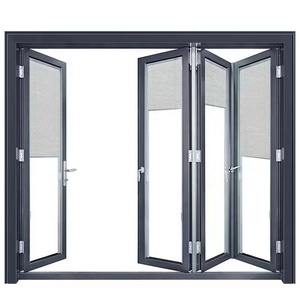
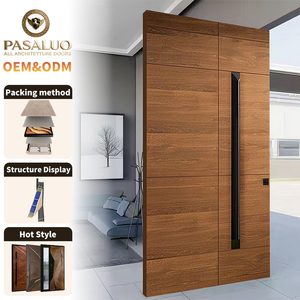
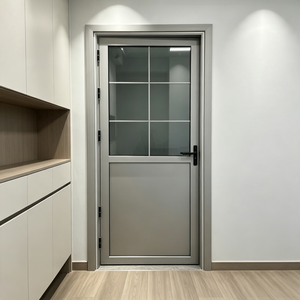
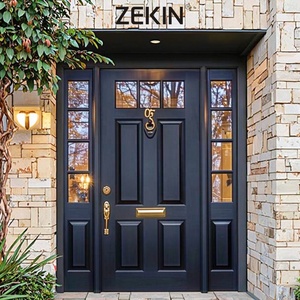
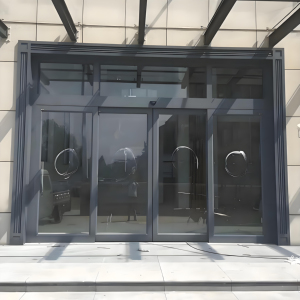
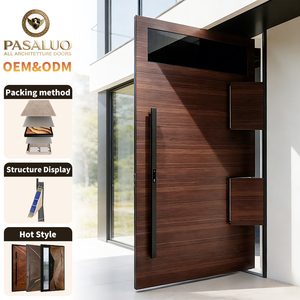
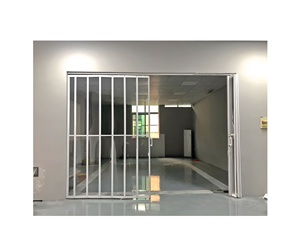
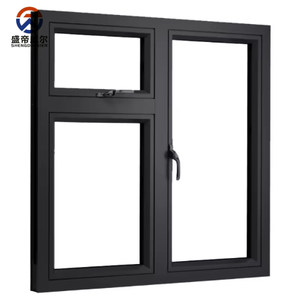
The global commercial real estate and retail construction sectors are undergoing a structural shift toward high-performance building envelopes. As retail storefronts, shopping centers, municipal complexes, and multi-family residential towers demand larger clear openings, structural rigidity, and rigorous thermal isolation, commercial aluminum shop doors have evolved from static entry barriers into sophisticated mechanical systems. Sourcing directly from top China suppliers offers overseas buyers, architects, and facade engineering firms an unprecedented synthesis of cost efficiency, custom extrusion capabilities, and compliance with stringent Western building codes.
At the center of this manufacturing transformation is Foshan, Guangdong Province—China’s premier aluminum industrial hub. Established export leaders, such as Window Wurx Industry Co., Ltd. (manufacturing high-specification Fenestration systems since 1993), utilize advanced automated extrusion lines, CNC machining centers, and automated glass double-glazing units to manufacture commercial entrance doors that conform to European Union CE standards (EN 14351-1) and Australian/New Zealand AS2047 code requirements.
Core Procurement Metric: Modern shop doors are evaluated on structural deflection limits (under wind load pressure testing up to 3000 Pa), overall U-factor energy performance, acoustic STC/OITC sound reduction values, and cycle durability exceeding 500,000 continuous opening/closing operations.
Commercial shop fronts and exterior store entrance systems require structural integrity to prevent sashes from sagging under heavy double or triple-glazed insulated glass units (IGUs). China's leading exporters utilize primary billet aluminum alloyed to 6063 specs:
Operating out of Foshan with 3 fully automated production lines and 150+ skilled technicians. Our operational throughput supports project-based custom manufacturing with consistent annual volume expansion.
Every commercial shop front door and structural frame system undergoes rigorous laboratory testing for air infiltration, water resistance, wind pressure resistance, and hardware endurance under EU and Australasian standards.
To ensure flawless arrival overseas, products are wrapped in protective PE film, corner-shielded, encased in bubble wrap, and loaded into fumigation-free wooden crates reinforced with internal container bracing.
The manufacturing landscape for commercial entrance solutions is experiencing significant innovation. B2B buyers and specifiers must navigate these developments when creating project specifications:
Traditional non-thermal aluminum frames exhibit high thermal conductivity ($K \approx 160\text{ W/m}\cdot\text{K}$), leading to thermal bridging, interior condensation, and high HVAC energy consumption. Modern high-tier Chinese exporters integrate polyamide thermal barrier strips composed of PA66 reinforced with 25% fiberglass (GF25). This mechanical insertion breaks the thermal bridge, reducing the frame's overall coefficient of heat transfer ($U_f$) to as low as $1.6 - 2.2\text{ W/m}^2\cdot\text{K}$. For energy-conscious projects in North America and Europe, thermal break shop doors significantly lower building operational carbon emissions.
Architectural preference has shifted toward oversized, seamless glass pivot doors for luxury boutique storefronts, hotel lobbies, and upscale automotive showrooms. Modern pivot engineering utilizes floor-mounted hydraulic spring pivots capable of supporting sash weights exceeding 400 kg. Exporters incorporate adjustable 3D pivot hinges and multi-point concealed locking mechanisms that maintain slim sightlines while satisfying strict physical security ratings.
Commercial doors installed in coastal or high-pollutant urban environments require superior surface degradation resistance:
As international supply chains emphasize transparency, digital verification, and carbon accounting, global procurement managers sourcing commercial doors from China are adopting new buying frameworks:
Institutional developers increasingly demand Environmental Product Declarations (EPDs) for structural aluminum components. Leading Chinese suppliers are shifting toward low-carbon primary aluminum smelted using hydropower (Hydro-Aluminium billets) and incorporating recycled scrap aluminum (up to 30-50% post-consumer content). Procurement contracts now routinely specify carbon intensity thresholds measured in metric tons of $\text{CO}_2$ per metric ton of extruded profile.
To eliminate site rework and field trimming, the procurement workflow relies on 3D Building Information Modeling (BIM) files (Revit/IFC formats). Top China exporters maintain dedicated CAD engineering desks that translate architectural floor plans into detailed shop drawings—specifying anchor bolt placement, perimeter sealant gaps, expansion joint tolerances, and glass dead-load block positioning before manufacturing begins.
Commercial entrance doors are becoming fully integrated digital nodes within Building Management Systems (BMS). Modern export specifications frequently incorporate built-in magnetic locks, biometric access control pathways, motor-driven automatic sliding or folding operators (such as DORMA or GEZE compatible systems), and embedded sensor wiring channels designed directly into the aluminum extrusion profile.
Essential technical and logistical answers for project managers, buyers, and general contractors importing aluminum entrance systems from China.
For Europe, products must carry CE marking under EN 14351-1 testing for structural load, water tightness, and air permeability. For Australia/New Zealand, compliance with AS2047 (windows and external doors) and AS1288 (glass selection and installation) is required. For North America, testing under NFRC (U-factor and SHGC ratings) and AAMA/WDMA/CSA standards ensures local building code compliance.
Yes. Customization includes frame profile dimensions, thermal-break depth, dual-color powder coating, anodizing finish thickness (up to Class 25), and glass options (double/triple-glazed, Low-E coatings, argon gas fill, laminated security glass). Hardware can be factory-fitted with premium Chinese brands or pre-milled for international brands like DORMA, LCN, Cisa, or Yale.
Window Wurx utilizes a multi-tiered export packaging system: individual units are wrapped in protective PE film, reinforced with high-density foam edge guards, enclosed in air-cushioned bubble wrap, and secured inside fumigation-free solid plywood crates. Within the shipping container, crates are locked with steel strapping and timber bracing to prevent shifting caused by ocean transit vibration.
Following CAD drawing sign-off and color sample approval, production typically requires 25 to 35 business days depending on system complexity (e.g., custom extrusion dies, specialized fire-rated laminated glass, or PVDF custom color runs). Large multi-building commercial developments are scheduled in container batches to align with job site erection timelines.
Whether you require custom shopfront entrances, high-traffic pivot doors, thermal-break sliding systems, or complete structural fenestration packages—our engineering team is ready to analyze your architectural drawings and provide factory-direct pricing.
Contact Us