
Direct factory production portfolio certified under AS2047, CE, and ISO9001 quality management benchmarks.
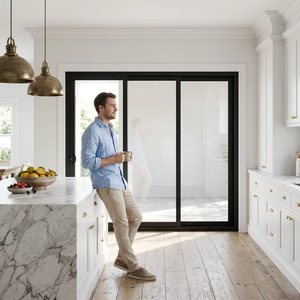
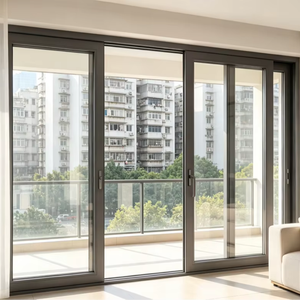
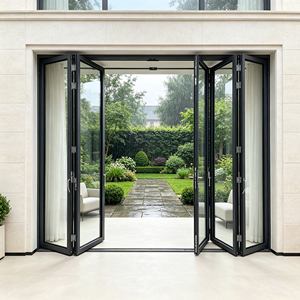
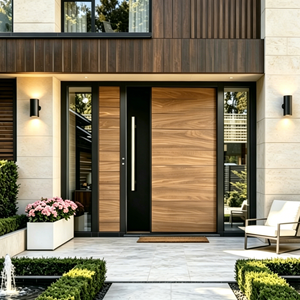
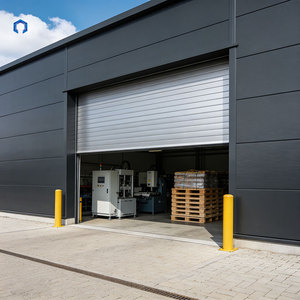
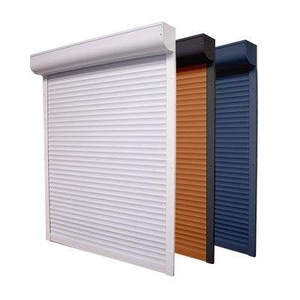
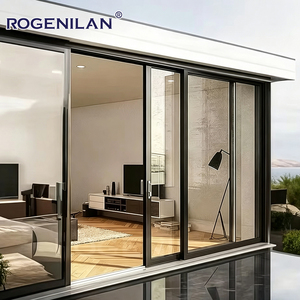
Operating from Foshan, China—the world’s premier architectural extrusion hub—Window Wurx Industry Co., Ltd. delivers verified structural integrity, energy efficiency, and export compliance.
Utilizing high-density 6063-T5/T6 primary architectural grade aluminium profiles. Wall thickness parameters meet strict structural wind load resistance codes ranging from 2.0mm up to 3.0mm heavy-duty commercial threshold requirements.
Fully compliant with Australian standard AS2047 (air infiltration, water penetration, ultimate limit state deflection) and European Union CE Safety Marking (EN 14351-1), simplifying structural building code approval for international developers.
Every order undergoes rigorous export packaging: surface protective film, corner guards, EPE foam wrapping, 5-ply heavy corrugated cartoning, and heat-treated fumigation-free solid timber crate containment for containerized ocean transport.
In modern architectural design and real estate development, the front entry system serves as both the aesthetic anchor and the primary structural barrier of a building envelope. As global energy building performance directives (such as Europe’s EPBD, Australia’s NCC/NatHERS, and North America’s IECC) enforce lower U-factors and higher airtightness ratings, sourcing high-performance front doors has transformed from a simple material purchase into a complex engineering procurement process.
China has long emerged as the world’s manufacturing powerhouse for architectural fenestration systems. Specifically, the Foshan industrial cluster in Guangdong province represents over 40% of global high-end aluminium door and window export output. For international procurement managers, real estate developers, commercial contractors, and importing dealers, partnering directly with a qualified China wholesale aluminium and glass front doors manufacturer offers significant economic and technical leverage—provided the structural, thermal, and manufacturing specifications are meticulously evaluated.
To assist architects, structural engineers, and commercial buyers in specifying thermal break entry doors and panoramic glass front entrance systems, the following data matrix outlines standard engineering benchmarks delivered across our manufacturing lines in Foshan:
| Performance Vector | Standard Non-Thermal System | Thermal Break Architectural System | Ultra-Insulated / Passive House System |
|---|---|---|---|
| Profile Alloy & Temper | 6063-T5 Aluminium (1.4–1.8mm) | 6063-T5 / T6 High-Tensile (2.0–3.0mm) | 6063-T6 Structural Alloy (3.0mm+) |
| Thermal Strip Tech | None (Solid Profile) | PA66-GF25 Polyamide (24mm–34mm) | PA66-GF25 + Aerogel / Foam Infill |
| U-Factor (Thermal Transference) | 3.5 – 4.8 W/m²·K | 1.6 – 2.2 W/m²·K | 0.8 – 1.2 W/m²·K |
| Acoustic Rating (STC / Rw) | 28 dB – 32 dB | 38 dB – 44 dB | 45 dB – 50 dB+ |
| Water Penetration Resistance | 250 Pa – 350 Pa | 450 Pa – 600 Pa (AS2047 Class) | 700 Pa+ Heavy Storm Grade |
| Wind Pressure Resistance | 2.5 kPa (Serviceability) | 4.5 kPa – 5.0 kPa (Ultimate) | 6.0 kPa+ Hurricane Impact Grade |
| Glass Configuration | 5mm + 12A + 5mm Tempered Clear | 6mm Low-E + 16Ar + 6mm Triple Silver | 8mm Laminate + 18Ar + 6mm Low-E + 6mm |
A resilient architectural glass entry door system relies on an intricately engineered assembly where material science meets structural engineering. When evaluating wholesale manufacturers in China, engineering teams must dissect four fundamental system components:
Aluminium profile quality dictates structural deflection under wind loads, hardware retention torque, and frame longevity. Premium Chinese manufacturers utilize primary ingot aluminium rather than recycled scrap metal. The standard alloy 6063-T5 delivers ideal surface finish capabilities for powder coating and anodizing, providing an ultimate tensile strength of no less than 160 MPa. For heavy-duty commercial pivot entry doors or large-span lift-and-slide glass entryways, 6063-T6 temper is specified, pushing yield strength above 210 MPa to prevent frame twisting under heavy structural glass loads.
Raw aluminium possesses a high thermal conductivity of approximately 200 W/m·K. Uninsulated metal frames act as thermal bridges, allowing extreme exterior cold or heat to transfer directly indoors while encouraging condensation line formation. Modern thermal break front doors utilize structural polyamide thermal barrier strips reinforced with 25% glass fiber (PA66-GF25). These strips join the outer and inner aluminium extrusions, reducing frame conductivity to under 0.3 W/m·K. Multi-cavity thermal strips filled with expanded polyurethane (PU) or aerogel insulation further enhance U-values to meet stringent net-zero energy design criteria.
Because glass compromises up to 80% of an entrance door panel’s total surface area, glass performance directly impacts overall thermal efficiency and safety. Reliable China OEM factories supply certified Insulated Glass Units (IGUs) incorporating:
The operational feel and security of a wholesale entry door depend upon hardware mechanics. Leading Chinese factories integrate world-class hardware systems—including German-engineered Siegenia, Hoppe, and GU, Italian Giesse systems, or high-tier proprietary hardware. Heavy-duty concealed 3D-adjustable hinges engineered to support panel weights exceeding 300kg, coupled with multi-point locking mechanisms (hook bolts, deadbolts, and continuous roller locking cams), guarantee airtight gasket compression across all four perimeter edges.
The global construction and building material industry is shifting rapidly under the pressure of smart technology integration, evolving environmental regulations, and changing architectural aesthetics. B2B buyers and importers looking to maintain market competitiveness must align their product portfolios with five major upcoming trends:
Traditional mechanical key locks are rapidly giving way to motorized multi-point locks compatible with biometric fingerprint scanning, facial recognition sensors, RFID keypads, and smart-home automation protocols (Matter, Zigbee, Z-Wave). Forward-thinking manufacturers are building wiring channels directly inside thermal aluminium door profiles for plug-and-play smart access hardware.
Modern luxury architecture demands maximum daylight and unobstructed outdoor views. Sourcing trends show an exponential demand surge for ultra-slim profile entry doors—reducing visible frame face widths down to 20mm–35mm while maintaining extreme structural load capacity through steel-reinforced interior aluminium mullions.
Architects and project developers in Europe and North America increasingly mandate Environmental Product Declarations (EPDs) detailing embodied carbon metrics. Chinese manufacturers utilizing hydro-powered green primary aluminium smelting and zero-VOC electrostatic powder coating lines are taking lead positions in international contract bidding.
The production of architectural entry doors in China has transitioned from traditional manual workshop fabrication to automated Industry 4.0 smart manufacturing plants. Understanding these technical shifts enables buyers to set precise Quality Assurance (QA) parameters during factory audits:
Modern production facilities employ 5-axis automated CNC machining centers (such as FOM Industrie or Emmegi). Key lock slotting, hinge mounting recessing, corner miter joint cutting, and drainage weep-hole routing are performed under digital CAD/CAM guidance. This eliminates manual measurement tolerances, holding overall frame dimension accuracy within ±0.5mm across 3-meter tall entry door assemblies.
Given that exterior front doors face constant UV exposure, air pollution, and coastal salt spray, advanced surface finishing technology is essential. Premier Chinese manufacturers operate dedicated automated vertical coating lines supporting:
Traditional mechanical corner screw joints can loosen over time during shipping transit or heavy wind loads, creating micro-gaps that leak water and air. Modern China factories utilize heavy-duty hydraulic corner crimping combined with dual-component structural corner adhesives (such as Weiss COSMOFEN) or seamless laser-welding technology. This produces airtight, watertight corner joints capable of withstanding extreme torsional stress.
Technical, commercial, and logistical clarifications for international importers, architectural specifiers, and trade dealers sourcing from China.
Whether you are specifying a high-end residential villa development, importing standard window & door inventory, or seeking reliable OEM/ODM factory capacity in Foshan, our engineering team is ready to deliver detailed shop drawings, technical pricing schedules, and sample packages.