
Explore our structural grade, CE & AS2047 certified wholesale product line manufactured for global builders, distributors, and architectural contractors.
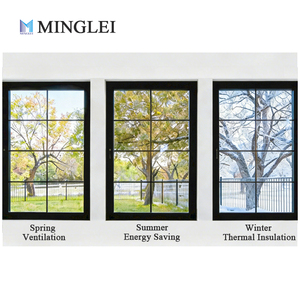
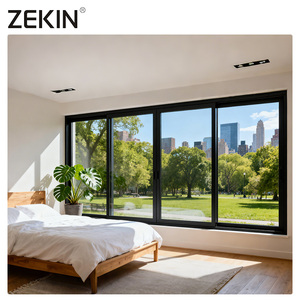
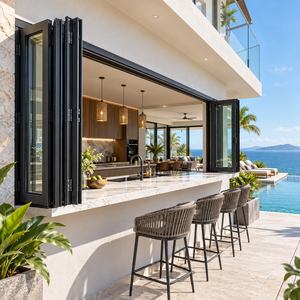
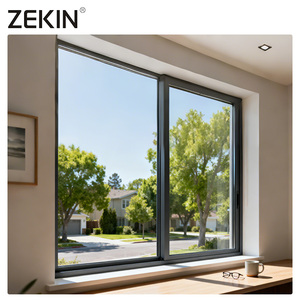
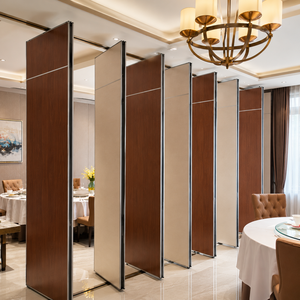
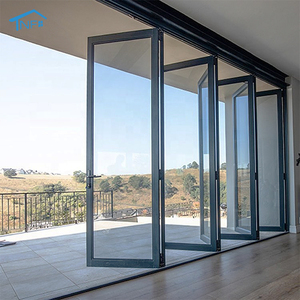
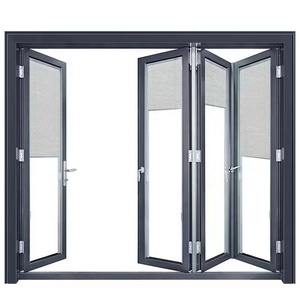
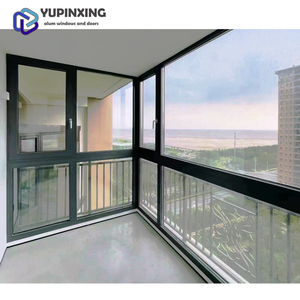
Operating from China's premier aluminum production cluster in Foshan, Window Wurx Industry Co., Ltd. combines three decades of metallurgical engineering with stringent global certification compliance.
Every commercial and residential frame order is manufactured from custom CAD/BIM shop drawings rather than limited stock profiles. Our advanced vertical powder-coating line supports dual-color extrusion technology, allowing distinct exterior architectural finishes (such as PVDF dark bronze) while preserving interior aesthetic harmonies (such as matte architectural white).
Structural reliability requires empirical verification. Our architectural window and door systems are fully certified under CE (EN 14351-1) for the European Union, tested to AS2047 / AS1288 standards for Australian structural and water-penetration resistance, and configured for NFRC thermal performance compliance across North America.
Long-haul ocean container transit demands superior protective packaging. Every window unit undergoes individual PE shrink wrapping, heavy-duty EPE foam corner guard fitment, multi-layer corrugated wrap, and placement inside fumigation-free ISPM-15 compliant plywood crates with internal shock-absorbing braces.
Understanding the material science behind high-performance aluminum fenestration systems: from extrusion tempers to thermodynamic U-factor optimization.
The foundation of structural fenestration lies in magnesium-silicon aluminum alloys. While standard residential fabricators often rely on unverified recycled scrap, our factory exclusively utilizes primary ingot 6063-T5 and 6063-T6 architectural grade extrusions.
Aluminum exhibits a high thermal conductivity ($k \approx 200 \text{ W/m}\cdot\text{K}$). To prevent heat bridging, high-efficiency fenestration relies on mechanical insertion of low-conductivity barrier strips.
We strictly utilize PA66-GF25 (Polyamide 66 reinforced with 25% glass fiber) rather than cheap PVC substitutes. PA66-GF25 matches the linear coefficient of thermal expansion of aluminum extrusions ($2.3 \times 10^{-5} /\text{K}$), eliminating internal shear stress, frame distortion, and seal degradation under extreme seasonal temperature differentials (-30°C to +70°C).
Glass accounts for 75% to 85% of a window’s total surface area. Achieving low total U-factors ($U_w \le 1.2 \text{ W/m}^2\text{K}$) requires precise glass build-up specification:
Empirical technical parameters across primary custom aluminum system categories manufactured by Window Wurx.
| System Classification | Structural Alloy Grade | Thermal Break Profile | Thermal U-Factor ($U_w$) | Acoustic Damping (STC) | Design Pressure (DP Rating) |
|---|---|---|---|---|---|
| Thermal Break Casement | 6063-T5 (1.4mm - 2.0mm) | 24mm PA66-GF25 Strip | 1.1 - 1.4 W/m²K | 38 - 44 dB | DP65 - DP80 |
| Hurricane Impact Sliding | 6063-T6 (2.0mm - 3.0mm) | 20mm PA66-GF25 Strip | 1.4 - 1.8 W/m²K | 35 - 40 dB | DP70 - DP90 (SGP Interlayer) |
| Heavy-Duty Folding / Bi-Fold | 6063-T5 / T6 (2.0mm) | 14.8mm - 20mm PA66 | 1.3 - 1.6 W/m²K | 36 - 42 dB | DP55 - DP70 |
| Unitized Curtain Wall | 6063-T6 (2.5mm - 5.0mm) | 32mm Structural Polyamide | 0.9 - 1.3 W/m²K | 42 - 48 dB | DP80 - DP120+ |
Key technology shifts driving specifications for architectural buyers, real estate developers, and commercial importing groups over the next decade.
Global building energy codes (such as the EU Energy Performance of Buildings Directive and US Title 24) are enforcing ultra-low operational carbon emissions. Procurement trends favor triple-glazed, multi-chambered thermal break profiles achieving certified Passive House Institute (PHI) ratings ($U_w < 0.8 \text{ W/m}^2\text{K}$).
Modern architectural design prioritizes structural transparency. Advanced procurement demands narrow frame sightlines (down to 21mm visible interlocking stile width) coupled with concealed hinges and flush sill details that handle massive structural loads without compromising clean aesthetics.
Automated fenestration is rapidly transitioning from luxury commercial buildings to mainstream residential projects. Factory pre-wiring for hidden concealed actuators, magnetic sensor contact switches, and smart home protocol integration (RS485, Zigbee, KNX) represents an indispensable procurement requirement.
Escalating climate volatility has heightened global demand for impact-rated glazing systems. Importers in coastal jurisdictions require laminated glass configurations containing SentryGlas® (SGP) ionoplast interlayers that resist cyclic pressure up to 90 PSF and withstand missile impact velocities without breach.
From raw billet extrusion to container loading: how Window Wurx eliminates project risk for overseas buyers.
Before metal cutting initiates, our technical division generates complete 2D cross-sectional elevations, anchor installation details, and glass schedule sheets. This guarantees absolute compliance with local building codes, structural wind load requirements, and rough opening (RO) site dimensions.
Extrusions are processed on 5-axis automated CNC machining centers to ensure precise corner mitering, hardware mortising, and weep hole drainage milling. Surface finishes utilize premium AkzoNobel or PPG PVDF fluoropolymer resins complying with AAMA 2605 specifications for superior resistance against salt spray, UV fading, and chalking.
Randomly selected frame assemblies undergo rigorous factory air-infiltration (ASTM E283) and cyclic water-penetration testing (ASTM E331). Upon quality sign-off, finished units are packed into reinforced crates and systematically loaded into containers using specialized loading ramps to prevent ocean transit shifting.
Direct technical answers for commercial contractors, architects, real estate developers, and fenestration importers.
Our aluminum window and door systems hold full CE certification (encompassing EN 14351-1 performance parameters for air tightness, water tightness, and wind load resistance). For Oceania markets, our products are independently tested to AS2047 / AS1288 standards, verifying structural capacity under extreme wind loads and mechanical durability. Furthermore, our insulated glass assemblies carry NFRC compliance documentation for North American energy audits.
Yes. Every unit manufactured in our 20,000m² Foshan plant is tailored to project specifications. You can specify exact aluminum profile wall thicknesses (from 1.4mm up to 3.0mm+), thermal break widths (PA66-GF25), surface coating processes (Powder Coating, PVDF, Anodized, or Woodgrain transfer), glass combinations (Double, Triple, Laminated, Low-E, Argon-filled, SGP impact), and premium hardware brands (German Siegenia, Roto, Hoppe, or certified high-durability native hardware).
We deploy a zero-damage 5-Layer Export Protective System. First, aluminum frames are sealed with protective anti-scratch film. Second, heavy EPE foam corner caps shield fragile profile edges. Third, entire units are shrink-wrapped in moisture-proof PE film. Fourth, windows are encased in rigid double-corrugated outer board. Finally, products are loaded into custom fumigation-free ISPM-15 plywood crates equipped with internal vibration-dampening foam wedges and heavy-duty steel bands.
We offer flexible direct-from-factory dealer partnership models that eliminate middleman markups without expensive franchise fees. Overseas partners receive full architectural support including 3D rendering assistance, BIM/CAD shop drawing preparation, customized sample corner kits, physical hardware displays, factory pricing structures, and dedicated engineering consultation for bidding on commercial tenders.
Standard fabrication lead time ranges from 25 to 35 calendar days following final signed approval of CAD shop drawings and deposit confirmation. For custom architectural extrusion dies or special PVDF color matches, lead times extend by approximately 7–10 days. Our 3 automated CNC assembly lines provide dependable volume throughput for large multi-family or commercial construction developments.
Standard architectural powder coating (AAMA 2603/2604) provides excellent scratch resistance for inland residential projects. However, for oceanfront or coastal installations exposed to high salt-air humidity and intense solar ultraviolet radiation, we strongly recommend PVDF (Fluoropolymer) coating conforming to AAMA 2605. PVDF coatings utilize carbon-fluorine chemical bonds that maintain gloss retention and color stability for over 20+ years without chalking or peeling under severe marine exposure.
Whether you require custom thermal break casements, heavy-duty hurricane sliding doors, or complete unitized curtain wall systems, our engineering team delivers precision solutions direct from Foshan.
Get Catalog