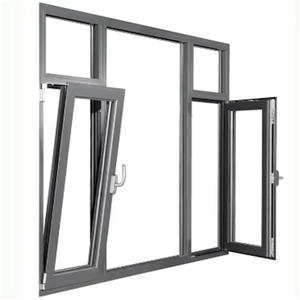

Custom-engineered aluminum profile assemblies compliant with CE, AS2047, and international structural standards.
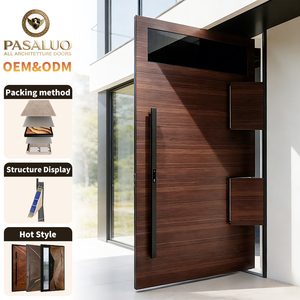
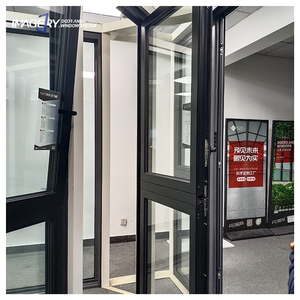
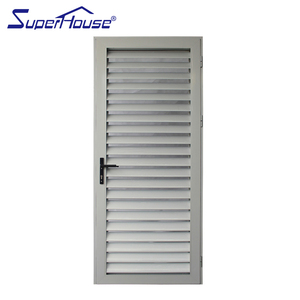
Operating from China's architectural hub since 1993, supplying certified aluminum window, door, and cabinet partition systems to worldwide developers.
Housing 3 automated extrusion and assembly lines with over 150 skilled fabricators, maintaining an annual export growth rate exceeding 30%.
Independently tested systems meeting rigorous European Union structural standards and Australian AS2047 fenestration safety requirements.
Fumigation-free wooden cases, edge protectors, foam interleaving, and structural container bracing to ensure zero transit damage across long-haul ocean routes.
In high-end architectural residential projects and commercial hospitality developments, kitchen door systems serve a dual operational role: creating a strict barrier against ambient noise, high thermal energy, oil vapor, and moisture, while serving as a refined visual transition between kitchen interiors and main living areas. Sourcing custom OEM aluminium kitchen doors requires structural specifiers, procurement managers, and developers to evaluate extrusion metallurgy, surface passivation, hardware endurance, and perimeter sealing mechanics.
The core structural integrity of modern aluminum kitchen cabinet doors, sliding glass partitions, and swing entry doors relies on high-grade aluminum extrusions. For custom OEM fabrication, 6063-T5 aluminum alloy remains the industry benchmark. It offers an ideal balance of tensile strength (minimum 175 MPa), yield strength (minimum 130 MPa), and exceptional surface finish fluidity required for precision anodizing and fluorocarbon (PVDF) powder coatings.
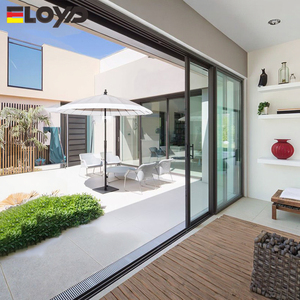
For large-span architectural glass doors—such as 12-foot multi-panel sliding kitchen systems or heavy-duty titanium-aluminum honeycomb doors—wall thickness specification must meet strict deflection tolerances. Standard residential profiles feature a frame depth ranging from 1.2mm to 2.0mm. However, heavy-use commercial kitchen doors require reinforced profile walls of up to 3.0mm to withstand frequent cycling without frame deformation or corner seam separation.
Kitchen environments generate localized heat loads and acoustic disturbances from high-decibel appliances. Non-thermal break aluminum profiles readily conduct heat, leading to energy inefficiency and condensation buildup on glass surfaces. Modern OEM manufacturing integrates polyamide (PA66-GF25 with 25% glass fiber reinforcement) thermal barrier strips inside the aluminum extrusions.
Kitchen doors face aggressive environmental factors, including grease splatters, humidity, detergent chemicals, and frequent tactile interaction. Untreated or poorly finished aluminum profiles quickly show corrosion, fingerprint stains, and surface pitting. Custom OEM manufacturing utilizes multi-stage electro-chemical surface treatments:
Controlled anodic oxidation creates an integral aluminum oxide layer. Provides scratch resistance, metallic depth, and non-fingerprint surfaces ideal for minimalist dark-toned kitchen frames.
Kynar 500-based resin coatings applied in a three-coat, two-bake automated system. Offers immunity to salt fog, oil degradation, UV discoloration, and harsh chemical cleaners.
Modern kitchen door manufacturing balances full-glaze visual transparency with solid opacity for storage areas or utility kitchens. Specifiers must match core materials to operational requirements:
How global architectural demands, smart home integration, and sustainable manufacturing standards are shaping the next generation of door sourcing.
Architects are driving demand toward ultra-narrow visible frame widths (under 16mm). These minimalist aluminum profiles maximize glass surface area, letting natural daylight penetrate deep into kitchen spaces while providing clear visual connectivity.
Commercial and luxury residential developments are increasingly specifying soft-close magnetic dampening mechanisms, flush-track bottom rails, and integrated electric drive systems compatible with touchless sensors and home automation networks.
ESG compliance is shifting OEM procurement preferences toward suppliers using recycled primary aluminum and zero-VOC powder coating processes, meeting international green building standard specifications like LEED and BREEAM.
Direct answers regarding custom sizing, technical certifications, hardware compatibility, production lead times, and global shipping logistics.
Our aluminum window and door systems are CE certified for European building directives and rigorously tested to AS2047 fenestration standards for Australia and New Zealand. Factory operations follow ISO9001 quality management protocols. Complete structural wind-pressure, water-tightness, and acoustic test reports are provided during initial shop drawing reviews.
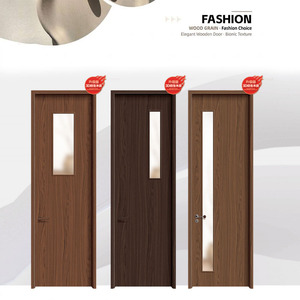
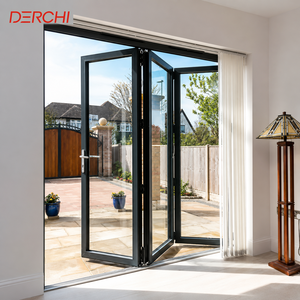
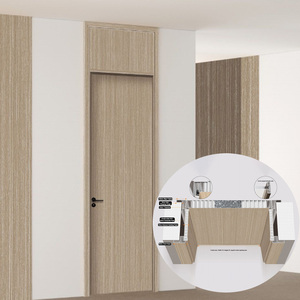
Yes. As a dedicated OEM supplier, we build every order to your precise architectural drawings. Frame profiles, overall door dimensions, opening mechanisms (sliding, pocket, bi-fold, swing, or pivot), glass specs (frosted, Low-E, ribbed, tempered), and surface finishes (RAL color powder coat, anodized, or grain wood-effect) are customized. Dual-color profiles are also available to match different interior and exterior palettes.
Standard lead times range from 25 to 35 business days following formal approval of CAD shop drawings and finish samples. Our 20,000 m² workshop, equipped with 3 automated fabrication lines, allows us to reliably maintain schedule commitments for both custom single-villa orders and multi-story commercial residential projects.
We use a proven 5-layer heavy export packaging system. Each unit is wrapped in protective PE film, reinforced at corners with impact-resistant plastic guards, wrapped in shock-absorbing bubble wrap, and packed into custom fumigation-free solid plywood crates. Container loads are structurally braced with internal steel strapping to prevent movement during long ocean transits.
Yes. While we stock premium German and top-tier Chinese concealed hinges, multi-point locksets, and soft-close track systems (such as Hoppe, Siegenia, and Kin Long), our engineering team can prep profiles to integrate your preferred client-specified hardware systems seamlessly.
Thermal break profiles utilize structural polyamide isolation strips between inner and outer aluminum frames. In kitchen applications, this significantly reduces heat transfer from heavy cooking equipment into adjacent air-conditioned living areas, prevents moisture condensation on metal surfaces, and provides sound isolation from high-decibel appliances.
We maintain flexible procurement structures to support developers, distributors, and custom home builders. Our standard minimum order starts at 50 square meters for standard extrusion profiles. For custom profile dies or proprietary system development, MOQs are determined based on raw extrusion tonnage requirements.
Send your architectural CAD drawings, door schedules, or engineering specifications to our team. We provide rapid technical reviews, structural feasibility assessments, and factory-direct wholesale quotes within 24 hours.
Get Catalog