
Engineered for high-end residential villas, commercial shopfronts, and modern architectural developments. Tested to international standards including CE and AS2047.
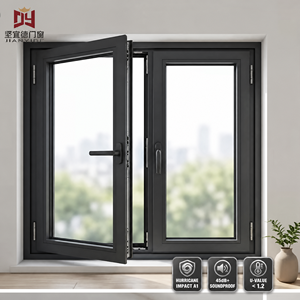
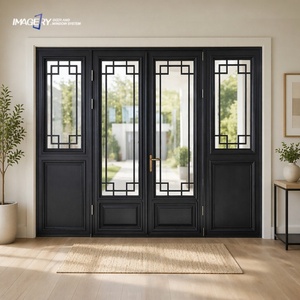
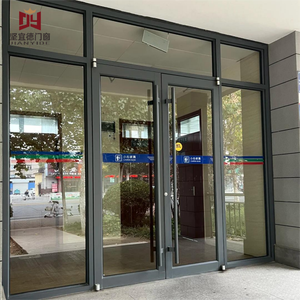
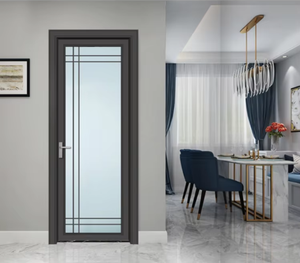
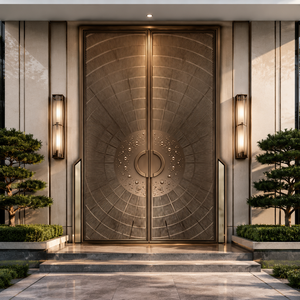
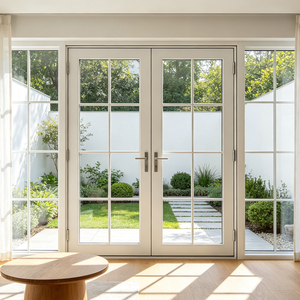
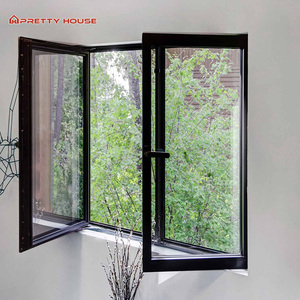
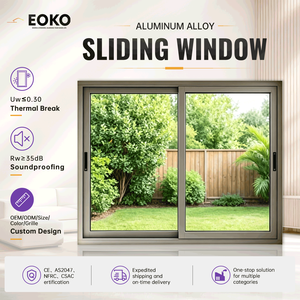
Located in Dali Town, Nanhai District, Foshan City—the recognized epicenter of China's aluminum extrusion and architectural glazing industry—Window Wurx Industry Co., Ltd. has established itself as an authoritative global manufacturer and exporter since 1993. Over three decades of focused engineering research and continuous capital investment have transformed our 20,000-square-meter intelligent production facility into a flagship operational model equipped with 3 automated assembly lines and over 150 skilled fabrication specialists.
Unlike standard assembly operations, our OEM and ODM capabilities span the full architectural lifecycle: from metallurgical alloy selection, thermal break extrusion design, and precision CNC machining, to customized powder coating, dual-tone anodizing, glass unit fabrication, and rigorous hydrostatic pressure testing. Our facility operates under ISO9001 quality control protocols, generating consistent year-on-year sales growth of approximately 30% across international markets in North America, Europe, Australia, the Middle East, and Southeast Asia.
Fully compliant with European CE safety standards and Australian AS2047 structural performance criteria. Complete test documentation for water resistance, air tightness, and structural wind pressure available for code authority review.
Tailor-made profile wall thicknesses (1.4mm to 3.0mm+), custom glass build-ups, non-standard geometric shapes, specialized hardware integrations, and two-tone surface finishes matching distinct interior and exterior architectural color schemes.
Engineered long-haul logistics protection: PE protective film, EPE foam edge wraps, heavy corrugated guardboards, non-fumigation plywood crates, and internal container steel strapping for damage-free ocean delivery.
Aluminum casement doors demand exceptional torsional rigidity to maintain long-term alignment under continuous cycle loading and high wind loads. We utilize prime-grade 6063-T5 and high-strength 6063-T6 aluminum alloys. T5 artificial aging provides an optimal balance between tensile strength and malleability for intricate extrusion detail, while T6 temper delivers superior structural strength required for heavy-duty commercial entry doors and oversized villa swing systems.
The structural performance of a casement door frame is heavily dictated by its web thickness and corner joint construction. Our heavy-duty series (e.g., 86 Series and RG50 Series) incorporate structural wall thicknesses ranging from 2.0mm to 3.0mm, vastly exceeding residential minimums. Corner assembly utilizes mechanical corner cleats injected with two-component polyurethane corner adhesive (German Weiss glue technology), creating a monolithic joint structure that eliminates frame sagging, air leakage, and corner seam separation over decades of operation.
Raw aluminum exhibits high thermal conductivity ($k \approx 200 \text{ W/m}\cdot\text{K}$), rendering uninsulated profiles unsuitable for energy-efficient building envelopes. Modern OEM aluminum casement doors resolve this via thermal break technology—chemically isolating the exterior aluminum profile from the interior aluminum profile using low-conductivity structural polyamide insulating strips.
Technical Insight: We utilize Technoform Polyamide PA66 GF25 (25% glass-fiber reinforced nylon) thermal break bars. PA66 GF25 matches the coefficient of thermal expansion of structural aluminum ($2.3 \times 10^{-5}/\text{K}$), preventing thermal shearing stress and seal failure during severe seasonal temperature swings between exterior surfaces (up to 70°C in direct sun) and climate-controlled interiors (21°C).
When combined with multi-cavity profile designs and warm-edge spacer insulated glass units (IGU) packed with Argon gas, overall door assembly thermal transmittance values ($U_w$) can drop below $1.2 \text{ W/m}^2\text{K}$ ($0.21 \text{ Btu/h}\cdot\text{ft}^2\cdot^{\circ}\text{F}$), qualifying for Passive House energy metrics and strict US NFRC or European EnEV standards.
| System Series | Frame Depth | Alloy Grade | Thermal Break | U-Value ($U_w$) | Acoustic Rating | Water Tightness |
|---|---|---|---|---|---|---|
| Heavy Duty 86 Series | 86 mm | 6063-T6 Structural | 34mm PA66 GF25 Multi-Cavity | 1.1 – 1.4 W/m²K | STC 42 dB / Rw 43 dB | Class 9A (600 Pa) |
| RG50 Luxury Swing | 50 mm | 6063-T5 Premium | 24mm PA66 GF25 Strip | 1.5 – 1.8 W/m²K | STC 38 dB / Rw 39 dB | Class 7A (450 Pa) |
| Commercial Entrance (KFC Style) | 100 mm | 6061-T6 High Impact | Optional Heavy Thermal Break | 1.8 – 2.2 W/m²K | STC 35 dB / Rw 36 dB | Class 6A (350 Pa) |
| French Double Casement | 70 mm | 6063-T5 Premium | 28mm PA66 GF25 Multi-Cavity | 1.3 – 1.6 W/m²K | STC 40 dB / Rw 41 dB | Class 8A (500 Pa) |
Noise pollution abatement requires precise acoustic decoupling. Casement doors inherently provide superior sound insulation compared to sliding systems due to compression sealing along the entire perimeter when latched. Our OEM designs incorporate a continuous triple-seal gasket topology utilizing automotive-grade EPDM (Ethylene Propylene Diene Monomer) synthetic rubber gaskets, which exhibit superior elasticity and resistance to UV degradation, ozone, and compression set over 25+ years.
In conjunction with acoustic laminated glass configurations (e.g., 6mm Clear + 1.52mm PVB/Acoustic Interlayer + 6mm Clear), acoustic energy is absorbed across varied frequency spectrums. This yields Sound Transmission Class (STC) ratings up to 45 dB, converting ambient urban highway noise (80 dB) to quiet indoor library levels (35 dB).
A casement door’s physical security relies on hardware integration. Our custom OEM profiles are engineered to integrate seamlessly with European standard C-groove and K-groove hardware hardware hardware systems from leading manufacturers including Siegenia, Hoppe, Sobinco, and G-U, alongside proprietary heavy-duty custom hardware options.
Multi-point locking mechanisms engage mushroom cam pins or solid steel hook bolts into heavy zinc-alloy frame keep plates at up to 5 points along the vertical and horizontal sash edges. This uniform compression along the EPDM gaskets ensures airtight sealing while providing RC2 and RC3 anti-burglary ratings under European EN 1627 standards.
Key shifts impacting architectural aluminum door specification, sourcing standards, and manufacturing tech worldwide.
Global building mandates increasingly emphasize Embodied Carbon limits alongside operational energy efficiency. Sourcing low-carbon aluminum extruded using hydro-power or high percentages of post-consumer recycled billet (saving 95% of energy vs primary smelting) is becoming a mandatory requirement for LEED and BREEAM project procurement.
Architectural aesthetics continue to favor minimal frame visibility and floor-to-ceiling glass expanses. The trend demands hidden hinges, concealed drainage systems, flush threshold transitions, and ultra-slim profile sightlines (under 40mm visible face width) capable of carrying sashes over 300 kg.
High-end residential and commercial entry casements are rapidly integrating hidden motorized swing operators, automated multi-point electronic latching, keyless RFID/biometric readers, and Building Management System (BMS) connectivity for automated night-flush ventilation and security monitoring.
Climate change events drive demand for hurricane-impact certified casement doors. Sourcing requirements now mandate compliance with ASTM E1886/E1996 missile impact tests, Florida Product Approval, and high-pressure water resistance upwards of 700 Pa for coastal regions.
To eliminate design risk and ensure flawless on-site installation for international contractors, importers, and project developers, Window Wurx operates a transparent 6-step engineering workflow:
Clients submit architectural elevation drawings and door schedules. Our structural engineering team evaluates wind load parameters, opening spans, structural connections, and local code compliance.
We match target U-values, acoustic STC ratings, and budget goals with optimal profile series (e.g. 50mm, 70mm, 86mm), thermal strip sizes, low-E coating types, and hardware configurations.
Detailed 2D/3D shop drawings detailing section cuts, anchoring details, drainage paths, and finish swatches are provided for architect sign-off prior to production.
Extrusions undergo automated double-head cutting, CNC milling for hardware slots and drainage ports, corner crimping with structural sealant, and robotic glass unit installation.
Every unit undergoes factory testing for diagonal squareness, gasket compression, hardware cycling smooth operation, and air/water tightness verification.
Products are wrapped in multi-layer protective packaging, crated in customized fumigation-free wooden boxes, and loaded into containers with heavy-duty shock mitigation.
Detailed technical answers to common questions raised by overseas importers, architects, and building developers.