


1. Engineering Guide: OEM Custom Aluminum Fabrication for Commercial & High-End Residential Doors
In contemporary architectural engineering, custom aluminum door fabrications represent the nexus of structural integrity, thermal efficiency, and aesthetic minimalism. As premier OEM manufacturers located in Foshan, China's central aluminum production hub, Window Wurx Industry Co., Ltd. delivers tailored fenestration and entrance solutions engineered to meet rigorous international building codes.
Extruded aluminum alloys—specifically 6063-T5, 6063-T6, and 6061-T6—form the backbone of high-performance architectural door profiles. Compared to unplasticized polyvinyl chloride (uPVC) or timber systems, custom extruded aluminum exhibits superior tensile strength (up to 230 MPa for T6 tempers), allowing structural engineers to design expansive door leaves with ultra-slim sightlines that maximize daylight harvesting without compromising wind-load resistance (ASTM E330).
2. Advanced Thermal-Break Architecture and Energy Efficiency (U-Value Optimization)
Uninsulated aluminum exhibits high thermal conductivity. To prevent thermal bridging between outdoor exterior environments and interior controlled climates, our OEM fabrication process embeds continuous glass-fiber-reinforced polyamide (PA66GF25) strips inside the extrusion profiles. This structural break dramatically reduces conductive heat transfers.
- Thermal Resistance Optimization: Incorporating multi-chambered thermal break profiles minimizes convective air currents within the internal frame cavities.
- Glazing Synergy: Pairing thermal break frames with argon-filled, double- or triple-glazed Low-Emissivity (Low-E) glass units reduces total system U-factors to below 1.4 W/m²K (0.25 BTU/h·ft²·°F), satisfying strict European energy performance standards (EnEV / CE) and Australian AS2047 requirements.
- Air & Water Infiltration Protection: Multi-point perimeter sealing engineered with vulcanized EPDM gaskets ensures air permeability complies with EN 12207 Class 4 and water tightness reaches EN 12208 Class 9A standards.
3. Global Procurement & Architectural Sourcing Trends (2025–2030 Analysis)
Commercial importers, main building contractors, and real estate developers face evolving regulatory and design landscapes. B2B procurement trends for aluminum doors highlight four primary market drivers:
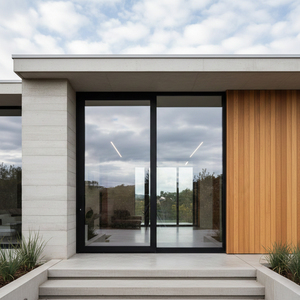
A. Demand for Oversized Micro-Slim Sightline Openings: Modern luxury villas and commercial venues favor expansive glass spans, such as multi-panel Lift & Slide or heavy-duty Pivot doors measuring up to 6 meters in height. OEM fabricators must utilize high-yield structural aluminum combined with precision CNC milling to ensure effortless hardware sliding mechanisms and flawless weight redistribution.
B. Decarbonization and Low-Carbon Recycled Aluminum: European and North American procurement protocols increasingly evaluate Embodied Carbon. Sourcing aluminum billet melted using hydro-electric energy or integrating certified recycled content reduces carbon intensity under 4.0 kg CO2/kg Al, helping developers earn LEED v4 and BREEAM sustainability credits.
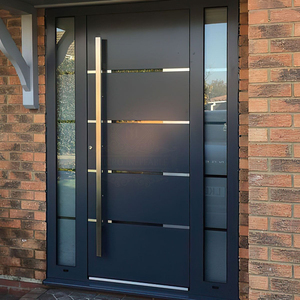
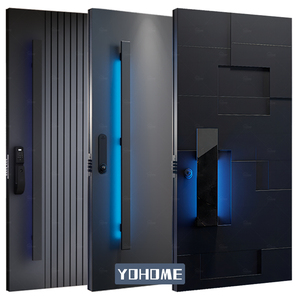
C. Smart Architectural Integration: Modern front entrance pivot doors feature smart OEM fabrications—integrating concealed electric multi-point locks, biometric fingerprint scanners, motorized opening actuators, and custom-embedded LED architectural accent lighting flush within the aluminum jambs.
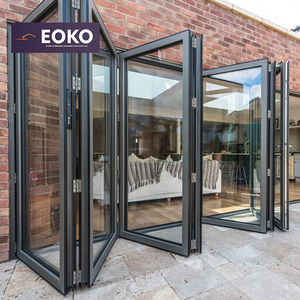
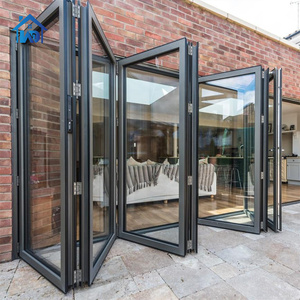
D. Extreme Weather & Hurricane Resilience: Coastal construction projects require verified impact resistance. High-specification impact folding and sliding doors feature laminated safety glass with SentryGlas® interlayers and reinforced heavy-wall aluminum frames tested to withstand severe cyclical wind pressures (ASTM E1886/E1996) and hurricane force debris impact.
4. Factory Enterprise Advantages & Export Quality Assurance Protocol
Founded in 1993, Window Wurx Industry Co., Ltd. operates a 20,000 square meter automated manufacturing complex equipped with multi-axis CNC machining centers, automated corner-crimping machines, and double-head precision cutting saws. Our manufacturing philosophy focuses on eliminating site tolerances for overseas contractors:
- Precision Fabrication Tolerances: All extrusion cuts, hardware mortises, and corner joinery are processed under digital CNC controls with tolerances held within ±0.1 mm, ensuring watertight mechanical joint assembly.
- Two-Tone Anodizing and Coating Capability: Our specialized surface finishing lines allow distinct color treatments on interior versus exterior surfaces—matching exterior cladding palettes while harmonizing with internal architectural interior design.
- 5-Layer Export Packaging Protection: To eliminate long-haul transit risk, every unit is individually sealed in protective PE film, edge-protected with high-density EPE foam, wrapped in bubble barrier sheets, and encased in fumigation-free solid plywood crates reinforced with steel strapping. Inside shipping containers, shock-absorbing bracing prevents vibration damage during cross-ocean voyages.