
Direct factory supply featuring thermal break profiles, cyclone-impact glazing, slimline sightlines, and precision hardware integration for commercial & luxury residential projects.
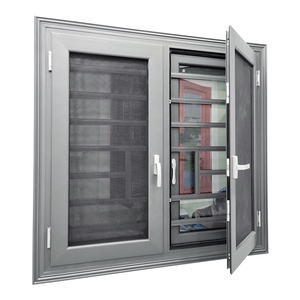
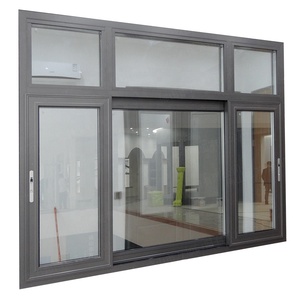
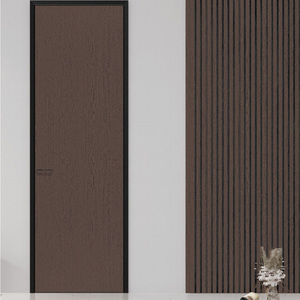
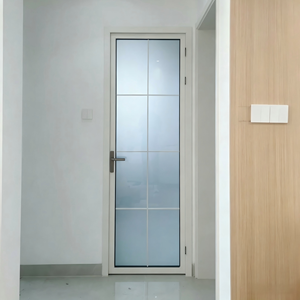
A comprehensive procurement analysis on material science, thermal physics, structural integrity, and custom manufacturing standards for real estate developers and general contractors.
In high-end architectural fenestration, the baseline durability of a sliding door or window system relies directly on metallurgical composition. Leading Foshan OEM factories utilize primary 6063-T5 and high-tensile 6061-T6 aluminum alloys. Unlike recycled scrap aluminum which contains uncontrolled impurity ratios, virgin 6063 alloy offers optimal yield strength (≥110 MPa) and hardness (≥8.5 HW), delivering superior wind-load resistance and deflection control under hurricane-force loads.
Structural profile thickness is designed in accordance with international building codes (including ASTM B221 and GB 5237). Heavy-duty exterior sliding doors demand structural wall thicknesses ranging from 2.0mm to 3.0mm, whereas interior slim-frame systems utilize 1.4mm to 1.8mm profiles reinforced by internal structural ribs. This engineering architecture prevents frame warping over long spans, ensuring smooth roller motion across multi-track configurations.
Uninsulated aluminum exhibits high thermal conductivity (k ≈ 200 W/m·K), leading to extreme energy loss and condensation risk. Modern OEM manufacturing mitigates this through precision-engineered thermal breaks using Technoform PA66GF25 (Polyamide 66 reinforced with 25% glass fiber). This composite strip bridges the exterior and interior extruded aluminum profiles, reducing the overall heat transfer coefficient (U-factor) down to ≤ 1.4 W/m²·K when paired with Low-Emissivity (Low-E) double or triple glazing.
Acoustic performance is simultaneously maximized via multi-cavity sealing structures and EPDM (Ethylene Propylene Diene Monomer) gasket strip arrays. When integrated with laminated acoustic glass (e.g., 6mm + 1.14PVB + 6mm), the system achieves Sound Transmission Class (STC) ratings between 38 dB and 45 dB, effectively attenuating low-frequency urban traffic noise and high-frequency wind whistles.
Reinforced mullions and 6063-T6 temper alloys engineered to withstand wind pressures up to 5000 Pa under AS2047 and ASTM E330 testing standards.
PA66GF25 polyamide thermal insulation strips combined with argon-filled Low-E double glazing lower building HVAC loads by up to 35%.
German-engineered hardware (Siegenia / Hoppe / GU) featuring anti-lift blocks, stainless steel mortise locks, and hidden soft-closing hydraulics.
| Performance Standard | Standard Commercial Sliding Door | Window Wurx OEM Heavy-Duty Thermal Sliding Door | Certification / Testing Basis |
|---|---|---|---|
| Profile Alloy & Temper | Recycled 6063-T5 (1.4mm) | Primary 6063-T6 / T5 (2.0mm - 3.0mm) | ASTM B221 / GB 5237 |
| Thermal Transmittance (U-Value) | 3.2 - 4.5 W/m²·K | 1.2 - 1.8 W/m²·K (Low-E Double Argon) | EN ISO 10077-1 / NFRC 100 |
| Acoustic Insulation (STC) | 25 - 28 dB | 38 - 45 dB (Acoustic Laminated) | ASTM E90 / ISO 717-1 |
| Water Penetration Resistance | 300 Pa | 700 Pa - 1000 Pa (Sub-Sill Drainage) | AS4420.2 / ASTM E331 |
| Cyclonic / Wind Load Rating | 1500 Pa | up to 5000 Pa (Hurricane Impact Glass) | AS2047 / Florida Building Code |
| Surface Finishing Warranty | Standard Anodizing (3-5 Yrs) | AkzoNobel / PPG Fluorocarbon PVDF (20+ Yrs) | AAMA 2605 / Qualicoat Class 2 |
Key technological shifts reshaping global B2B procurement of aluminum sliding doors and integrated window facades.
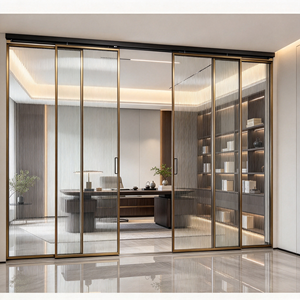
Modern architectural design prioritizes maximum glass surface ratios and daylight utilization. Sourcing trends show an exponential demand increase for ultra-slim sliding door profile systems featuring interlocking mullions as narrow as 18mm to 25mm. OEM factories are responding by shifting structural loads onto high-modulus structural silicone sealants and perimeter outer frames concealed inside walls and floor tracks, resulting in a seamless flush threshold visual effect.
Commercial and luxury residential developments are increasingly specifying smart automated sliding door systems. Advanced OEM factories integrate brushless DC motor drives, magnetic levitation tracks, and safety radar sensors directly within the head profile. These motorized sliding systems interface with central Building Management Systems (BMS) via Zigbee, KNX, or RS485 protocols, enabling remote climate control, auto-ventilation scheduling, and automated lockdown modes.
With environmental regulations like Europe's CBAM (Carbon Border Adjustment Mechanism) taking effect, global buyers demand verified Environmental Product Declarations (EPD). Modern OEM facilities are adopting hydro-powered low-carbon aluminum billets and closed-loop scrap recycling processes, drastically lowering the embodied carbon of finished fenestration units to meet LEED and BREEAM sustainability standards.
Operating from Foshan, China — the world's premier aluminum manufacturing cluster — providing turnkey OEM/ODM solutions to global contractors since 1993.
Equipped with 3 fully automated CNC extrusion, cutting, and corner-crimping lines, producing over 300,000m² of custom window and door systems annually.
Every batch undergoes incoming raw aluminum spectrometry, anodizing thickness checks, corner shear testing, glass seal integrity validation, and pre-shipment trial assembly.
Protected with PE film, corner guards, honeycomb cardboard, bubble wrap, and steel-strapped fumigation-free solid plywood crates for zero Transit Damage guarantee.
Direct technical answers for architectural buyers, importers, and project engineers evaluating factory-direct OEM production.
Send your project drawings, window schedules, or custom OEM specifications directly to our engineering desk. Receive comprehensive CAD shop drawings, factory-direct pricing, and technical analysis within 24 hours.