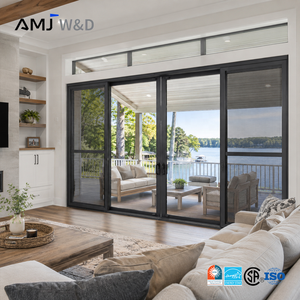

Explore our engineering-grade OEM/ODM sliding door configurations crafted for residential villas, modern high-rises, and commercial architectural envelopes.
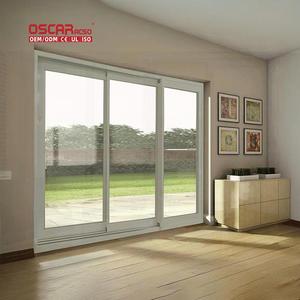
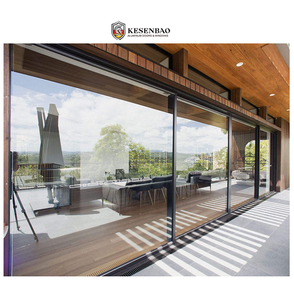
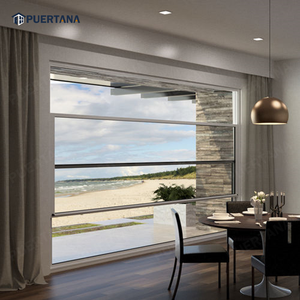
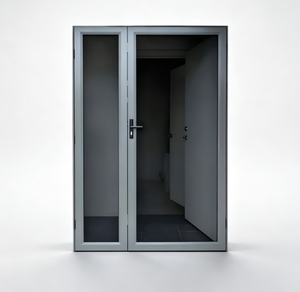
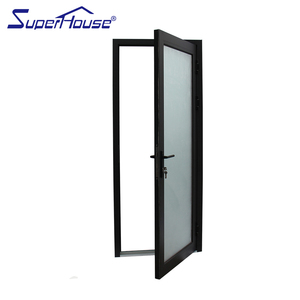
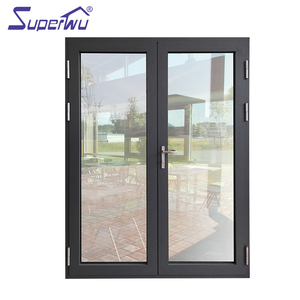
Operating from Foshan—the global epicentre of architectural aluminium manufacturing—Window Wurx Industry Co., Ltd. integrates decades of metallurgical mastery with modern automated extrusion processing to serve international developers, trade buyers, and architectural systems integrators.
Full-scope OEM/ODM profile design flexibility. From structural 6063-T5/T6 alloy selection and multi-cavity thermal break extrusions to bespoke dual-tone powder coating (Qualicoat Class 2 standard), we bring custom CAD drawings to life with millimeter precision.
Engineered for high-wind, severe rain, and extreme thermal environments. Fully tested and certified under Australian standard AS2047, European CE norms, and North American NFRC acoustic and thermal isolation rating protocols.
Export logistics perfected over 30 years. Each custom sliding door panel is wrapped in protective PE film, corner-shielded, encased in dense EPE foam, and crated in fumigation-free wooden boxes reinforced with container load-locking bracing.
Structural integrity, thermal performance, and mechanical longevity: detailed analysis of material science and hardware engineering in modern sliding door manufacturing.

The foundation of any high-performance sliding door lies in the structural integrity of its extruded aluminium profile. We utilize prime-grade 6063-T5 and 6063-T6 architectural aluminium alloys engineered to achieve high tensile strength (≥ 205 MPa) and yield strength (≥ 180 MPa).
Profile wall thicknesses range from 1.6mm for standard residential applications up to 3.0mm heavy-duty commercial mullions designed to sustain extreme wind load pressure exceeding 4500 Pa (AS2047 design compliance).

Uninsulated aluminium profiles readily conduct heat, leading to energy loss and interior condensation. Our thermal break sliding door systems incorporate imported Polyamide PA66-GF25 (25% glass fiber reinforced) insulation strips.
By creating a continuous thermal barrier between the exterior and interior profile sections, thermal conductivity is reduced dramatically. Paired with double- or triple-glazed Low-E insulated glass units (IGUs) filled with 90%+ Argon gas, overall system thermal transmittance values drop to U-factor ≤ 1.4 W/m²K (R-value ~4.0).
| Performance Parameter | Test Standard / Standard Code | Engineering Specification | Project Value Delivered |
|---|---|---|---|
| Structural Wind Load | ASTM E330 / AS2047 / EN 12210 | Class C5 / 4500 Pa Design Pressure | Super high-rise & coastal typhoon resistance |
| Thermal Transmittance (U-Value) | ISO 10077-2 / NFRC 100 | 1.1 – 1.8 W/m²K (Thermal Break + Triple IGU) | Up to 40% reduction in HVAC energy consumption |
| Water Penetration Resistance | EN 12208 / AS4420.5 | Class E1050 (1050 Pa static water pressure) | Zero water ingress under heavy rainstorm conditions |
| Air Infiltration Rate | ASTM E283 / EN 12207 | Class 4 (≤ 0.05 m³/h·m at 100 Pa) | Airtight seal preventing dust & thermal leakage |
| Acoustic Isolation (Rw) | ISO 717-1 / ASTM E90 | 35 dB – 44 dB (Laminated Double Low-E Glass) | Effective blocking of urban traffic noise |
| Hardware Rollers Lifespan | EN 13126-15 / AAMA 906 | Heavy-duty SUS316 rollers rated for 100,000 cycles | Smooth push-pull sliding operation for 25+ years |
Key shift factors influencing international architectural specifications, supply chain compliance, and hardware innovation in aluminium fabrication sliding door procurement.
Modern architectural design overwhelmingly favors maximum glass area and minimal frame visibility. Future procurement focuses on ultra-narrow interlock profiles (as slim as 16mm to 20mm) concealed outer frames, and flush sill designs that merge interior flooring seamlessly with exterior patios.
Demand for motorized sliding doors integrated with smart home automation (Tuya, KNX, Zigbee) is surging. Electric sliding doors with silent magnetic levitation (maglev) linear drives, contactless sensors, and safety auto-reverse mechanisms are becoming standard in luxury residential projects.
With strict EU CBAM (Carbon Border Adjustment Mechanism) and global green building certifications (LEED, BREEAM), developers require verification of recycled aluminium content (hydro-powered billet smelting) and Environmental Product Declarations (EPDs).
From primary ingot extrusion to final crate dispatch: how Window Wurx guarantees zero-defect manufacturing across large volume commercial orders.

Every custom aluminium sliding door produced in our 20,000 square meter factory undergoes a multi-point quality check lifecycle before leaving Foshan port:
Direct technical and commercial answers for architects, project contractors, importers, and regional door distributors.
Our sliding doors and windows are fully tested and certified under Australian standard AS2047 (tested for wind pressure, water penetration, air infiltration, and ultimate strength) and carry the European CE marking. Furthermore, test reports covering acoustic insulation (ISO 717-1), thermal conductivity (NFRC standards), and structural load capacity are available for architectural review prior to order placement.
As a direct Foshan manufacturer, our OEM/ODM capabilities encompass total flexibility: frame dimensions, profile wall thickness, thermal break configurations, frame colors (RAL powder coating, woodgrain heat transfer, dual-color inside/outside), glass selection (double/triple toughened, Low-E, laminated, tinted, smart electrochromic glass, or integrated blinds), and hardware lock selection (German Hoppe, Siegenia, Roto, or custom stainless steel mortise multi-point hardware).
We deploy a battle-tested 5-layer export packaging protocol: 1) Surface protective PE film, 2) Shock-absorbing plastic corner protectors, 3) Thick EPE pearl cotton padding, 4) Heavy-duty corrugated cardboard boxing, and 5) Fully enclosed, fumigation-free solid plywood crates. Within the shipping container, air-cushion bags and steel strapping lock crates in place to prevent movement during transit vibration.
Our standard production lead time is 25 to 35 working days following shop drawing approval and deposit confirmation. For custom extruded die tooling profiles, add 10 to 14 days for mold opening and sample approval. Our flexible manufacturing setup accommodates both custom single-villa luxury projects and multi-container commercial project volumes (MOQ generally starting at 50 m² for standard profiles).
Our in-house design engineering team provides complete 2D CAD shop drawings and 3D BIM models for sign-off prior to cutting. Each unit is delivered with labeled frame parts matching project elevation schedules. For large-scale projects, we offer detailed installation manuals, video guides, and direct technical video conferencing support for site crews.
Partner directly with Foshan's trusted manufacturer. Submit your architectural CAD drawings, project schedules, or OEM specifications today for immediate factory-direct pricing and technical evaluation.