
Factory-direct OEM & ODM door solutions customized for luxury villas, commercial projects, and global distributor inventories.
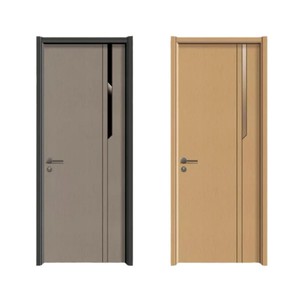
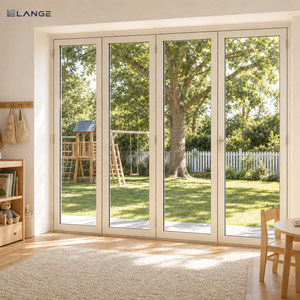
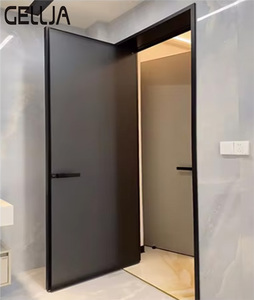
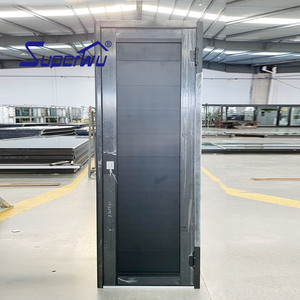
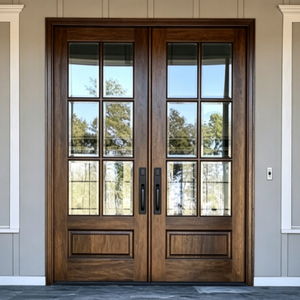
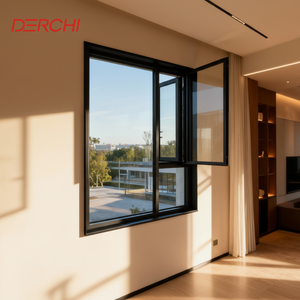
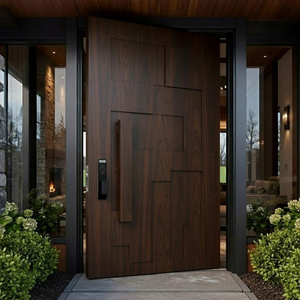
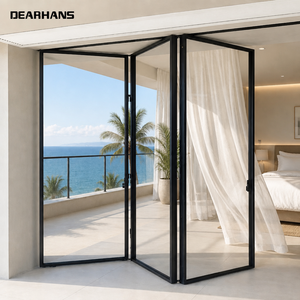
In contemporary architectural design, the sitting room (or living hall) represents the central focal point of acoustic comfort, indoor-outdoor transitions, and daylighting efficiency. Sourcing architectural-grade aluminium sitting room doors requires a manufacturing partner capable of delivering structural integrity, thermal decoupling, and customizable aesthetic profiles. As a premier Foshan-based manufacturer established in 1993, Window Wurx Industry Co., Ltd. operates at the intersection of precision metallurgy, energy efficiency, and modern design.
Our 20,000 square meter intelligent manufacturing center is equipped with advanced CNC profile machining centers, automated corner-crimping units, and dual-component extrusion lines. Whether your procurement requirement demands ultra-narrow frame sightlines for modern minimalist residences or hurricane-impact rated heavy-duty sliding systems for coastal villas, our factory-direct OEM/ODM production protocols ensure strict adherence to international building codes.
In-house engineering teams develop multi-chamber thermal break extrusion profiles certified under CE (EN 14351-1) and AS2047 standards for European, Australian, and North American markets.
Full control over sash profile width, dual-color anodizing, fluorocarbon powder coating (PVDF), acoustic laminated glass build-ups, and German-engineered hardware integration.
Every sitting room door unit is protected with protective film, foam edge guards, shrink wrap, cellular board cladding, and fumigation-free solid timber crating for zero-defect sea transport.
The global architectural opening sector is undergoing a structural transition driven by decarbonization mandates, smart home automation, and evolving interior design preferences. B2B buyers, project developers, and hardware importers must align their procurement strategies with four key macro trends:
Regulatory tightening regarding building envelope heat loss (such as Europe's EPBD directive and Australia's NCC energy requirements) requires sitting room doors to achieve overall U-factors below 1.4 W/m²K. Sourcing trends favor multi-cavity polyamide (PA66GF25) thermal barriers combined with triple-pane argon-filled Low-E glass.
Modern sitting room design emphasizes visual continuity between interior living spaces and external patios or gardens. Market demand has shifted toward minimal-bezel sliding and bifold doors featuring visible profile widths under 20mm, hidden drainage gutters, and zero-step barrier-free floor tracks.
Large-format sitting room doors (such as heavy-duty sliding doors exceeding 400kg per panel) are increasingly specified with concealed electromagnetic motorized drives, smart home IoT integration, biometrics, and automated wind-rain sensors.
Enterprise buyers are actively tracking Scope 3 emissions. Sourcing contracts increasingly demand recycled aluminium alloy content (6063-T5/T6 grade), chrome-free surface pretreatments, and EPD (Environmental Product Declaration) documentation from suppliers.
To meet the dual demands of high aesthetic appeal and structural durability, modern aluminium sitting room door manufacturing relies on critical engineering innovations across metallurgic treatments, glass technology, and hardware mechanics:
Standard residential door frames often suffer from sagging or seal deformation over extended usage. High-end OEM suppliers utilize 6063-T6 architectural aluminium extrusions with wall thicknesses ranging from 2.0mm to 3.0mm. The inclusion of internal reinforcement ribs ensures wind-load resistance exceeding 5000 Pa (equivalent to Category 5 hurricane pressures).
Sitting rooms located near urban arterials or high-density zones require superior sound dampening. By pairing multi-layer EPDM weatherstripping gaskets with acoustic laminated glass (featuring PVB or SGP interlayers), modern aluminium door systems achieve Sound Transmission Class (STC) ratings above 42 dB, effectively isolating living rooms from external ambient noise.
Coastal environments and high-UV exposure zones demand advanced surface finishing. Production capabilities encompass:
Production lead times depend on system complexity and finish requirements. Following final shop-drawing sign-off and color sample approval, standard manufacturing cycles range from 25 to 35 calendar days. Accelerated scheduling is available for large-scale commercial developments utilizing our 3 automated production lines.
We custom-configure profile depths (ranging from 65mm to 135mm systems) and thermal break widths. We utilize imported Technoform polyamide insulating strips and supply double or triple insulated glass units (IGUs) coated with Low-E films tailored to specific solar heat gain coefficients (SHGC) and U-values required by local building codes.
Yes. Our OEM/ODM service supports full hardware customization including German SIEGENIA, HOPPE, or GU multi-point locking systems. Furthermore, thermal break profiles allow dual-color finishes—enabling a dark anodized or powder-coated exterior to match the facade while maintaining a warm woodgrain or light interior frame to match living room decor.
Every door assembly undergoes a comprehensive 4-stage quality check: raw profile wall thickness verification, corner crimping shear strength tests, pre-assembly alignment and hardware cycling tests, and hydrostatic water-tightness testing prior to final packaging.
We provide comprehensive technical support including CAD shop-drawing generation, BIM modeling files, structural wind load calculations, sample box kits, and step-by-step installation manuals or video guidance for local site teams.
Direct factory engineering support, competitive wholesale pricing, and certified quality for your next architectural project or dealership inventory.
Contact Us