
Certified high-performance window and door systems fabricated to international building codes (AS2047, CE, NFRC, ASTM) for commercial and residential developments.
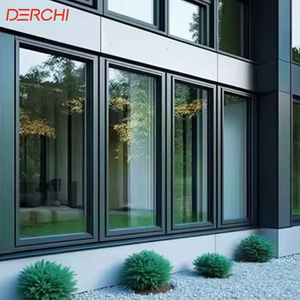
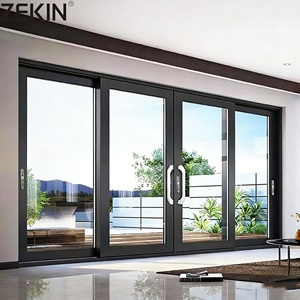
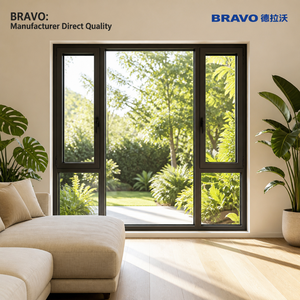
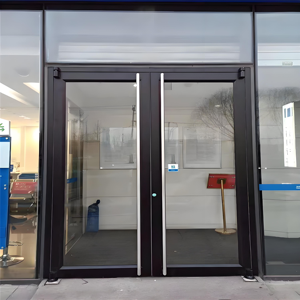
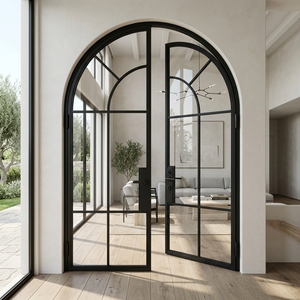
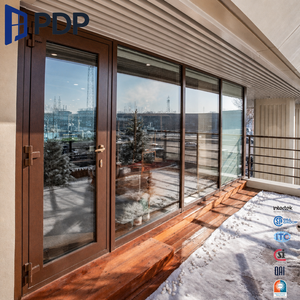
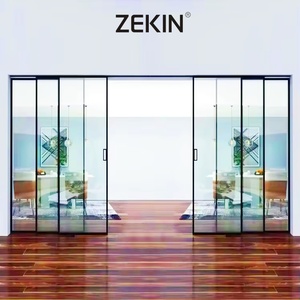
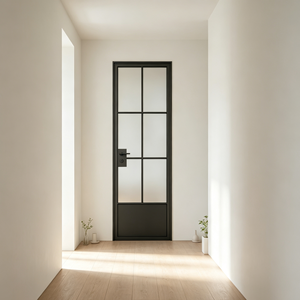
In modern architectural engineering, the structural performance and thermal integrity of external door and window systems represent critical factors in building durability, energy rating compliance, and occupant safety. OEM (Original Equipment Manufacturer) and ODM (Original Design Manufacturer) custom aluminium door solutions provide commercial real estate developers, contractors, and architectural hardware importers with tailored profile geometries, custom thermal breaks, specialized glass units, and proprietary mechanical fittings designed to withstand extreme wind loads, severe weather exposure, and intensive usage cycles.
As a specialized manufacturer based in Foshan, China—the global epicenter of high-grade aluminium extrusion and architectural hardware fabrication—Window Wurx Industry Co., Ltd. operates under strict quality management systems certified to ISO 9001:2015 standards. Custom aluminium door production requires comprehensive engineering validation from raw material selection through surface treatment, insulating glass unit (IGU) integration, multi-point locking assembly, and protective export packaging.
To meet diverse regional building standard requirements—such as AS2047 for Australia and New Zealand, CE EN 14351-1 across the European Union, and NFRC thermal performance ratings in North America—OEM and ODM buyers must evaluate physical profile parameters. The technical matrix below outlines the primary alloy, thermal, and glass configurations provided across our standard door export lines:
| Technical Parameter | Standard Configuration | High-Performance / OEM Customization |
|---|---|---|
| Aluminium Alloy Grade | 6063-T5 Architectural Billet | 6063-T6 High-Tensile Structural Grade |
| Profile Wall Thickness | 1.4mm - 2.0mm (Door Frame / Sash) | 2.2mm - 3.0mm (Heavy Duty Commercial / Impact) |
| Thermal Break System | 14.8mm Polyamide PA66 GF25 Strips | 24mm - 34mm PA66 Low-U Insulated Cavities |
| Glass Build-Up Options | 5mm + 12Ar + 5mm Tempered Double Glazed | 6mm Low-E + 16Ar + 6mm Laminated Hurricane Proof |
| Surface Finishing | AkzoNobel Powder Coating (60-80μm) | Fluorocarbon PVDF (3-Coat ≥40μm) / Anodized 25μm |
| Air Infiltration Rating | AS4420.4 Level 3 (< 0.5 L/s·m²) | Airtight Class 4 (EN 12207) / Custom Pressure Seal |
| Acoustic Insulation (STC) | STC 32 - 36 dB sound reduction | STC 40 - 45 dB Soundproof Acoustic Laminated Glass |
The global market for architectural aluminium windows and doors is undergoing a structural transition driven by decarbonization mandates, evolving energy conservation codes (such as Germany’s EnEV / GEG standards and Australia's NatHERS 7-Star energy ratings), and modern minimalistic architectural aesthetics. Importers, wholesalers, and general contractors must align their supply chains with several critical emerging procurement trends:
A. Decarbonization & Environmental Product Declarations (EPD)
Institutional procurement for commercial projects increasingly requires verified EPD documentation detailing the embodied carbon metrics of structural materials. Sourcing primary aluminium extrusions produced via low-carbon hydropower smelting reduces environmental impact. Furthermore, high-volume B2B buyers now mandate 100% recyclable alloy tracking and non-toxic powder coating certifications (Qualicoat Class 2 and AAMA 2604/2605 compliance) to fulfill LEED and BREEAM building credits.
B. Adoption of Ultra-Slim Sightline Minimalist Systems
Architectural preference has shifted dramatically toward narrow-frame sliding stacker doors and ultra-slim casement doors. Frame sightlines as narrow as 20mm to 35mm allow expansive daylighting while requiring engineered structural reinforcement inside the outer mullions. OEM manufacturers capable of co-designing hidden drainage tracks, flush threshold tracks for barrier-free access (ADA compliant), and concealed multipoint locking mechanisms are securing a competitive edge in global supply contracts.
C. Integrated Smart Security & Building Automation (BMS) Integration
Commercial double doors and high-end residential patio systems now demand built-in motorized actuation, biometric access control, and electronic sensor routing embedded directly within the thermal break chambers. Future-proof OEM door designs incorporate pre-drilled wiring conduits, heavy-duty hidden hinges supporting sashes up to 400 kg, and smart home protocol compatibility (Zigbee, Z-Wave, KNX connection modules).
Engineering innovation in aluminium standard doors focuses on optimizing frame thermodynamics, mechanical load capacity, and automated manufacturing precision. Technical developments are redefining performance benchmarks across four primary areas:
1. Multi-Cavity Polyamide Thermal Insulation Barrier Engineering
Traditional aluminum profiles without thermal breaks exhibited high thermal conductivity (U-values around 5.8 W/m²K), leading to interior condensation and energy loss. Modern OEM extrusion technology incorporates 25% glass-fiber reinforced Polyamide (PA66 GF25) thermal strips inserted between interior and exterior aluminium chambers. Advanced multi-cavity designs filled with expanded polyethylene (PE) or polyurethane insulating foam achieve frame U-values ($U_f$) under 1.3 W/m²K, enabling Passive House standard compliance when combined with triple Low-E argon glass units ($U_g \le 0.6 \text{ W/m}^2\text{K}$).
2. Extreme Weather & Hurricane Impact Engineering
Coastal regions across North America, the Caribbean, Australasia, and East Asia subject building envelopes to severe typhoon and hurricane forces. Modern ODM impact-proof doors utilize structural silicone glazing (SSG) techniques with high-tack SentryGlas® (SGP) interlayer laminates. These systems endure cyclic wind pressure testing up to ±90 psf and large missile impact tests (ASTM E1996/E1886), ensuring that even if outer glass plies shatter, the structural membrane remains intact against pressure drops.
3. Advanced Surface Treatments & Anti-Corrosion Nanotechnology
For marine and industrial environments, standard anodizing or architectural powder coating can suffer from filiform corrosion if pre-treatment processes are inadequate. Advanced factory coating lines utilize multi-stage zirconium-based chromate-free conversion coatings followed by electrostatic application of PVDF (Polyvinylidene Fluoride) resin coatings or super-durable thermosetting powders. This guarantees resistance to salt spray exposure (ASTM B117 extended test > 3000 hours) without chalking, color fading, or adhesion loss.
4. Automated CNC Machining & Corner Crimping Precision
Precision fabrication has shifted from manual cutting to multi-axis automated CNC machining centers. Computer-controlled milling ensures hardware mortises, drainage slots, and corner key injection points are executed with tolerances under ±0.1mm. High-pressure hydraulic corner crimping combined with dual-component epoxy corner assembly glues prevents joint separation, frame sagging, and water leakage across long operational lifecycles.
Window Wurx Industry Co., Ltd., located in Foshan, Guangdong Province, China, has specialized in custom aluminum window, door, sunroom, and curtain wall system fabrication since 1993. Over three decades of continuous technical refinement and capital investment have established our factory as a trusted supply partner for international architects, property developers, hardware distributors, and facade engineering specialists.
Equipped with three automated extrusion assembly lines, high-precision double-head cutting saws, automated CNC machining centers, and heavy-duty glass handling systems operating under 5S visual management standards.
Our in-house R&D department provides comprehensive structural calculations, thermal simulations (using LBNL THERM & WINDOW software), shop drawing production, and customized die-mold tooling development.
Extensive independent lab test reports for AS2047 (Australian Standard for Windows and External Doors), CE mark compliance under EN 14351-1, NFRC thermal performance ratings, and ISO 9001 quality audits.
Every frame and glass unit undergoes individual foam edge protection, protective polyethylene film wrapping, corner guards, and crating in fumigation-free solid plywood boxes braced against container transit motion.
We provide factory-direct wholesale pricing, low MOQ sample production, custom hardware branding, private label packaging, and dedicated technical assistance for global distributors and dealers.
With annual production capacity expanding continuously and sales growing roughly 30% year-on-year, our scalable supply chain reliably accommodates both single luxury villa projects and large multi-building developments.
Below are authoritative responses to technical, commercial, and operational questions commonly raised during OEM/ODM aluminium door contract negotiations: