
Precision-engineered aluminum profiles customized to international building codes (AS2047, CE, NFRC) manufactured in Foshan, China.
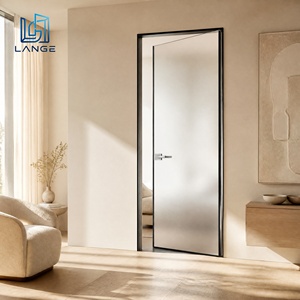
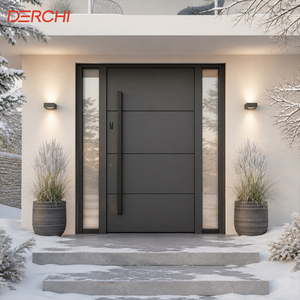
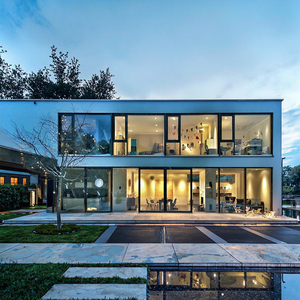
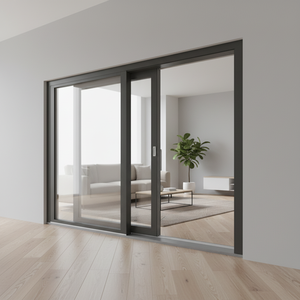
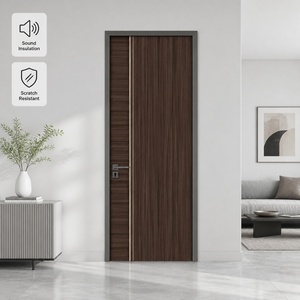
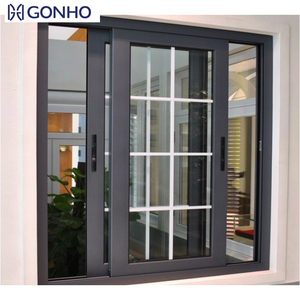
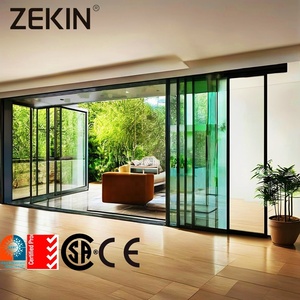
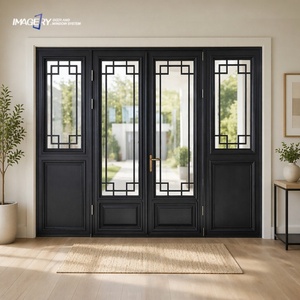
An in-depth analysis of structural integrity, space optimization, thermal cavity performance, and hardware dynamics in modern residential and commercial developments.
In contemporary spatial architecture, the physical footprint of traditional hinged swing doors represents a key spatial constraint. A standard swing door consumes up to 1.5 square meters of usable floor area purely for its operational arc. Consequently, top-tier global architects, interior designers, and commercial property developers are systematically transitioning toward high-performance **Aluminium Pocket Door Systems**.
Aluminium pocket doors operate by sliding smoothly along an overhead track assembly into a fully concealed wall cavity (the "pocket"). When fully opened, the door panel vanishes completely into the architectural wall stud work. This creates an uninterrupted spatial flow, maximises usable real estate in luxury villas, luxury hotel suites, and high-density residential towers, and delivers the clean aesthetic required by modern minimalist design paradigms.
Information Gain Insight: Unlike standard sliding doors that leave a fixed glass panel visible within the structural opening, engineered aluminium pocket doors provide a 100% clear opening width. Chinese manufacturing hubs—specifically Foshan—have pioneered extruded pocket framework systems that allow pre-assembled cassette integration directly into drywall or masonry cavity walls.
The structural longevity and acoustic damping of a pocket door rely entirely on the mechanical profile of the aluminium extrusions. Sourcing managers must look beyond superficial aesthetics to evaluate structural alloy specs, wall thicknesses, and thermal break engineering.
Our structural pocket frames use primary 6063-T6 grade billet aluminium. This provides exceptional tensile strength (yielding up to 210 MPa) and high corrosion resistance, ensuring zero frame warping over decades of continuous slide cycles.
To eliminate thermal bridging in exterior-facing pocket installations, profiles feature double Polyamide (PA66GF25) thermal break strips, keeping energy loss to a minimum and lowering overall U-values below 1.4 W/m²K.
Surface treatments utilize AkzoNobel fluorocarbon (PVDF) or Qualicoat Class 2 powder coatings, tested against 2,000+ hours of salt spray exposure to resist fading, chalking, and coastal atmosphere degradation.
Standard architectural specifications require main profile wall thicknesses ranging between **1.8mm and 3.0mm** for heavy-duty glazed sliding pocket doors. Thin-gauge extrusions (<1.4mm) sold by budget suppliers often lead to frame deflection under wind load or heavy glass weight, causing track binding inside the hidden cavity—an issue that is notoriously costly to repair once drywall finish is applied.
A pocket door is only as reliable as its internal mechanism. Because the operating components sit inside a finished wall stud, selecting factory-tested, low-maintenance hardware is crucial for project success.
Leading China aluminium pocket door manufacturers have engineered modular, heavy-duty roller carriage systems equipped with:
Window Wurx Industry Co., Ltd. combines 30+ years of metal fabrication mastery with complete customization flexibility for global importers, developers, and trade contractors.
Operating out of Dali Town, Foshan—China's premier aluminium capital—our workshop houses 3 automated CNC cutting and corner-crimping production lines capable of producing thousands of window and door units monthly with sub-millimeter precision.
Our products carry verified international test reports including Australian AS2047 / AS1288 certification, European CE compliance, and North American NFRC thermal ratings, guaranteeing smooth municipal building code approvals.
Every order is individual-wrapped with protective film, edge protectors, heavy foam block padding, and fully enclosed in fumigation-free plywood crates reinforced for ocean freight container transportation.
As global real estate markets prioritize structural energy efficiency and flexible living spaces, the architectural specification for aluminium pocket doors is evolving along several key technological vectors:
1. Ultra-Slim Sightline Integration: Interlocking vertical stile dimensions are shrinking from traditional 50mm profiles to ultra-slim 16mm-22mm minimalist profiles. This maximizes natural daylight transfer while maintaining hurricane-grade wind load resistance.
2. Magnetic Levitation Drive (Maglev Automation): Modern commercial installations (such as luxury hotels and hospital surgical corridors) are rapidly adopting contactless linear motor drives embedded within top tracks. Maglev pocket doors offer whisper-quiet touchless operation, smart home integration, and zero belt-wear maintenance.
3. Dual-Tone Powder Coating Options: High-end residential builds increasingly demand different frame finishes inside versus outside. Advanced extrusion break technology enables exterior powder coating matching façade cladding while interior finishes match custom wood veneer or wall paint colors.
4. Flush-Floor Threshold Engineering: Recessed track profiles flush with finished timber, marble, or tile flooring completely remove trip hazards, meeting ADA (Americans with Disabilities Act) accessibility standards globally.
Clear answers to the most common engineering, customization, and freight questions when importing pocket doors from China.
Contact our senior technical engineering team today for factory-direct quotes, CAD shop drawings, thermal calculations, and sample profile requests.