
Explore our certified range of heavy-duty, energy-efficient aluminum crank out and casement window systems engineered for commercial projects and luxury residential builds worldwide.
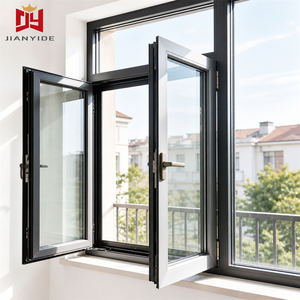
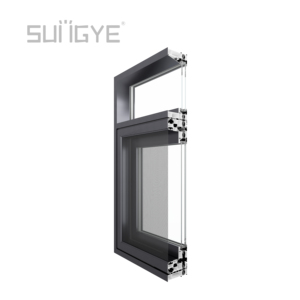
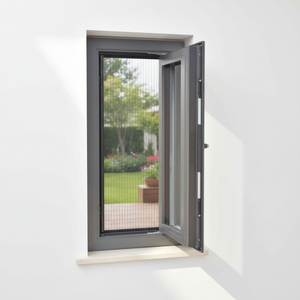
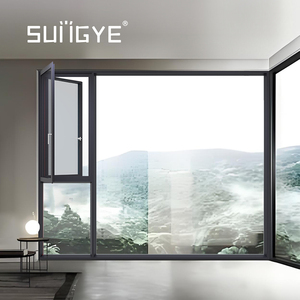
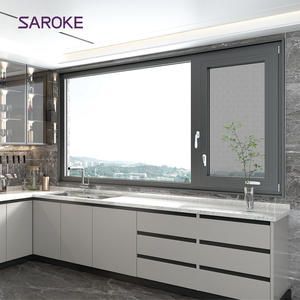
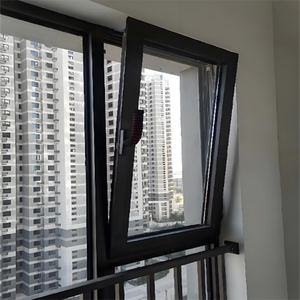
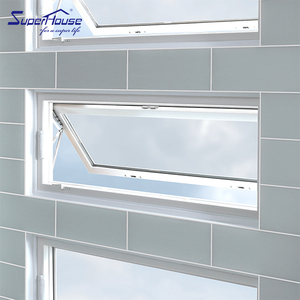
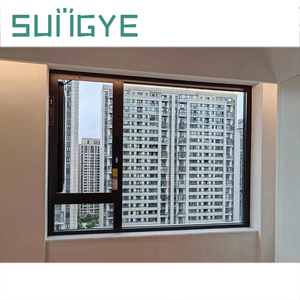
In modern architectural fenestration, aluminum crank out windows (frequently categorized alongside project-out awning and outward-swing casement systems) have established themselves as the premiere standard for structural integrity, precise ventilation control, and superior thermal performance. Designed with mechanical rotary operator arms, continuous multi-point gearboxes, and compression sealing gaskets, crank out mechanisms allow sashes to extend outward smoothly, catching cross-breezes while offering uncompromising resistance against wind driven rain.
For international real estate developers, commercial contractors, and regional window distributors, navigating the Chinese manufacturing landscape requires a deep evaluation beyond surface pricing. China's architectural aluminum sector accounts for over 50% of global fenestration profile extrusions. However, matching specific regional building codes—such as North America's NFRC/AAMA ratings, Australia's AS2047 standard, or Europe's CE EN 14351-1 norms—demands technical collaboration with experienced, certified manufacturers.
Strategic Procurement Insight: Sourcing high-performance aluminum crank out windows directly from Foshan, China's industrial hub, provides up to 35-45% cost efficiency compared to domestic Western manufacturing, without sacrificing structural load capability (DP ratings) or thermal transmittance thresholds (U-factors).
The operational longevity and physical performance of an aluminum crank out window rely on four foundational engineering components: profile metallurgy, thermal barrier integration, glass build-up chemistry, and mechanical hardware assembly.
Premium manufacturers utilize primary 6063-T5 or T6 grade aluminum alloys featuring wall thicknesses from 1.4mm to 2.2mm. T5/T6 precipitation heat treatment guarantees exceptional yield strength, wind load resistance up to 5000 Pa, and flawless anodizing or fluorocarbon (PVDF) powder coating adhesion.
To prevent frame-conducted heat loss, broken bridge systems utilize imported PA66 GF25 (Polyamide reinforced with 25% glass fiber). This thermal barrier insulates interior spaces, lowering total frame U-factors to under 1.4 W/m²·K when paired with Low-E glass units.
Our crank systems integrate Truth/Roto style heavy-duty stainless steel operator arms and multi-point lock transmission bars. Tested to over 50,000 open-close operational cycles, they resist saltwater corrosion and support sash weights exceeding 80kg.
Below is a standardized technical matrix detailing profile, glass, thermal, and structural parameters across typical export grade window configurations offered by leading Chinese suppliers:
| Specification Feature | Standard Commercial Grade | High-Energy Efficiency Thermal Break | Hurricane Impact Rated System |
|---|---|---|---|
| Aluminum Profile Grade | 6063-T5 Primary Aluminum | 6063-T5 / T6 High Tensile Alloy | 6063-T6 Architectural Reinforced |
| Profile Frame Wall Thickness | 1.4mm – 1.6mm | 1.8mm – 2.0mm | 2.2mm – 3.0mm Heavy Structural |
| Thermal Strip Tech | 14.8mm Standard PVC / PA66 | 24mm – 34mm PA66 GF25 Polyamide | Multi-cavity Insulated PA66 GF25 |
| Glazing Configuration | 5mm + 12A + 5mm Double Toughened | 6mm Low-E + 16Ar + 6mm Triple Pane | 6mm Laminated (PVB/SGP) + 12A + 6mm Low-E |
| Thermal Transmittance (U-Factor) | 2.2 – 2.8 W/m²·K (0.39 BTU/h·ft²·°F) | 1.2 – 1.6 W/m²·K (0.22 BTU/h·ft²·°F) | 1.0 – 1.4 W/m²·K (0.18 BTU/h·ft²·°F) |
| Air Infiltration Rating | Level 4 (GB/T 7106) | Level 8 / AAMA Tight Sealing | ASTM E283 Ultra-Airtight Standard |
| Water Resistance Pressure | 350 Pa – 450 Pa | 600 Pa – 750 Pa | 1050 Pa (ASTM E331 Hurricane Level) |
| Hardware Mechanical Lifetime | 25,000 Cycle Warranty | 50,000 Cycle Dual Gearbox | 75,000 Cycle Heavy Duty Stainless Steel |
The international window market is undergoing a seismic shift driven by strict decarbonization targets, rising electricity costs, and modern architectural aesthetics demanding maximal daylit surface areas. Sourcing directors and project engineers must factor the following macro trends into their purchasing strategies:
Contemporary architectural aesthetics favor expansive, unobstructed views. Traditional bulky aluminum sashes are being superseded by narrow-frame designs where the frame profile is virtually hidden within the building envelope. Modern China crank out window suppliers achieve this by integrating concealed operator hinges and flush exterior sashes, increasing clear glass viewing area by up to 18% without weakening structural load capability.
Energy codes across North America (IECC 2024), Europe (EPBD directives), and Australia (NCC 2023) demand significantly lower U-factors. Future-proof procurement requires adopting multi-cavity thermal break extrusions injected with high-density polyurethane insulation foams, warm-edge composite glass spacers, and krypton/argon gas fillings. Triple-glazed crank out windows engineered in Foshan can now achieve passive house compliant U-values under 0.8 W/m²·K.
Commercial high-rises and luxury residences are increasingly specifying smart fenestration. Electric crank out actuators equipped with rain, wind, and air quality sensors automatically open sashes for night purge ventilation or seal them flush before heavy storm landfall. Leading exporters provide pre-wired 24V DC hidden chain drive or crank drive motors compatible with Zigbee, KNX, and home automation controllers.
Corporate ESG mandates require builders to quantify embodied carbon. Leading Chinese extruders are shifting to hydropower-smelted low-carbon aluminum billets and implementing comprehensive Environmental Product Declarations (EPD). Verifiable EPD documentation helps developers secure LEED, BREEAM, and WELL building certifications.
Establishing a smooth supply chain with a factory in China requires assessing tangible operational parameters rather than relying on promotional literature alone. Evaluating prospective vendors against the following criteria minimizes sourcing risks:
Ensure the manufacturer holds valid test reports from independent accredited laboratories (e.g., Intertek, SAI Global, TÜV Rheinland). Crucial credentials include AS2047 & AS1288 (Australia), NFRC & AAMA (USA), and CE EN 14351-1 (Europe).
A reliable supplier must house an active structural engineering team capable of generating detailed BIM models, shop drawings, wind load deflection calculations (L/175 or L/240), and customized timber reveal attachment solutions tailored to your wall structure.
Examine the supplier’s surface coating plant. Premium suppliers utilize AkzoNobel or PPG certified fluorocarbon powder coatings (PVDF) guaranteeing 15-20 year color fastness against chalking and fading under intense UV exposure, alongside two-tone color capabilities.
As a premiere OEM/ODM exporter based in Foshan City, Guangdong Province, Window Wurx Industry Co., Ltd. has established a global benchmark in architectural aluminum window and door fabrication since 1993. Operating from a state-of-the-art 20,000 m² industrial facility equipped with 3 automated precision fabrication lines, our team of over 150 skilled engineers and fabricators delivers architectural systems for luxury single-family residences, commercial towers, and multi-unit residential projects worldwide.
Partner with Window Wurx Industry Co., Ltd. for direct factory pricing, certified architectural performance, and dedicated engineering assistance on your upcoming project.
Inquire Now