
Empowering international architects, commercial contractors, and fenestration importers with high-precision 6063-T5/T6 thermal-break aluminium mosquito screen doors. Factory-direct engineering from Foshan, China since 1993.
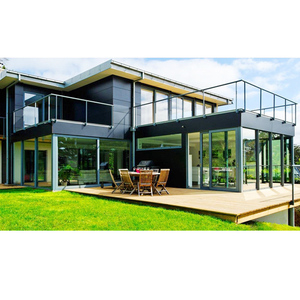
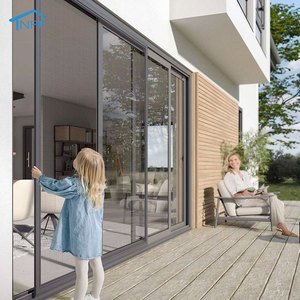
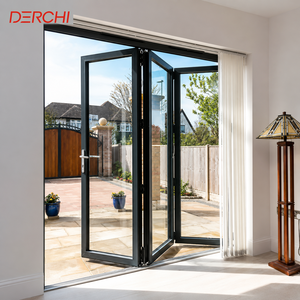
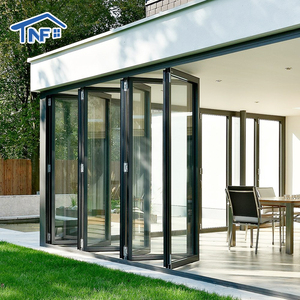
Sourcing premium architectural fenestration requires total transparency, strict structural engineering, and verified material compliance. Operating out of Foshan, Guangdong—China’s global hub for high-grade aluminium profile extrusion—Window Wurx Industry Co., Ltd. has established itself as an authoritative OEM/ODM partner for global builders, real estate developers, and wholesale distributors over the past three decades.
Every door frame utilizes primary-grade 6063-T5 or T6 extruded aluminium alloy profiles with wall thicknesses ranging from 1.4mm to 2.5mm. Fully compliant with Australian standard AS2047 and European CE EN 14351-1 requirements.
Our engineering team pioneers multi-track thermal break integrations utilizing PA66-GF25 reinforced polyamide insulation strips. We co-engineer mesh tension retention systems that eliminate mesh sagging across spans up to 6 meters.
To eliminate long-distance maritime transit damage, each screen door unit is wrapped in protective PE film, corner-guarded with EPE foam, encased in heavy cardboard, and secured within fumigation-free wooden crates with internal bracing.
Choosing the right insect screen mesh material determines structural durability, light transmission, and security compliance.
| Mesh Type Material | Wire Diameter / Gauge | Tensile Strength & Security | Corrosion Resistance | Light & Air Permeability | Recommended Application |
|---|---|---|---|---|---|
| 304 Stainless Steel (King Kong Mesh) | 0.70mm - 0.90mm | Extreme (Anti-Intrusion / Shear Proof) | High (Standard Atmospheric) | Medium (45% - 55%) | Security Doors, Ground Floor Villas |
| 316 Marine Stainless Steel | 0.80mm | Ultra-High (Impact Resistant) | Maximum (Coastal Salt Spray & Acid Rain) | Medium (50%) | Oceanfront Residences & Commercial Resorts |
| High-Clarity Micro Stainless Steel | 0.20mm - 0.35mm | Moderate (Insect Defense) | High | Ultra-High (75% - 85% Invisible View) | Luxury Apartments, High-Rise Balconies |
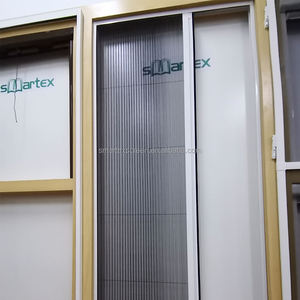
| Pleated PET / Polyesterorgan Mesh | N/A (Folded Web) | Flexible Retractable Tension | Moisture Proof & UV Stabilized | High (65%) | Wide-Span Folding & Bi-Fold Patio Doors |
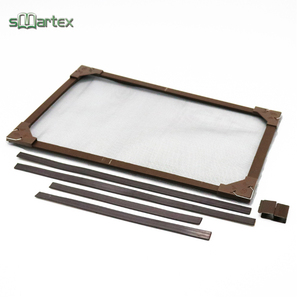
| PVC-Coated Fiberglass Mesh | 0.28mm | Basic Flexibility | Non-Corrosive | High (70%) | Economical Roll-Up / Magnetic Screens |
The global architectural opening market is undergoing a seismic shift. Procurement directors are no longer purchasing insect screens as standalone aftermarket accessories. Instead, modern building specs mandate fully integrated multi-functional envelope systems. Below are the four macro procurement trends shaping global contract buying over the next decade:
Architectural designs heavily emphasize unimpeded indoor-outdoor visual connectivity. Traditional thick wire security mesh creates visual obstruction. Next-generation procurement is leaning toward ultra-fine 316-grade stainless steel wire woven at sub-0.2mm diameters. This provides optimal insect exclusion (preventing tiny midges and no-see-ums) while delivering over 80% natural light translucency and high optical transparency.
Universal design accessibility standards (such as ADA compliance in North America and barrier-free building regulations in Europe) are forcing factories to redesign door sills. Future-proof mosquito net doors feature recessed floor tracks or motorized auto-drop bottom seals that eliminate trip hazards while maintaining a complete perimeter insect seal against crawling pests.
Energy code tightening worldwide requires windows and doors to maintain strict U-values (Solar Heat Gain Coefficients and Thermal Transmittance). Factories are now integrating stainless steel mesh screens directly within thermal-break extrusions, allowing homeowners to leave primary glass doors open for night ventilation while preserving energy efficiency, insect barrier integrity, and forced-entry deterrence.
Large-scale architectural sliding systems exceeding 4 meters in height require motorized screen actuation. Automated insect screen doors connected to smart home platforms (Zigbee, Z-Wave, or KNX) automatically deploy based on time-of-day schedules, ambient wind speed sensors, or mosquito activity indexes, delivering hands-free living experiences in luxury residential developments.
Technological evolution in aluminium surface finishing and metallurgical processing has significantly extended the lifespan and operational performance of screen door assemblies:
Standard powder coatings degrade under high ultraviolet (UV) exposure, resulting in chalking and color fading within 3 to 5 years. Leading factories now employ Fluorocarbon (PVDF) spray finishes and Qualicoat Class 2 / Class 3 certified architectural powder coatings. These coatings endure over 2,000 hours of continuous salt spray testing (ASTM B117), maintaining color integrity and gloss retention even in harsh tropical or coastal environments.
Wind pressure dynamic failure has historically plagued screen doors. Advanced structural engineering incorporates internal stainless steel tension cords, caterpillar-track guide blocks, and anti-jump roller bearings. These mechanical enhancements ensure that pleated screens and sliding screens remain locked inside extruded aluminium tracks under wind forces up to gale-force 8 (62-74 km/h).
Detailed technical and commercial answers tailored for international procurement officers, trade importers, and architectural project managers.
Consult with our structural engineering team today for factory-direct quotes, technical CAD drawings, and customized sample kits.
Send an Inquiry