
Precision-engineered architectural glazing, patio sliders, and high-security entrance doors certified to international building standards (CE, AS2047, NFRC).
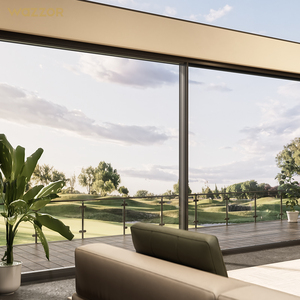
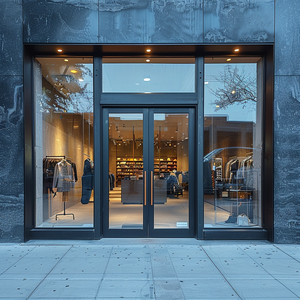
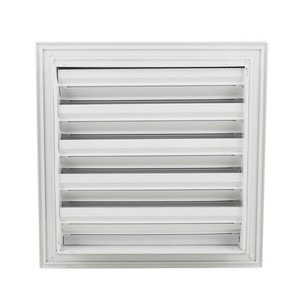
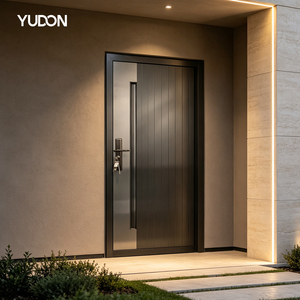
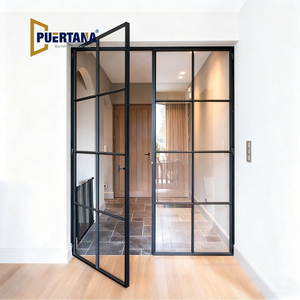
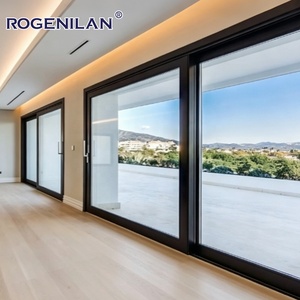
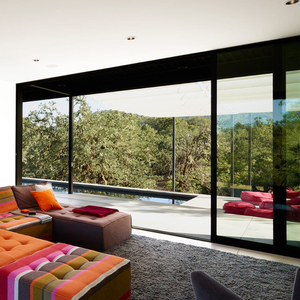
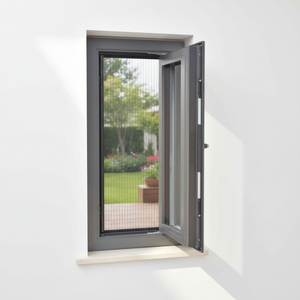
Operating from Foshan—China’s premier aluminium production epicenter—we bridge architectural design intent with high-precision manufacturing and export reliability.
Every hybrid door profile is meticulously designed by our in-house engineering team. Holding full CE mark compliance, AS2047 Australian certification, and NFRC thermal validation, our systems guarantee passing strict municipal code inspections worldwide.
Equipped with 3 automated fabrication lines and manned by over 150 skilled craftspeople, our facility manages large-scale commercial developments and bespoke residential villas simultaneously, ensuring stable lead times and 30% annual production scaling.
Long-haul sea transportation demands robust protection. We wrap every door unit in protective film, heavy-duty foam corner guards, waterproof wrapping, and fumigation-free wooden crates reinforced with internal shock-absorbing braces.

We empower architects and property developers with unlimited aesthetic freedom. Our aluminium wood composite door systems allow dual-tone finishing: exterior heavy-gauge extruded aluminium coated in weather-resistant PVDF or powder-coat to match façade cladding, paired with interior solid natural timber (such as American Oak, Teak, or Black Walnut) finished in eco-friendly water-based lacquers.
In modern architectural design, selecting the ideal fenestration material represents a critical compromise between structural resilience, thermal efficiency, and interior aesthetic luxury. Standard all-metal systems often lack organic warmth, while solid wood doors exposed to external elements suffer from thermal expansion, moisture absorption, UV degradation, and ongoing maintenance burdens. The Aluminium Wood Composite Door System (also known as Wood-Clad Aluminium or Aluminium-Clad Timber) resolves this technical paradox through structural hybrid engineering.
Technical Insight: By mechanically joining exterior extruded aluminium profiles with interior structural timber via nylon snap-friction clips, aluminium wood doors decouple thermal expansion coefficients between metal and wood. This eliminates structural distortion, moisture entry, and frame warping under extreme ambient temperature cycles.
Our factory utilizes high-tensile 6063-T6 architectural aluminium extrusions for the outer structural frame. This exterior shield bears the brunt of rain, wind loads, solar radiation, and physical wear. Anodized, fluorocarbon (PVDF), or Qualicoat-certified powder coatings are applied to ensure superior salt-spray corrosion resistance, making these systems highly suitable for coastal environments and high-rise structures.
Conversely, the interior structural core features sustainably harvested, kiln-dried timber (moisture content strictly controlled between 8% and 12%). Options include:
Energy code mandates across North America, Europe, and Australia are increasingly stringent, requiring fenestration assemblies to achieve overall thermal transmittance values (U-factor) below 1.2 W/m²K. Our thermal break wood-clad aluminium systems utilize polyamide PA66-GF25 glass-fiber reinforced insulating strips combined with triple-pane insulated glass units (IGU) featuring Argon gas fills and Low-E soft coatings.
Metropolitan traffic and aircraft noise typically fall within the 125 Hz to 4000 Hz frequency bandwidth. Solid wood possesses natural acoustic attenuation properties due to its cellular porous structure. When paired with multi-chamber aluminium profiles, multi-layer EPDM weatherstripping gaskets, and asymmetric laminated glass (e.g., 6mm + 12Ar + 4mm + 1.14PVB + 4mm), our doors achieve a certified Sound Transmission Class (STC) rating of up to 45 dB.

As the global construction sector transitions toward Net-Zero Buildings (NZEB) and sustainable procurement practices, several macro trends are defining the future of aluminium wood door manufacturing and international trade:
The demand for ultra-low energy building components is shifting wood-clad doors from luxury niche items to standard specification criteria in cold and temperate zones. Future profile engineering incorporates aerogel insulation inserts within thermal break cavities and quadruple-seal perimeter EPDM gaskets to eliminate thermal bridging completely.
Commercial and luxury residential developments are increasingly requesting electro-mechanical multi-point locking systems compatible with smart home protocols (Z-Wave, Zigbee, KNX). Concealed electric actuators enable automated sliding or folding operation via biometric fingerprint scanners, keypad entry, or centralized building management systems (BMS).
Modern minimalist architecture demands maximum glass area and minimal visible frame profiles. Advanced structural adhesive bonding allows glass panels to act as load-bearing structural members within the aluminium wood sash, enabling panel sizes exceeding 10 square meters while maintaining effort-free sliding operation.
Overseas procurement managers and real estate developers now require full traceability of timber raw materials. Sustainable forest management certification (FSC / PEFC) paired with factory-issued EPD documentation ensures compliance with green building rating systems such as LEED and BREEAM.
Sourcing custom fenestration directly from Chinese manufacturers offers substantial cost efficiencies, but requires rigorous quality management protocols to prevent project delays, code non-compliance, or transit damage.
Never initiate mass production based on architect rendering sketches. Require the factory to issue detailed CAD/BIM shop drawings detailing profile cross-sections, glass build-up, anchor placement, and wall connection flashings.
Specify heavy-duty hardware from reputable international suppliers (such as Siegenia, Hoppe, Roto, or top-tier domestic brands like CMECH). Verify cycle tests exceed 50,000 opening/closing operations.
Ensure your supplier utilizes customized wooden crates with foam separating every panel. Inspect container loading diagrams to verify load distribution and prevent crushing forces during maritime transit.
We enforce strict multi-tier export packaging specs to guarantee zero damage during transoceanic shipping routes to Europe, North America, and Australasia.

Essential answers regarding certification, material performance, custom fabrication, and international shipping logistics.
The core distinction lies in the primary load-bearing material. Aluminium-Clad Wood doors feature a heavy solid timber frame as the main structural support, protected externally by an aluminium cover clip. Wood-Clad Aluminium doors utilize a heavy-gauge extruded aluminium profile as the primary structural frame, lined internally with natural wood fascia for aesthetic interior warmth. Wood-clad aluminium offers higher weather resistance and structural strength for large-span openings, while aluminium-clad wood provides traditional solid-timber luxury.
Our window and door systems undergo rigorous testing to meet global standards. We hold CE certification for European markets, AS2047 and AS1288 testing validation for Australia and New Zealand, and NFRC/CSA compliant thermal testing for North America. Full test reports for air infiltration, water resistance, wind pressure capacity, and U-values are provided during project consultation.
Destructive moisture entry is prevented through a three-stage engineering defense system: First, the exterior aluminium shield absorbs all direct rainfall. Second, a continuous ventilation gap is engineered between the aluminium and wood profiles to allow condensate evaporation. Third, multi-channel EPDM rubber gaskets create a tight air-water seal, while interior wood components are treated with eco-friendly hydro-phobic timber preservers and water-based coatings.
Yes, 100% of our production is made-to-order based on architectural drawings. You can specify exact rough opening dimensions, panel configurations (sliding, folding, casement, swing), grid/mullion designs, glass types (tinted, low-E, acoustic laminated), and surface finishes. Dual-tone finishes allow you to match the exterior aluminium powder coating to the building elevation while choosing a specific stain for the interior solid wood.
Standard production lead time is typically 30 to 45 days following final CAD shop drawing approval and deposit receipt. We support both custom luxury villa orders (low MOQ) and high-volume commercial developments. Our 20,000 m² facility with 3 automated lines enables efficient schedule coordination for multi-container project shipments.
Contact our engineering specialists today to receive full technical specifications, structural shop drawings, and competitive direct factory pricing for your upcoming developments.
Get Catalog