
Explore our certified export series engineered for extreme weather resilience, maximum acoustic attenuation, and low carbon thermal efficiency. Fully customizable for large-scale commercial developments and luxury residential estates.
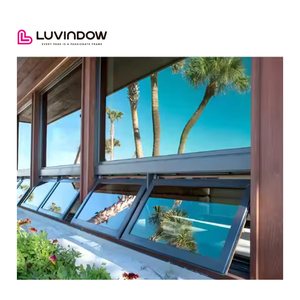
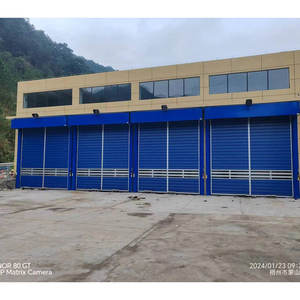
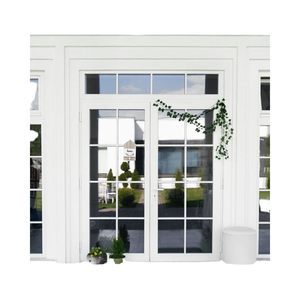
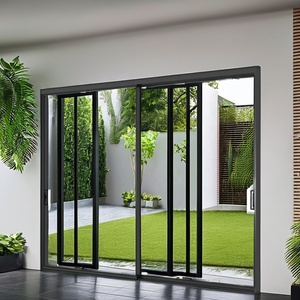
Modern architectural demands have shifted fenestration engineering from simple structural framing to complex envelope thermodynamic management. As a premier Foshan-based aluminum windows manufacturer operating since 1993, Window Wurx Industry Co., Ltd. integrates advanced metallurgical alloys, polyamide structural thermal barriers, and custom optical glazing assemblies to fulfill stringent global building energy codes.
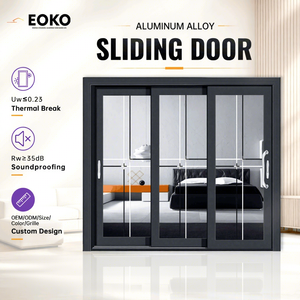
Information Gain Insight: The thermal performance of an aluminum window framing system is primarily governed by the structural width of its polyamide (PA66-GF25) thermal break strip and the precision of multi-cavity perimeter sealing. Our 6063-T6 architectural aluminum profiles reduce frame thermal bridging to achieve system U-values as low as 1.2 W/m²K without compromising dynamic wind load resistance up to 4.5 kPa.
Utilizing prime virgin aluminum extrusions treated to T5 or T6 temper standards. Offers superior tensile yield strength (>210 MPa), resisting deflection under heavy gust pressures, making it ideal for high-rise commercial curtain walls and hurricane-impact coastal residential installations.
Reinforced with 25% glass fiber, our thermal break strips match the linear thermal expansion coefficient of aluminum frames. This prevents structural shear failure over thermal cycling while blocking conductive energy transfer between exterior and interior envelope zones.
Triple EPDM continuous weather stripping combined with multi-point locking hardware creates hermetically sealed window sashes. Delivers acoustic attenuation ratings up to STC 42 dB, effectively insulating interior living spaces from highway, airport, and urban ambient noise pollution.
| Performance Standard | Window Wurx Benchmark Specification | International Standard Compliance | B2B Architectural Benefit |
|---|---|---|---|
| Thermal Transmittance (U-Value) | 1.0 - 1.4 W/m²K (Low-E Double/Triple IGUs) | EN ISO 10077-2 / NFRC Certified | Exceeds ENERGY STAR® & EU Zero-Energy Building mandates |
| Structural Wind Load Resistance | Up to 4500 Pa (Design Pressure Class 90) | AS2047 / ASTM E330 | Resists category 5 hurricane force winds and high-altitude load deflection |
| Water Penetration Resistance | Static: 600 Pa / Dynamic: 700 Pa | BS EN 12208 Class 9A / AS4420.2 | Zero water leakage under violent driving rain conditions |
| Air Infiltration Sealing | < 0.1 m³/(h·m²) at 100 Pa | Class 4 (EN 12207) / AS2047 Air Tightness | Eliminates draft-induced heat loss and moisture condensation risk |
| Acoustic Insulation (Rw/STC) | 38 dB - 45 dB (Laminated Acoustic Glass) | ISO 717-1 / ASTM E413 | Optimal sound dampening for luxury hotels and downtown apartments |
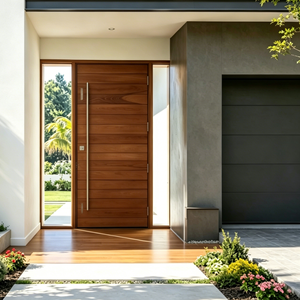
The global luxury residential market is rapidly pivoting toward concealed-frame sliding doors and ultra-slim profile casement windows. Architectural specifications increasingly demand interlock sightlines smaller than 20mm to maximize daylight harvesting (WWR - Window-to-Wall Ratio) while concealing outer frames within finished drywall pockets.
With the implementation of the European Union’s Carbon Border Adjustment Mechanism (CBAM) and global LEED v4.1 green building frameworks, international real estate developers are scrutinizing the embodied carbon footprint of fenestration imports. Low-carbon hydro-powered aluminum extrusions and recycled billet alloys (≥75% post-consumer content) are fast becoming mandatory B2B tender requirements.
Commercial and residential fenestration systems are transitioning into connected smart building components. Modern procurement orders heavily favor concealed electric chain actuators, automated multipoint locking gear, integrated magnetic sensor switches, and motor-driven rapid industrial roll-up doors that integrate directly into Building Management Systems (BMS).
To satisfy net-zero carbon building codes without burdening structural window frames with heavy, thick triple-pane IGUs, the industry is accelerating toward Vacuum Insulated Glass. Featuring a 0.3mm micro-vacuum gap, VIG achieves center-of-glass U-values below 0.6 W/m²K inside standard frame depths, revolutionizing retrofit and high-efficiency modern architecture.
Headquartered in Foshan, China — the globally recognized capital of high-end aluminum manufacturing — Window Wurx Industry Co., Ltd. provides direct engineering, precise manufacturing, and seamless logistics support for global importers, developers, and architectural studios.
Established in 1993, bringing decades of empirical shop floor experience in extrusion design, surface anodizing, fluorocarbon (PVDF) powder coating, and precision CNC milling.
Our 20,000 m² facility houses 3 automated German-imported CNC cutting and corner-crimping production lines, yielding consistent 0.1mm machining tolerances across high-volume orders.
Products undergo protective film wrapping, corner guards, EPE foam padding, fully enclosed fumigation-free plywood crates, and container bracing to ensure zero transit damage.
Transparent answers regarding certification compliance, custom engineering workflows, volume logistics, and OEM dealer partnership models.
Our complete window, door, and curtain wall portfolio carries CE testing compliance for European Union directives, AS2047 and AS1288 structural/water penetration certification for Australia and New Zealand, as well as NFRC thermal performance compliance for North American construction markets. Full laboratory test reports (including NATA-accredited test results) are supplied during project technical submittals.
Yes, 100% of our production output is engineered to match architect shop drawings and local structural building codes. You can specify exact frame profile depths (e.g., 55mm to 150mm series), glass build-ups (double/triple Low-E, acoustic laminated, hurricane impact glass), surface finishes (AkzoNobel powder coating, dual-color anodizing, woodgrain sublimation), and premium hardware systems (such as German Siegenia, Hoppe, Roto, or custom heavy-duty stainless steel components).
We employ a robust 5-layer export packaging protocol. First, sashes and frames are wrapped in anti-scratch protective film. Second, vulnerable corners are fitted with reinforced plastic guards. Third, thick EPE foam shock-absorbing sheets encapsulate each unit. Fourth, products are packed inside IPPC-compliant fumigation-free plywood crates. Finally, heavy-duty polyester strapping and steel wire bracing lock the crates inside the shipping container to mitigate maritime vibration.
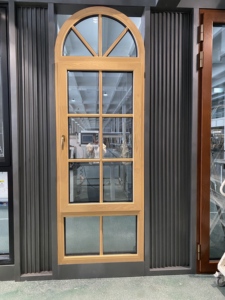
Standard fabrication lead times range between 25 to 35 calendar days following formal CAD shop drawing approval and sample color sign-off. For complex custom extrusion dies or specialized curved glass architectural configurations, initial lead time is approximately 40 days. Our 3 automated CNC production lines enable reliable batch scheduling to maintain strict project critical paths.
We offer comprehensive technical and dealer support that is significantly more accessible than rigid traditional franchise frameworks. Our engineering desk provides full CAD detailing, 3D BIM modeling support, structural wind calculation reports, step-by-step installation guides, and direct factory-direct wholesale pricing to maximize dealer margin potential and contractor competitiveness.
Connect directly with Window Wurx structural engineers for complimentary shop drawing evaluations, thermal energy performance consulting, and competitive factory-direct quotations.