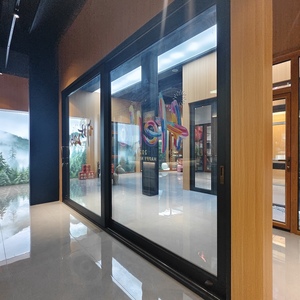

Explore our engineering portfolio certified to CE and AS2047 international standards. Designed for luxury villas, commercial developments, and high-end residential projects.
Established Year
Production Workshop
Master Craftsmen
Automated Production
Window Wurx Industry Co., Ltd. combines 30+ years of Foshan extrusion mastery with rigorous export logistics and international certification benchmarks.
Tested rigorously for wind pressure, water tightness, air infiltration, and structural strength. Guaranteed structural compliance for Australian, European, and North American building codes.
Equipped with PA66GF25 polyamide thermal break strips, multi-chamber extrusion geometry, and double/triple Low-E insulating glass to minimize thermal bridge conductivity and dampen ambient noise up to 45dB.
Every single frame and unit undergoes 5-tier protection: protective film, foam corner guards, bubble wrap, heavy corrugated paper, and fumigation-free solid timber crating for long-haul maritime routes.
In modern architectural design, exterior doors serve as pivotal interfaces connecting interior luxury with exterior environmental challenges. Far beyond simple access points, exterior aluminum door systems represent engineered dynamic facades requiring balance across structural integrity, thermal resistance (U-factor), wind-load resistance, acoustic dampening, and security. Sourcing top-tier aluminum exterior doors demands an in-depth technical evaluation of extrusion alloys, thermal break technologies, surface treat chemistry, structural hardware, and insulating glass unit (IGU) configurations.
Key Procurement Insight: Aluminum exterior doors fabricated from prime 6063-T6 architectural extrusions paired with PA66GF25 polyamide thermal breaks offer up to 40% superior energy efficiency over un-broken aluminum, reducing building HVAC energy loss while meeting strict net-zero carbon targets.
The foundation of long-term exterior door durability lies in the raw aluminum profile. Leading manufacturers utilize 6063-T6 aluminum alloy, renowned for its optimal balance of tensile strength, corrosion resistance, and surface finish capabilities. Wall thickness is a primary factor in structural stability; high-load pivot doors, large-span bi-fold panels, and heavy-duty sliding systems must feature profile wall thicknesses between 2.0mm and 3.0mm to withstand design wind pressures up to 5000 Pa without structural deflection.
Furthermore, internal multi-chambered extrusion designs allow for integrated structural steel reinforcements and multi-point locking rods, ensuring resistance against forced entry and thermal warping under severe climate conditions.
Raw aluminum is naturally conductive ($k \approx 200 \text{ W/m}\cdot\text{K}$). To meet modern green building certifications such as LEED, BREEAM, or Passivhaus standards, aluminum doors employ a thermal break system. This involves mechanically inserting low-conductivity polyamide strips—specifically Polyamide 66 reinforced with 25% glass fiber (PA66GF25)—between the outer and inner aluminum profile halves ($k \approx 0.3 \text{ W/m}\cdot\text{K}$).
Exterior door finishes must endure relentless ultraviolet radiation, coastal salt spray, moisture, and temperature fluctuations. Leading export manufacturers apply three major surface coating methods:
| Coating Technology | Chemical Composition | Expected Lifespan | Ideal Application Environment |
|---|---|---|---|
| Qualicoat Powder Coating | Thermosetting Polyester / Epoxy Resin | 15 – 20 Years | Standard Residential & Urban Buildings |
| PVDF Fluorocarbon Paint | 70% Polyvinylidene Fluoride Resin | 25 – 30+ Years | Coastal Fronts, Tropical UV Zones & High-Rises |
| Anodizing Finish | Electrolytic Aluminum Oxide Layer | 20 – 25 Years | Modern Industrial Architecture & High-Traffic Commercial |
| Italian Heat-Transfer Woodgrain | Powder Sublimation Film Coating | 15 – 20 Years | Luxury Villas & Rustic Architectural Designs |
An exterior aluminum door's operation relies heavily on its hardware architecture. Premium suppliers partner with global hardware leaders (e.g., German Siegenia, G-U, Hoppe, or custom heavy-duty stainless steel components). Multi-point locking mechanisms secure the door panel to the outer frame at 3 to 7 distinct points with a single turn of a key or smart biometric trigger, offering superior air-tightness, water-tightness, and anti-burglary defense.
Stay ahead of architectural developments. Understand key technological and procurement shifts driving the global exterior door market over the next decade.
Architects are heavily favoring minimalist designs with narrow frame profiles and zero-step flush bottom tracks. Stainless steel drainage channels integrated underneath ensure 100% water tightness while delivering barrier-free transitions between indoors and outdoor patios.
Procurement demand is shifting rapidly toward smart doors featuring concealed electric motors, biometric fingerprint recognition, facial scanners, and IoT smart-home integration (Zigbee/KNX protocols) with automatic drop-down bottom seal gaskets.
Global developers are requiring Environmental Product Declarations (EPDs). Sourcing certified low-carbon recycled aluminum profiles produced via hydroelectric smelters reduces embodied carbon footprints by up to 70% without compromising structural strength.
With increasing frequency of extreme climate events, global buyers prioritize doors tested to ASTM E1996 impact standards and AS2047 cyclone conditions, utilizing SGP structural interlayers and reinforced heavy-duty hinge pivots.
Technical guidance and commercial parameters for project managers, importers, architects, and real estate developers.
Our aluminum window and exterior door systems carry full CE certification (enforcing EN 14351-1 standards across Europe) and compliance with AS2047 / AS1288 standards for Australia and New Zealand. Additionally, we provide comprehensive laboratory test reports covering air infiltration, water penetration resistance, structural deflection under wind pressure, and acoustical STC performance ratings.
Yes. Because we operate a 20,000 m² factory with custom extrusion capabilities, every unit can be tailored to precise architectural drawings. We specialize in two-tone thermal break systems—allowing a dark anodized or powder-coated finish on the exterior face to match the building facade, and a warm woodgrain or custom interior paint finish inside the living space.
We utilize a proven 5-layer export packaging protocol. Every door frame and glass panel is wrapped with protective PE anti-scratch film, corner protectors, impact-resistant foam wrap, heavy-duty corrugated board, and packed inside custom fumigation-free plywood crates with interior bracing to withstand high ocean freight vibration and container handling.
For standard architectural profiles and stock colors, our production lead time is 25 to 35 business days following final CAD shop drawing approval. For custom anodizing or non-standard extrusion profiles, lead times range from 35 to 45 days. We accommodate flexible orders—ranging from custom single-villa projects to full container loads (20GP/40HQ) for commercial developments.
Thermal break aluminum combines the dimensional stability, structural strength, and slim visual sightlines of metal with superior thermal efficiency. Unlike solid wood, aluminum will not warp, swell, rot, or split under moisture and solar heat. Unlike UPVC, aluminum resists high-temperature degradation and allows significantly larger panel spans for grand architectural openings.
You can send your architectural plans, window/door schedules, or design specifications directly to our engineering sales team. We analyze your requirements and provide detailed CAD shop drawings along with itemized factory-direct pricing within 24 to 48 hours.