Engineering Authority: Foshan’s Benchmark Aluminum Fenestration Export Manufacturer
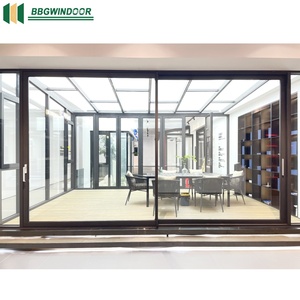
Selecting reliable aluminum replacement windows suppliers & exporters requires rigorous evaluation of metallurgical precision, structural thermal performance, and compliance with destination-market building standards. Headquartered in Foshan, Guangdong—China’s premier aluminum manufacturing cluster—Window Wurx Industry Co., Ltd. (Richocean) has served international commercial developers, facade engineers, and luxury residential contractors since 1993.
Our 20,000-square-meter automated manufacturing facility houses three state-of-the-art extrusion and CNC fabrication lines. Unlike generic local fabricators, Window Wurx operates under a holistic quality assurance protocol compliant with ISO 9001 quality management standard, European CE Marking (EN 14351-1), and Australia's stringent AS2047 fenestration specification (including AS1288 structural glass code compliance).
Key Factory Operations & Technical Capabilities
- Structural Profile Engineering: Extruded using primary 6063-T6 architectural grade aluminum alloys to deliver up to 230 MPa tensile strength, maintaining dimensional integrity under extreme wind pressure (up to 5000 Pa).
- Polyamide Thermal Barrier Integration: Multi-chamber thermal break profiles equipped with high-density PA66-GF25 (25% glass fiber reinforced polyamide) insulation strips to prevent thermal bridging across hot and cold interior-exterior gradients.
- Advanced Surface Metallurgy: Precision powder coating (AkzoNobel / PPG certified) and anodized finishes (15–25 Micron thickness) guaranteeing 20+ years of resistance against coastal salt-spray corrosion (ASTM B117 tested) and severe UV degradation.
- In-House Structural Testing Lab: Air infiltration (AS 4420.4), water penetration resistance (AS 4420.5 at 450Pa–600Pa), and ultimate strength deflection testing (AS 4420.6) performed prior to container loading.
Strategic Procurement Trends in Global Aluminum Window Export Markets (2025–2030)
The global demand for high-performance aluminum replacement windows is undergoing a structural paradigm shift driven by stringent municipal energy codes, net-zero architectural requirements, and evolving consumer preferences for seamless indoor-outdoor living. Importers, project managers, and architectural specifiers must adapt procurement frameworks to align with several critical technological trends:
1. Decarbonization & Ultra-Low U-Value Mandates
Regulatory frameworks across Europe (EPBD Directive), North America (ENERGY STAR® Version 7.0), and Australasia (NCC 2022 Volume One) are forcing lower total fenestration U-factors. Future-proof replacement projects require profiles engineered with multi-chamber thermal breaks exceeding 24mm, populated with expanded polyolefin insulation foams, and paired with low-emissivity (Low-E) triple-pane argon gas-filled glass units achieving overall U-values below 1.0 W/m²·K.
2. Minimalist Sightlines & High-Load Hardware Synergy
Architectural intent continues to push toward ultra-thin profile frames with maximum daylight opening area. However, larger glass spans increase dead load weight (up to 400kg per sash). The industry trend favors heavy-duty concealed hinges, stainless steel multi-wheel roller carriages, and multi-point locking systems capable of smoothly handling heavy double and triple IGUs without structural sag over time.
3. Integration of Smart Fenestration & BIPV
Modern replacement windows are evolving from passive thermal barriers into active building systems. Key developments include motorized concealed chain actuators integrated with home automation hubs, electrochromic smart glass (switchable privacy/tinting), and micro-solar integrated trickle ventilation systems that preserve indoor air quality without sacrificing thermal envelope performance.
4. EPD Transparency & Supply Chain Traceability
Green building certification schemes such as LEED v4.1, BREEAM, and WELL are mandating Environmental Product Declarations (EPDs). Trusted exporters must provide full life-cycle assessment (LCA) data covering raw material extraction, recycled aluminum content (using secondary recycled billets to reduce embodied carbon by up to 85%), and sustainable low-VOC powder coating processes.