
Precision-fabricated entry doors, courtyard gates, and patio glazing configurations ready for export deployment in Greater Tokyo.
An authoritative technical guide for Japanese general contractors, architectural firms, property developers, and door importers in Kanto region.
Sourcing exterior door systems for Tokyo’s urban architectural landscape requires a meticulous synthesis of structural resilience, thermal efficiency, strict compliance with Japanese Industrial Standards (JIS), and optimal spatial design. Unlike standard residential door procurement in North America or Western Europe, Tokyo presents a unique microclimate and regulatory matrix characterized by intense Pacific typhoon pressures, micro-seismic movement resilience, dense zero-lot-line urban planning, and stringent Net Zero Energy House (ZEH) energy performance targets.
As a global leader in custom aluminum architectural systems since 1993, Window Wurx Industry Co., Ltd. (operating out of our 20,000 m² automated manufacturing complex in Foshan, China) provides specialized B2B export solutions tailored specifically to the rigorous technical demands of the Japanese construction sector. This document provides deep engineering insights into profile selection, thermal break technology, surface finishing for Tokyo Bay maritime humidity, and streamlined import logistics through the Ports of Tokyo and Yokohama.
Under the Tokyo Metropolitan Building Code and JIS A 4702/4706, exterior entry and patio doors installed in mid-to-high rise developments or coastal districts (such as Odaiba, Toyosu, and Shinagawa) must withstand positive and negative wind pressures exceeding 2,400 Pa to 3,600 Pa (S-6 to S-7 ratings). Furthermore, frame profiles must accommodate dynamic inter-story drift ratios of up to 1/200 without seal rupture or glass breakage during seismic movement.
To successfully integrate imported aluminum outside doors into Tokyo residential and commercial projects, foreign manufacturers must adhere to four essential engineering parameters:
Tokyo’s geography presents direct exposure to Tokyo Bay marine atmospheres, which carry elevated chloride aerosol concentrations. Selecting the correct aluminum alloy and surface coating is critical to preventing filiform corrosion and degradation over a 30+ year design lifecycle.
| Finish Technology | Standard Specification | Corrosion & Salt Resistance | UV Color Retention | Recommended Tokyo Application |
|---|---|---|---|---|
| PVDF Fluorocarbon Spraying | Kynar 500 / 3-Coat System (≥40μm) | Exceptional (5,000+ Hrs Salt Spray) | Grade 5 (20-Year No-Fade) | Waterfront Luxury Villas (Odaiba, Toyosu, Minato) |
| Architectural Anodizing | JIS H 8601 Class AA15 (≥15μm) | High (3,000+ Hrs Salt Spray) | Grade 4.5 (Metallic Sheen) | Modern Commercial Envelopes & Urban Infill Units |
| Qualicoat Powder Coating | Architectural Polyester (60-80μm) | Good (1,500+ Hrs Salt Spray) | Grade 4 (Standard Matte Colors) | Interior Courtyard & Low-Rise Residential Entrances |
| 3D Thermal Transfer Woodgrain | Polyurethane Sublimation System | High (Scratch & Water Resistant) | Grade 4 (Natural Timber Look) | Traditional-Modern Fusion Architecture (Setagaya, Kamakura) |
Exterior doors manufactured by Window Wurx Industry Co., Ltd. are versatile engineered systems designed to adapt to Tokyo's diverse architectural typologies:
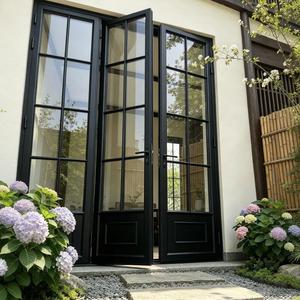
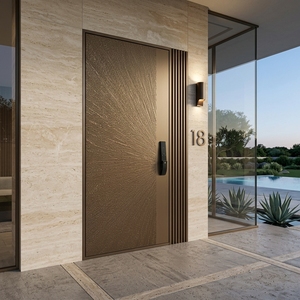
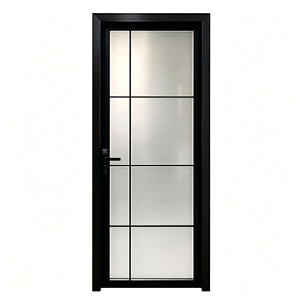
Grand entrance cast-aluminum doors and heavy-duty thermal-break double swing French doors. Outfitted with multi-point smart biometric locking mechanisms, concealed hinges, and high-clarity Low-E laminated glass for maximum privacy, soundproofing, and curb appeal.
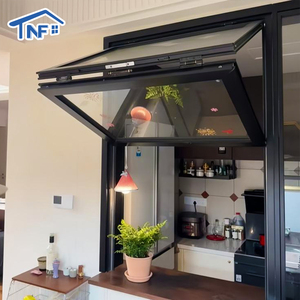
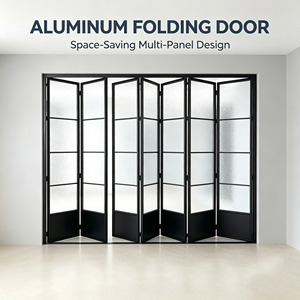
Minimalist bi-folding and multi-track sliding patio doors designed to maximize physical opening clearance on compact building footprints. Slim profile sightlines (as narrow as 28mm) allow maximum sunlight penetration into tight urban lots.
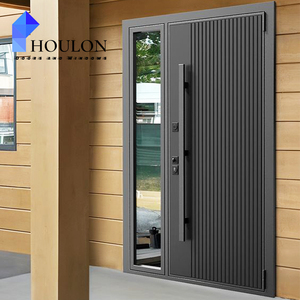
Heavy-traffic aluminum double casement and glass pivot doors engineered with high-cycle German hardware (HOPO / Siegenia). Custom powder-coated finishes matched precisely to brand color standards with integrated panic hardware.
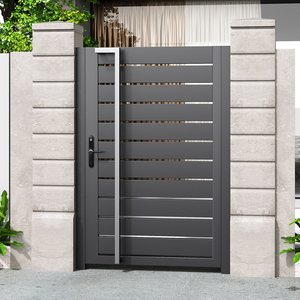
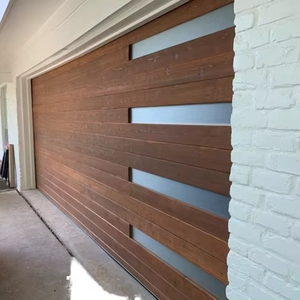
Motorized aluminum garage doors, heavy security front gates, and storm-resistant patio entrances featuring PVDF fluorocarbon coatings designed to withstand aggressive salt-laden ocean breezes.
Combining 30+ years of Foshan extrusion mastery with internationally certified quality control systems.
Our engineering team converts structural blueprints and Japanese shop drawings into precise millimetric CNC fabrication plans, providing full 3D CAD modeling and wind-load calculation reports before production.
Every door assembly undergoes factory water-tightness testing, corner tensile strength validation, and hardware fatigue testing. Fully compliant with international CE, AS2047, and ISO9001 standards.
To guarantee damage-free long-distance maritime transit to Tokyo or Yokohama ports, doors are sealed with protective films, corner guards, bubble wrap, EPE foam, and packed inside fumigation-free solid plywood crates.
Direct answers to technical, regulatory, and logistics queries commonly raised by Japanese buyers and importers.
Yes. Our heavy-duty exterior door systems are engineered and tested to sustain lateral wind pressure resistance up to 3,600 Pa (equivalent to JIS S-7 rating) and water tightness ratings up to 500 Pa (W-5 grade). We provide detailed third-party laboratory test reports for engineering submittals in Japan.
Absolutely. As a true factory-direct OEM/ODM manufacturer, we fabricate every frame strictly according to architectural CAD drawings. Whether your project requires standard Japanese metric dimensions, traditional Shaku grid alignments, or completely custom non-standard rough openings, our automated CNC machinery delivers millimetric precision.
For ZEH compliance in Tokyo (Climate Zone 5/6), we recommend our thermal break profiles paired with double or triple glazing: 6mm Low-E Tempered + 12A (Argon Gas filled with warm-edge spacers) + 6mm Clear Tempered glass. This achieves an overall U-factor ≤ 1.4 W/(m²·K) and significantly reduces solar heat gain (SHGC) during humid Tokyo summers.
We support FOB, CIF, and DDP (Delivered Duty Paid) shipping terms. Our experienced export department handles all customs documentation, certificates of origin, and phytosanitary packaging compliance. Ships leaving our Foshan/Shenzhen/Guangzhou ports typically arrive at Tokyo or Yokohama ports within 7 to 10 ocean transit days.
Yes. We offer factory pre-drilling and lock mortise customization to accommodate specified Japanese hardware models, or we can supply doors fully equipped with top-tier international multi-point locks, motorized electric strike plates, and keyless biometric entry systems.
Connect directly with our technical sales engineers for instant CAD reviews, factory-direct wholesale pricing, and technical submittal support.