
Explore our CE-certified and export-ready aluminum window, door, and glazing solutions custom-engineered for residential luxury developments and commercial projects.
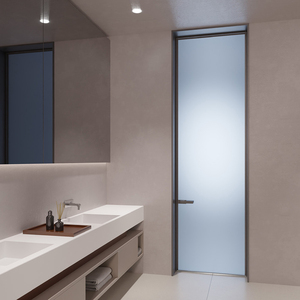
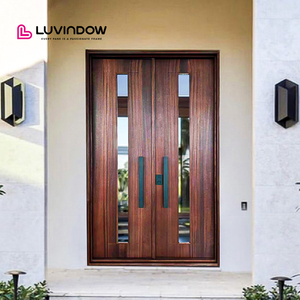
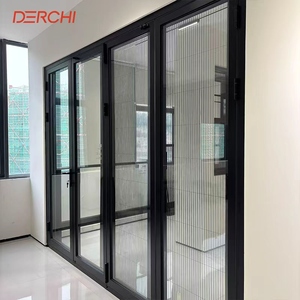
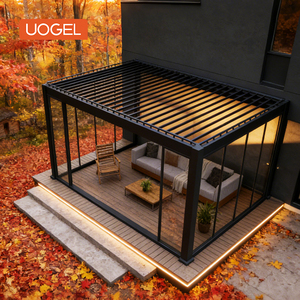
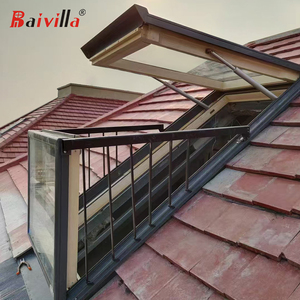
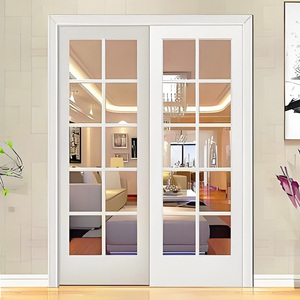
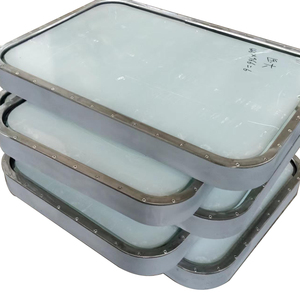
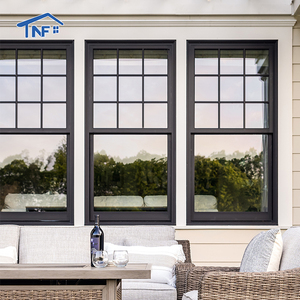
Addressing the dual challenges of Chicago’s extreme sub-zero winter temperatures (Climate Zone 5A) and dense urban acoustic pollution through certified high-STC thermal-break aluminum fenestration.
When specifying fenestration packages for multi-family high-rises, luxury custom residences, or historic adaptive reuse projects in Chicago, architectural teams and building owners encounter two uncompromising forces: intense environmental sound pollution and punishing winter freeze-thaw cycles. Navigating these requirements demands moving beyond off-the-shelf residential vinyl or non-insulated window profiles.
As a premiere CE certified aluminum soundproof window manufacturer supplying global markets since 1993 from our 20,000 m² Foshan facility (Window Wurx Industry Co., Ltd.), we deliver precision-engineered architectural aluminum windows designed to satisfy the rigorous technical parameters enforced across Cook County and the greater Chicagoland area.
Acoustic isolation in architectural fenestration is defined primarily by two metrics: Sound Transmission Class (STC), evaluated over standard human speech frequencies (125 Hz to 4000 Hz), and Outdoor-Indoor Transmission Class (OITC), which places greater weight on low-frequency sound sources such as diesel engines, elevated trains (the Chicago 'L'), jet aircraft traffic from O'Hare and Midway, and industrial ambient hums.
Standard dual-pane residential windows typically render an STC rating between 26 and 28. In noisy Chicago urban corridors—such as the Loop, West Loop, River North, or developments adjacent to the Kennedy Expressway (I-90/I-94)—this level of isolation is inadequate. Our specialized acoustic aluminum windows leverage advanced asymmetric glass configurations and acoustic PVB interlayers to achieve STC ratings from 42 to 48+, drastically attenuating peak decibel spikes.
| Glazing Configuration | Overall Glass Thickness | Acoustic Interlayer | STC Rating | OITC Rating | Target Chicago Noise Source |
|---|---|---|---|---|---|
| Standard Double Glass | 24 mm (6+12A+6) | None (Standard Monolithic) | 31 - 33 | 26 - 28 | Suburban ambient noise, low wind noise |
| Asymmetric Acoustic Double Glazing | 30 mm (8+14A+8.38 PVB) | 0.38 mm Acoustic PVB | 39 - 42 | 33 - 35 | High-density vehicular traffic, neighborhood retail |
| Triple Glass Acoustic Break | 42 mm (6+12A+4+12A+6.38 PVB) | 0.76 mm Acoustic PVB | 44 - 46 | 37 - 39 | CTA L-Train elevated tracks, commercial thoroughfares |
| Dual-Cavity Acoustic Laminated Profile | 52 mm (10.76 PVB + 16 Argon + 8 + 12 Argon + 6) | 1.52 mm Sound-Dampening PVB | 48 - 52 | 41 - 44 | O’Hare/Midway flight paths, downtown heavy arterial noise |
Chicago operates under IECC Climate Zone 5A, requiring low U-factors ($\le 0.24$ Btu/h·ft²·°F) to prevent interior thermal loss, glass condensation frost, and excessive heating loads during polar vortex events. Aluminum’s natural strength and structural rigidity make it superior for large expansive glass spans, but raw aluminum is a natural thermal conductor. To counteract structural thermal bridging, our windows feature precision-extruded PA66 GF25 polyamide thermal break strips inserted between the interior and exterior aluminum profile chambers.
Furthermore, our multi-point perimeter compression seals utilize high-density EPDM (Ethylene Propylene Diene Monomer) gasket materials that maintain elasticity down to $-40^\circ\text{C}$. This ensures airtight sealing against air infiltration under heavy winter wind pressures, preventing cold drafts and acoustic leakage simultaneously.
Tailored window profiles designed to resolve specific structural, thermal, and acoustic challenges in distinct Chicago architectural environments.
Downtown Chicago high-rises experience extreme wind loads off Lake Michigan combined with 24-hour street traffic. Our heavy-wall thermal break casement and tilt-and-turn windows deliver DP70 structural performance while dampening city center acoustic ambient noise.
Single-family home additions and luxury modern builds in historic neighborhoods demand ultra-slim sightlines without sacrificing insulation. Our minimalist glass sliding doors and casements provide clean architectural aesthetics paired with low SHGC Low-E glass.
Properties situated along airport flight paths or CTA elevated line corridors require specialized soundproof fenestration. Dual-cavity glass with PVB acoustic laminates creates an effective barrier against low-frequency engine rumbles and track vibration noise.
Market insights driving window specification decisions among Chicago architects, general contractors, and real estate developers.
Chicago’s Climate Action Plan is driving strict energy compliance codes across Cook County. Building specs increasingly dictate triple-pane insulated glass units (IGUs) filled with 90%+ Argon gas, warm-edge spacers, and triple-chambered thermal profiles to achieve Net-Zero energy readiness.
Reflecting Chicago’s deep industrial history, black matte and dark bronze anodized finishes dominate modern residential and loft retrofits. Powder coating options adhering to AAMA 2604/2605 specifications ensure long-term resistance against saltwater corrosion and UV degradation.
Architects in Chicago are transitioning away from standard double-hung timber windows toward heavy-duty aluminum Tilt & Turn systems. This configuration allows dual-action operation: tilting inwards from the top for secure, draft-free ventilation, or swinging inwards like a door for easy glass maintenance on upper levels.
Luxury multi-family developments are adopting flush-threshold aluminum sliding and folding patio doors. Thermally broken tracks equipped with stainless steel rollers allow smooth single-handed operation of massive double-glazed glass panels weighing up to 400 kg per sash.
Combining 30+ years of Foshan extrusion mastery with international compliance, factory-direct cost efficiency, and end-to-end export protection.
Established in 1993 in Dali Town, Foshan—China’s premier aluminum manufacturing hub. Operating 3 fully automated extrusion and assembly lines powered by 150+ skilled technicians, driving high-capacity throughput for large-scale developments.
Our fenestration systems undergo rigorous independent laboratory testing. Carrying CE certification (EN 14351-1) for Europe and AS2047 for Oceania, complete with complete test reports covering air permeability, water tightness, and structural wind load resistance.
To eliminate shipping damage across long ocean routes to US ports (such as the Port of Chicago / CN Logistics Park), each unit is individually wrapped in protective film, corner guards, foam layers, and crated in fumigation-free wooden boxes.
Fully bespoke fabrication based on your CAD shop drawings. Specify customized frame profiles, hardware brands (Siegenia, Hoppe, Sobinco, or custom US-compatible systems), and dual-color anodizing/powder coating matching interior and exterior finishes.
By bypassing third-party trading agencies and domestic distributors, developers and contractors achieve 30% to 45% material cost savings while maintaining direct technical communication with factory fenestration engineers.
Our dedicated engineering desk assists with structural calculations, acoustic glass recommendations, thermal modeling, shop drawing approvals, and step-by-step guidance for overseas freight clearance and jobsite installation.
Direct answers regarding certification alignment, shipping logistics, customization options, and acoustic performance testing.
European CE standard (EN 14351-1) certifies airtightness, water tightness, thermal insulation, and structural load resistance. For Chicago projects requiring specific ASTM (e.g., ASTM E90 for acoustics, ASTM E330 for structural load, ASTM E283/E331 for air/water), our factory provides detailed laboratory test data and engineering evaluations to satisfy local plan examiners and building inspectors.
Standard manufacturing lead time is 25 to 35 days following approval of finalized shop drawings. Ocean freight from Port of Nansha/Shenzhen to the Port of Chicago or direct intermodal rail via West Coast ports (LA/Long Beach to Chicago BNSF railhead) typically takes 22 to 30 days. We recommend budgeting 50-60 days total from order lock to site arrival.
Yes. Because our thermal break profiles are assembled in-house with polyamide insulating strips, we can produce two-tone finished frames—for example, an anodized dark bronze exterior matching a Chicago brownstone façade and a clean matte white interior matching interior decor.
Every window unit is wrapped in multi-layer protective film, fitted with heavy-duty corner guards, separated by shock-absorbing rubber pads, and sealed in export-grade fumigation-free plywood crates. Crates are custom-sized to fit seamlessly into 20GP or 40HQ ocean containers with internal steel strapping to prevent movement in transit.
While we support large-scale multi-family developments requiring thousands of square meters, our factory flexible line setup also accommodates bespoke residential project orders starting at a low threshold (typically 20 to 50 square meters or container-share shipments).
Yes. We provide sample corner cutaways showing profile wall thickness, polyamide thermal break integration, multi-point locking hardware mechanisms, double/triple glass build-ups, and surface finish options delivered via express air courier directly to your Chicago studio or office.