
Explore our factory-direct OEM/ODM aluminum storefront and architectural door systems. Customized for precision fit, thermal insulation, barrier-free access, and long-term operating durability.
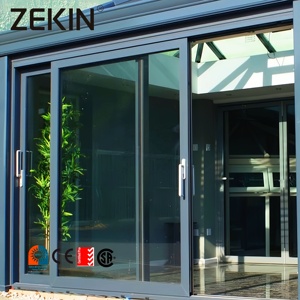
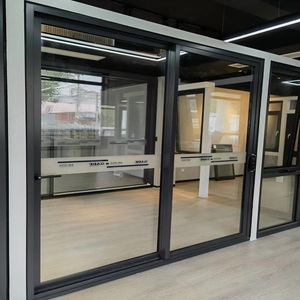
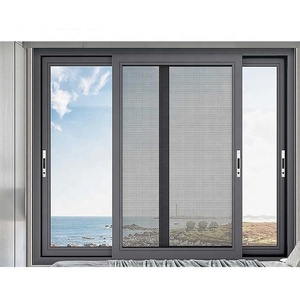
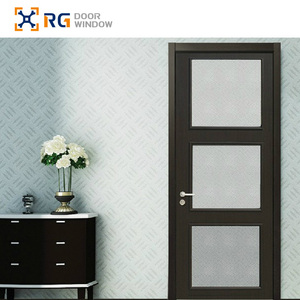
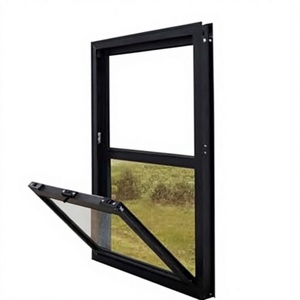
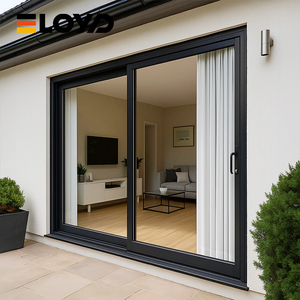
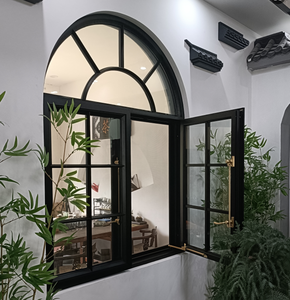
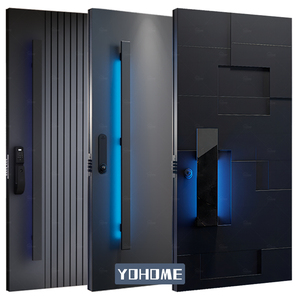
Sourcing commercial entrance systems for the Japanese market requires strict adherence to strict building codes, seismic engineering, and unique local operating workflows.
Japanese commercial building codes demand stringent structural performance. Our extruded aluminum storefront profiles utilize 6063-T5/T6 aviation-grade alloys with wall thicknesses up to 3.0mm, tested to meet JIS A 4702 standards for wind pressure resistance (S-5 to S-6 levels up to 3600 Pa), ensuring durability during typhoon seasons across Kanto and Kansai.
Given Japan's high seismic frequency, rigid entrance frames can buckle or shatter glass under shear stress. Our ODM storefront door systems feature floating sub-frame connectors and EPDM perimeter gaskets that allow inter-story drift angles of 1/150 to 1/100, isolating glass panels from structural seismic sway without compromising seal tightness.
In response to Japan's Net Zero Energy Building (ZEB) policies, our OEM manufacturing incorporates Technoform PA66 GF25 polyamide thermal break strips paired with double or triple Low-E argon-filled glazing. This delivers U-values as low as 1.4 W/m²K, eliminating condensation during cold Hokkaido winters and heat gain during hot Tokyo summers.
Comparing standard international commercial doors with Window Wurx custom Japan OEM/ODM performance specifications.
| Performance Parameter | Standard Commercial Storefront Door | Window Wurx Japan OEM/ODM Spec | Japanese Testing Standard |
|---|---|---|---|
| Wind Load Resistance | 1200 - 1800 Pa | 2400 - 3600 Pa (S-5 ~ S-6 Rating) | JIS A 4702 / JIS A 4706 |
| Water Tightness | 250 Pa (Standard Sill) | 500 - 750 Pa (W-4 ~ W-5 Sub-drain Sill) | JIS A 4706 Dynamic Pressure |
| Seismic Deformation | Rigid Connection (< 1/300) | Flexible Drift Gasket (1/100 ~ 1/150) | Japanese Building Standard Law |
| Air Infiltration | A-2 Grade | A-4 High Air Tightness Grade | JIS A 4702 Air Leakage Test |
| Barrier-Free Threshold | 15mm - 25mm Raised Step | < 5mm Flush Drainage Sill | Japan Universal Design Law |
| Surface Finish | Standard Anodizing (10-15 µm) | Electrophoretic Anodizing / PVDF (25 µm) | JIS H 8601 Corrosion Resistance |
How Window Wurx OEM/ODM storefront doors are deployed across commercial real estate verticals in Tokyo, Osaka, Nagoya, and Fukuoka.
High-end retail districts require ultra-narrow sightlines with maximum glass transparency. Our custom ODM pivot and sliding doors integrate concealed top closers, multi-point locks, and non-reflective low-iron glass, providing a minimalist aesthetic while withstanding high daily foot traffic cycles (500,000+ opening cycles tested).
Japan’s extensive network of convenience stores (Konbini) demands automatic aluminum sliding entrance doors equipped with heavy-duty motion sensors, safety infrared curtains, and continuous brush seals. We produce specialized profiles with pre-milled wiring channels for seamless integration with Japanese automatic door engines (e.g., NABCO, Teraoka).
Hospitality venues in Kyoto and Osaka leverage our heavy-duty horizontal sliding and folding aluminum systems. These doors allow restaurants to completely open their storefronts to the street during pleasant seasons, and securely lock down with high acoustic insulation (JIS T-2 soundproofing) when fully closed.
Understanding market shifts helps Japanese importers and general contractors stay ahead of building code mandates and consumer expectations.
Under Japan’s revised Barrier-Free Law, commercial buildings must provide step-free access for wheelchair users and the elderly. Our custom ODM doors incorporate flush sub-floor tracks with integrated drainage channels, maintaining water resistance while eliminating tripping risks at retail entrances.
Coastal urban areas such as Yokohama and Fukuoka suffer from salt spray corrosion. The market has shifted heavily toward high-durability Electrophoretic (ED) matte black and champagne gold anodized aluminum finishes, which resist fading, chalking, and salt oxidation for over 25 years.
Post-pandemic commercial design in Tokyo prioritizes contactless entry. Our OEM storefront frames feature pre-routed cavities for IC card readers, facial recognition pads, and electronic strike locks, compatible with Japanese smart access ecosystems.
Factory-direct OEM/ODM capabilities from Foshan, China — delivering quality, precision, and supply chain reliability to Japanese buyers since 1993.
Founded in 1993 in Foshan, China’s primary aluminum extrusion hub, Window Wurx operates a modern 20,000 m² production facility with over 150 skilled technicians. We maintain 3 fully automated extrusion and assembly lines, supporting steady 30% YoY global growth.
We provide comprehensive OEM/ODM customization. Whether you require bespoke Japanese profile sightlines, thermal break geometry, or customized lock housings, our in-house R&D team develops custom extrusion dies with shop drawing approvals in under 10 business days.
Shipping glass storefront systems across the Sea of Japan requires zero failure tolerance. Every door unit is protected with protective film, foam corner protectors, multi-layer bubble wrap, and packed inside fumigation-free solid wood crates designed for safe container loading and transit.
Clear answers regarding OEM custom orders, quality control, shipping logistics, and compliance for Japanese contractors and developers.
Yes. Our engineering team designs aluminum profiles, thermal breaks, and structural glazing assemblies to fully satisfy JIS A 4702 (performance criteria for doorsets) and JIS A 4706 (window and door assemblies). Test reports and structural calculations can be submitted for project approval prior to mass production.
For standard anodized or powder-coated stock profiles, our MOQ starts at 50 square meters. For custom OEM aluminum profile dies engineered to your specific drawing specifications, the profile extrusion MOQ is typically 500 kg per section design, with mold tooling costs fully credited upon high-volume order milestones.
Our ODM engineering team can pre-cut, CNC-mill, and reinforce the aluminum top transom profiles to accommodate major Japanese automatic door operators such as NABCO, Miwa, or Teraoka. We verify fixing points, wire pass-through grommets, and sensor bracket positions during the CAD shop drawing phase.
Once shop drawings are signed off, sample mockups take approximately 7-10 days, while standard batch production takes 20-25 days. Transit time from Guangzhou/Shenzhen to major Japanese ports (Tokyo, Yokohama, Osaka, Kobe, Nagoya) is fast—typically only 4 to 7 days direct transit.
Yes. By utilizing split thermal break profile assembly technology, we can apply different finishes to the exterior and interior surfaces. For example, exterior frames can feature a weather-resistant ED matte black anodizing, while interior frames match indoor timber or metallic finishes.
We use fully tempered or laminated safety glass (meets JIS R 3206 and JIS R 3205) coupled with high-elasticity structural silicone glazing (SSG) and continuous EPDM setting blocks. This creates a flexible cushion that prevents glass-to-metal contact during seismic sway.
Send us your architectural drawings, elevation plans, or specification requirements. Our technical sales engineering team will prepare shop drawings, thermal calculations, and competitive factory-direct pricing within 24 hours.